
Small Footprint, Steady Air: A Rotary Screw Compressor Upgrade Fix
Small Footprint, Steady Air: A Rotary Screw Air Compressor Upgrade Fix
A workshop that installs one more CNC machining centre or one more moulding cell rarely plans a compressed air project at the same time. The machine is ordered, landed and commissioned; air demand climbs; and the compressor that coped last quarter begins running without pause. The instinctive answer — buy a bigger compressor — then runs into three constraints that have nothing to do with airflow: floor space that belongs to production equipment, an electrical distribution board with no spare capacity, and a noise level that reaches the unit next door.
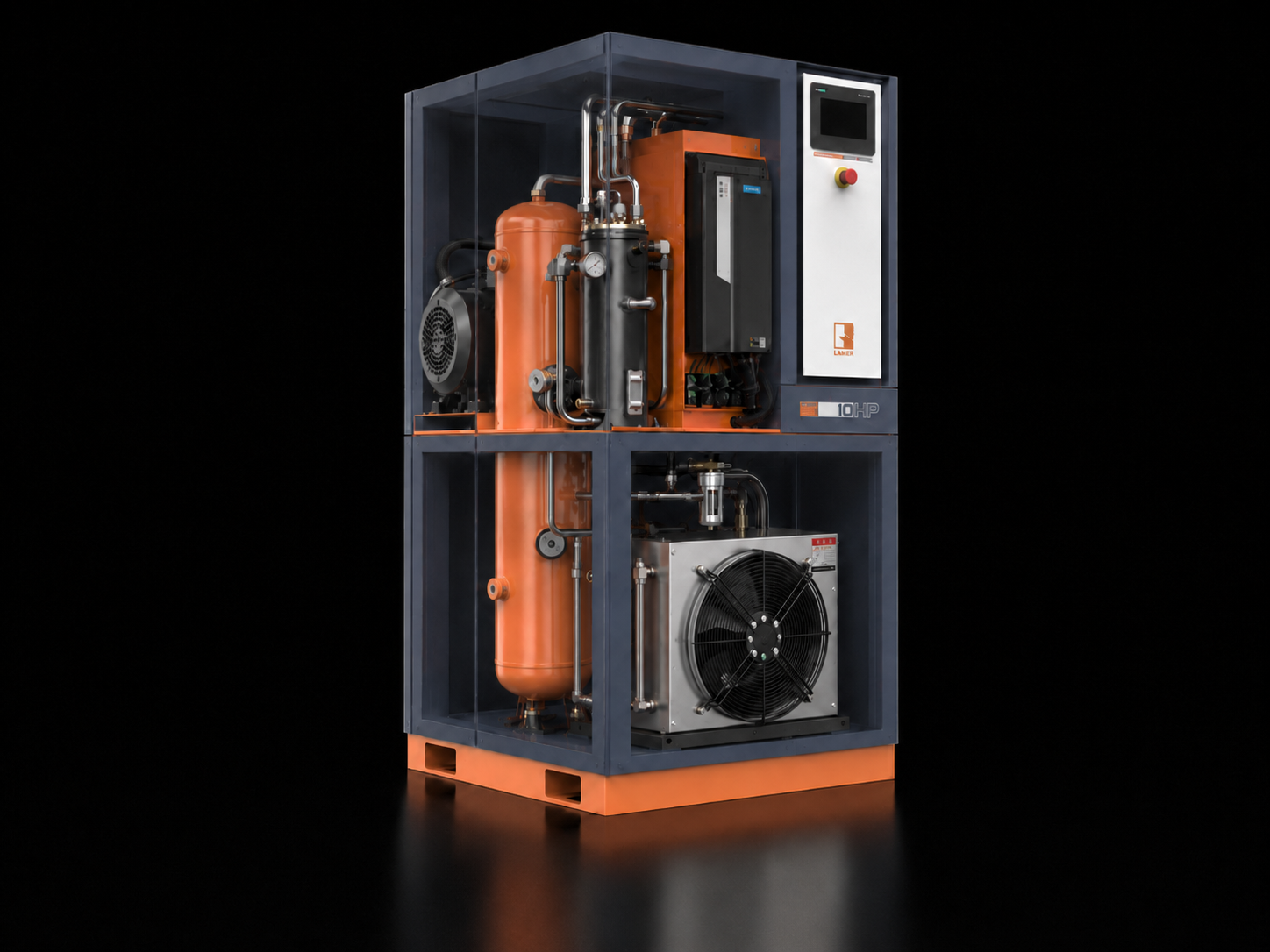
The UMW Air Micro rotary screw series is built for that specific squeeze. Models ML-4A, ML-5.5A and ML-7.5A cover 4 kW, 5.5 kW and 7.5 kW, with a series maximum airflow of 1.1 m³/min, an 8–13 bar pressure range, a 140 L air tank, a single-stage screw air end and a sheet-metal enclosure. This article treats the upgrade as an engineering fit-check rather than a purchase: what the package solves, what has to be specified around it, and where the fit ends.
The Upgrade Problem: More Machines, Same Air, Less Room
A compressed-air shortage almost never announces itself as a shortage. It appears as a machining centre that alarms on a clamp cylinder halfway through a cycle, a dust-removal hood that loses suction, or a pneumatic press that short-strokes at the end of a shift when every station is running. By the time the symptom is traced back to the air system, the production decision that caused it is months old and irreversible.
Four constraints define the constrained upgrade, and only one of them is about compressed air volume:
- Floor space. The utility corner already holds the receiver, the dryer, consumable stock and the electrical panel. Adding a second full-size compressor usually means giving up production floor, which is the most expensive square metre in the building.
- Electrical capacity. Stepping from a small piston unit to a 15 kW or 22 kW screw compressor can require a new distribution board, larger cabling and a supply upgrade. A 4–7.5 kW unit may sit within an existing spare way, which changes both the installation cost and the downtime.
- Noise. Small compressors are often placed close to operators because that is where the space is. Mechanical noise from a bare pump is difficult to absorb after the fact; an enclosed package can be positioned with far more freedom.
- Air stability rather than air volume. CNC actuators, pneumatic tools and dust-removal systems draw short, repeated bursts. The practical requirement is a stable pressure band at the point of use, not the largest possible nameplate output.
Framing the problem this way changes what a buyer evaluates. The question stops being "what is the biggest compressor I can afford" and becomes "which package delivers a stable, clean supply inside the space, power and noise envelope I already have".
Why This Has Become a Recurring Workshop Problem
Capacity in manufacturing is now added in small increments — one machine rather than a new hall — and the compressed-air market reflects that pattern. Commercial research cited for the screw compressor category projects the global market reaching USD 16.30 billion by 2030 (MarketsandMarkets, Screw Compressor Market Report 2025–2030, published March 2025). The same research family reports that Asia Pacific held 43.7% revenue share in 2025, that oil-filled rotary screw units accounted for 61.7% of the market in 2025, and that stationary screw compressors held 67.6% of the market in 2024. These are commercial estimates rather than audited shipment data, and they describe the category rather than the small-machine segment specifically.
What they do establish is context: the rotary screw principle is the mainstream industrial choice, and the overwhelming majority of installed screw capacity is oil-lubricated, stationary and fixed in place. An incremental workshop upgrade therefore is not choosing an exotic technology. It is choosing a package size and a level of integration — and integration is where the constraint is usually resolved or lost.
The engineering reason a screw compressor suits this role is mechanical rather than promotional. A rotary screw air end compresses continuously with few moving parts and no reciprocating imbalance, so it can run in the continuous duty that a production workshop actually imposes. For the Micro series, continuous operation is the stated operating mode, and the specified environment is high-temperature or humid conditions requiring stable, clean compressed air. That combination — continuous duty plus a demanding ambient — is why the equipment around the compressor matters as much as the compressor itself.
The Micro Rotary Screw Series: What the Envelope Contains
The Micro series is a compact, integrated rotary screw package rather than a bare pump. The supplied specification gives the following envelope:
| Model | Rated power | Series maximum airflow | Pressure range | Air tank | Air end |
|---|---|---|---|---|---|
| Micro ML-4A | 4 kW | 1.1 m³/min (series level) | 8–13 bar | 140 L | Single-stage screw |
| Micro ML-5.5A | 5.5 kW | 1.1 m³/min (series level) | 8–13 bar | 140 L | Single-stage screw |
| Micro ML-7.5A | 7.5 kW | 1.1 m³/min (series level) | 8–13 bar | 140 L | Single-stage screw |
Airflow and pressure are published at series level in the supplied specification. Model-specific free air delivery measured at a stated working pressure is not given and should be requested on the datasheet for the exact model and pressure before the order is placed. Enclosure material for the range is sheet metal.
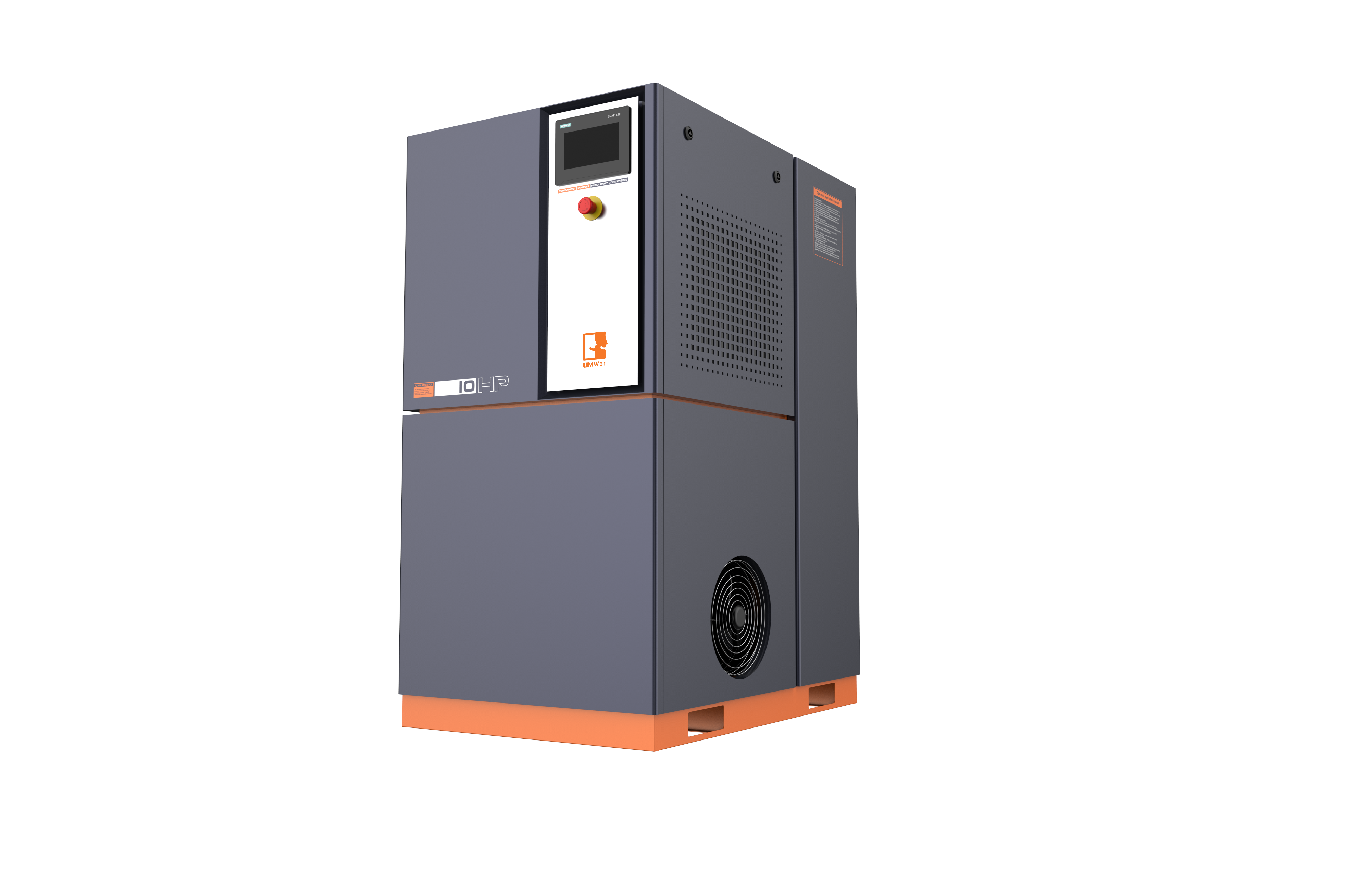
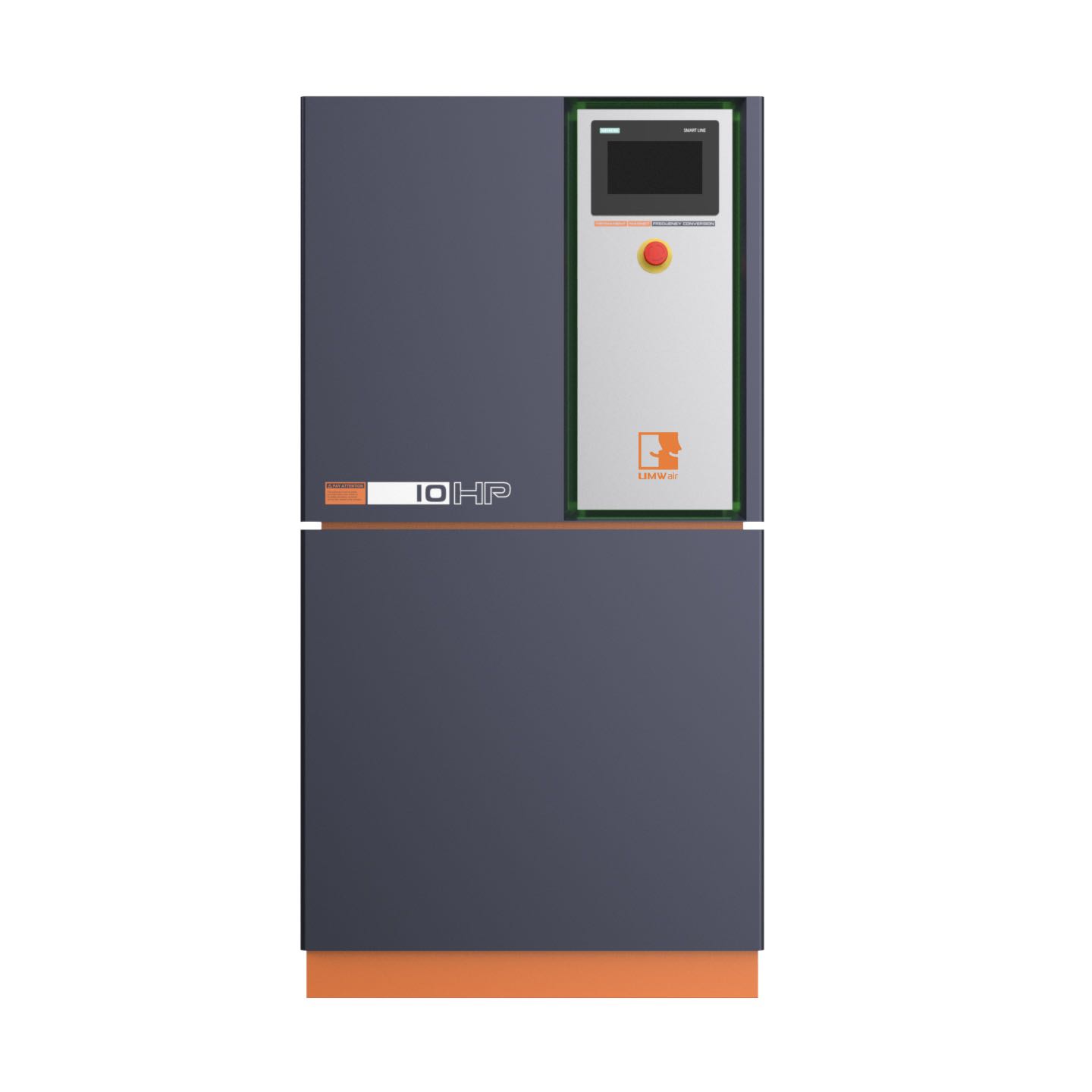
Read as an upgrade package, three features do the work. The integrated 140 L air tank reduces the number of separate components that must be found space for and buffered against short demand spikes. The sheet-metal enclosure turns a mechanical noise source into a contained one, which matters when the unit has to sit near a walkway or an operator station. And the single-stage screw air end provides the continuous-duty characteristic that a bare piston pump cannot sustain without short cycling.
Three power ratings rather than one is the practically useful part. A workshop that has just added one machining centre and has a genuine spare 4 kW way does not need to buy 7.5 kW and rework the supply; a workshop adding a second cell and a packaging line can step up without leaving the envelope. Matching power to measured demand is also the first saving in the whole project, because an oversized compressor unloads more often and wastes the margin it was bought for.
Turning the Specification into a Fit Check: Step by Step
The sequence below is the order in which the constraints should be tested. Done in this order, each step either confirms the Micro envelope or eliminates an option before money is committed.
Step 1 — Measure demand at the point of use, not at the receiver. List every consumer that will run simultaneously: CNC clamp and tool-change actuators, pneumatic tools, dust-removal systems, blow-off stations and any packaging grippers. Note the pressure each actually needs. A system that holds 8 bar at the tool will not necessarily hold it because the receiver shows 8 bar; pressure loss lives in the pipework, filters and hoses between them.
Step 2 — Reserve the footprint and confirm access. Treat the unit as a serviceable item, not a box. Plan clearance for panel access, drain and filter changes, and airflow around the enclosure. No outline drawing is included in the supplied specification, so request the dimensional drawing for the exact model before the floor position is fixed — this is the single most common cause of a late layout change.
Step 3 — Confirm the electrical supply against the chosen rating. The three ratings of 4 kW, 5.5 kW and 7.5 kW allow the electrical scope to be matched to what the board can actually accept. Confirm cable size, protection and starting method with a qualified electrician for the rating selected, and confirm the site voltage. UMW Air lists voltage among the customization options available through its OEM/ODM service, alongside colour and logo.
Step 4 — Specify air treatment at the same time as the compressor. A clean, dry supply is a system outcome. The matched equipment for this application class includes an air dryer, air tank, line filter, inverter and controller, and the workshop should decide on all five before installation rather than adding them after the first moisture problem appears.
Step 5 — Set the control and monitoring approach. The controller determines how the unit responds to demand, and it is what the maintenance team will actually interact with. It should be specified together with the inverter option, so that the drive strategy and the control logic are designed as one system rather than assembled later.
Step 6 — Verify before shipment and log the commissioning baseline. UMW Air conducts factory pre-shipment testing on its units, which is the point at which the buyer should confirm the tested configuration matches the order. On site, record pressure at the compressor outlet and at the furthest point of use, then repeat the reading after a leak survey. That baseline is the reference for every future argument about whether the air system has degraded.
The Equipment Around the Compressor
The compressor is the generator in a system that has four other jobs to do. In the matched-equipment list for CNC, plastics, automation and packaging applications, those jobs are assigned as follows.
| Equipment | Function in the system | What to confirm before ordering |
|---|---|---|
| Air dryer | Removes moisture so that condensate does not reach tools, cylinders or product | Dew point required by the process, ambient temperature and humidity, and matching flow rating |
| Air tank | Buffers short demand spikes; the Micro unit carries its own 140 L tank | Whether an additional receiver is needed for the duty profile, and where it will stand |
| Line filter | Removes particulate and oil carry-over downstream of the compressor | Filtration grade demanded by the end use, and the pressure drop it introduces |
| Inverter | Allows drive speed to follow demand instead of running at fixed speed | Whether the ordered model includes variable-speed drive, and the load profile it will see |
| Controller | Sets loading logic, pressure band and monitoring access | Pressure band settings, alarm visibility and who will read them |
The pressure-drop point deserves emphasis because it is where compact systems lose performance quietly. Every filter, dryer and undersized hose between the compressor and the tool removes pressure that the compressor has already paid for in energy. Specifying a slightly higher compressor pressure to compensate is the expensive fix; sizing treatment components for low pressure drop is the cheap one.
Scenarios Where a Small-Footprint Screw Compressor Fits
The Micro series is specified for CNC machinery production lines, automotive parts production lines, plastic processing line expansions, industrial automation integration, and food and beverage packaging line projects, across metal processing, plastics, automotive parts, electronics manufacturing, food packaging, construction materials, chemicals and energy. Three of those deserve a closer look because the constraint pattern differs.
CNC machining workshops. This is the classic incremental upgrade: one or two machining centres added to an existing shop, driving actuators, pneumatic tools and dust removal systems. UMW Air's case documentation records a CNC machining workshop in Vietnam running three units for a year across CNC actuators, pneumatic tools and dust removal, with the reported outcome of a 20% improvement in production efficiency and reduced downtime, alongside low energy consumption, easy maintenance and reliable long-term performance. That is a first-party case record for one customer, not a general performance guarantee — a workshop with a different machine mix should expect a different result and should verify against its own measured demand.
Plastic processing line expansion. Moulding and extrusion cells add demand in steps, and the air must be dry because moisture affects both the process and the finished part. Here the dryer specification does as much work as the compressor choice, and the continuous operation mode of the screw air end matches a line that runs through shifts.
Food and beverage packaging lines. Packaging is a purity-sensitive context, and the honest position is that air quality is determined by the treatment chain, not by the compressor alone. Where a written purity class is mandatory, the dryer and filtration specification — and documented evidence for them — has to be confirmed separately with the supplier. The supplied Micro specification identifies a single-stage screw air end; it does not identify an oil-free variant, so a site with an oil-free requirement should raise that question at quotation stage rather than assume it.
Metal processing and laser cutting. Shops running laser cutters alongside CNC equipment often look at the same small-compressor class. Assist-gas and optics-protection requirements vary by machine, and the 8–13 bar range of this series should be checked against the pressure and flow the specific laser installation states. Where the requirement falls inside the envelope, the series is a candidate; where it falls outside, the fit-check has done its job by eliminating it early.
Where the Fit Ends
A fit-check that never rules anything out is not a fit-check. Four boundaries should be stated plainly.
- Demand above the envelope. A sustained requirement above 1.1 m³/min moves the project outside this series and into a larger frame size, whatever the space pressure.
- Pressure above 13 bar. The series tops out at 13 bar. Applications needing higher pressure require a different specification, not a modified claim.
- Mandatory oil-free or classified air purity. Where a documented purity class is a contractual requirement, configuration and filtration evidence must be confirmed explicitly.
- Noise at a sensitive boundary. The series is specified against a low-noise requirement, but the supplied specification does not publish a sound pressure level. Obtain the measured value at one metre for the exact model, and plan the position accordingly — particularly if the boundary is shared with residential or office space.
Energy is the fifth consideration and it needs the same discipline. UMW Air's stated approach standardises PM VSD technology and low-resistance system design, converting each kWh into productive output rather than treating efficiency as an optional extra. Independent category research supports the direction: permanent magnet VSD compressors are reported to achieve energy savings of 20%–30% compared with traditional induction motors (The Business Research Company, Industrial Air Compressor Market Report 2026–2030), while Atlas Copco separately claims savings of up to 60% for VSD units against fixed-speed compressors on its own product pages. Those two figures are not interchangeable — different baselines, different duty profiles, no shared test conditions. Any workshop should ask for a calculation based on its own operating hours and load profile, and confirm whether the specific Micro unit ordered includes variable-speed drive.
Selection and Delivery: What the Supplier Side Adds
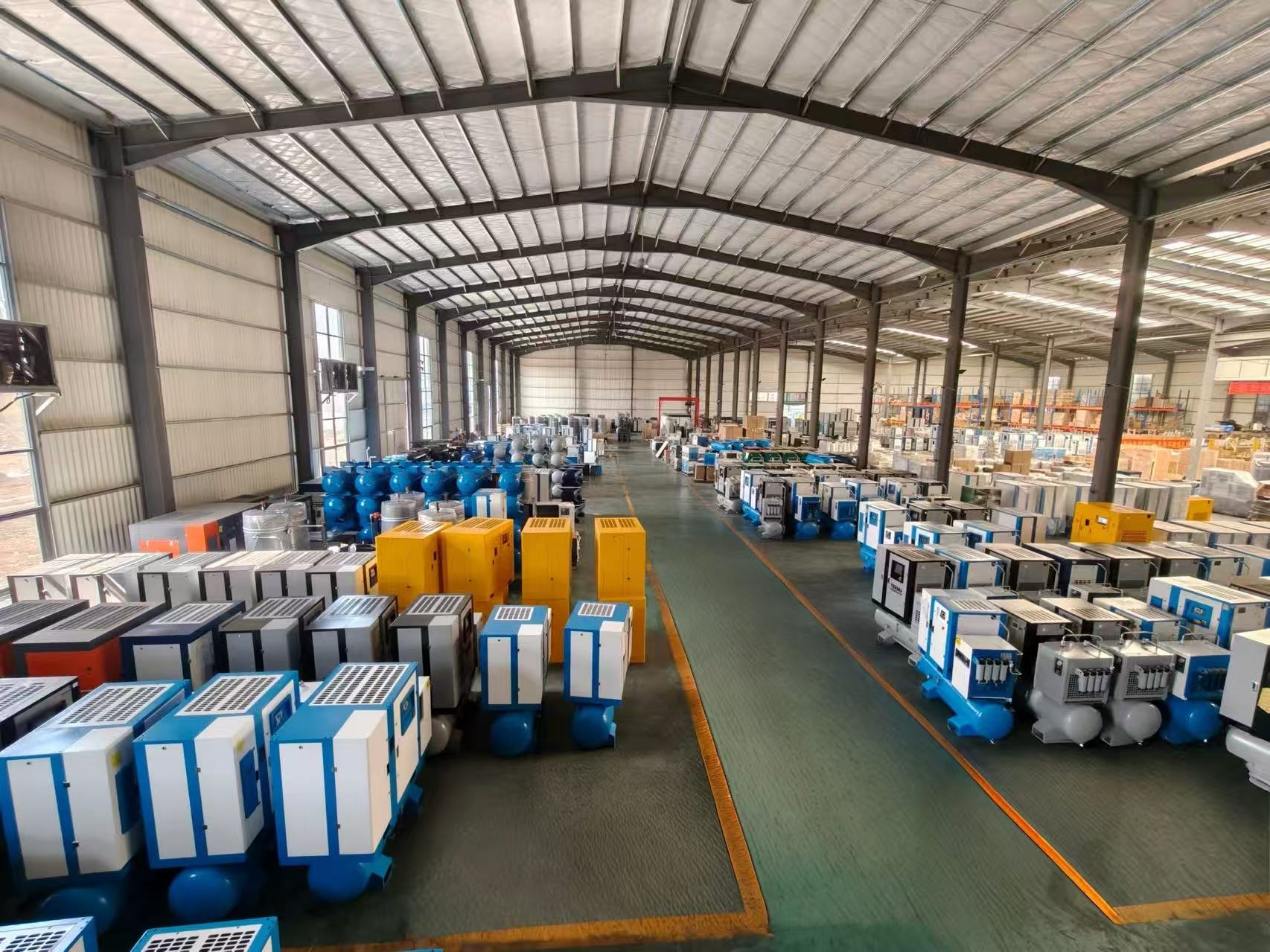
For a small upgrade, the supplier's ability to ship one unit quickly matters as much as the specification. UMW Air (Shandong UMW Air Tech Co., Ltd) states a minimum order quantity of one unit and a three-day lead time, with OEM/ODM customization available for colour, logo and voltage. The company reports a 2,000 m² facility, 200 employees, a 40-person R&D team and an annual output of 12,000 units against a monthly capacity of 1,000 units, exporting to the EU, the US, the Middle East and Southeast Asia. UMW Air publishes ISO 9001:2015 quality management and CE (Machinery/EMC Directives) certification information on its own certification page; as with any supplier, the certificate number, issuing body, validity date and the models actually covered should be checked against the quotation documents before approval.
After-sales support is stated as 24/7 technical support by email or phone, with remote troubleshooting and guidance. For a workshop whose air supply now drives production, remote diagnosis is often the difference between a shift lost and a shift salvaged, because most air-system faults — pressure band drift, moisture carry-over, filter blockage — are visible in readings before they are visible on the floor.
Frequently Asked Questions
Does the Micro series meet CE and ISO requirements for a workshop upgrade?
UMW Air publishes ISO 9001:2015 quality management certification and CE certification relating to the Machinery and EMC Directives. CE is a conformity marking rather than a single certificate, so the buyer should obtain the declaration of conformity and confirm that the specific model and voltage variant being purchased are covered, and that the documentation matches the destination market's requirements.
What size rotary screw air compressor does a CNC machine need?
It depends on how many machines run at once and what they drive. The Micro series offers 4 kW, 5.5 kW and 7.5 kW within a series maximum airflow of 1.1 m³/min and an 8–13 bar pressure range. Start by listing simultaneous consumers — clamp and tool-change actuators, pneumatic tools, dust removal — and the pressure each needs at the point of use, then match that to the model-specific free air delivery at the working pressure.
What supporting equipment has to be added to a Micro compressor?
The matched equipment for this application class includes an air dryer, air tank, line filter, inverter and controller. The compressor supplies the air; the dryer removes moisture, the filter controls particulate and oil carry-over, the tank buffers short demand spikes, and the inverter and controller determine how the unit responds to changing demand. Specifying all five at once avoids retrofitting treatment after a moisture or pressure problem appears.
How much does energy efficiency actually change the running cost?
Category research reports 20%–30% energy savings for permanent magnet VSD compressors versus traditional induction motors, and one manufacturer claims up to 60% for VSD against fixed-speed units under its own conditions. Neither figure transfers directly to a specific workshop. The useful number comes from annual operating hours, the real load profile and the specific energy of the model quoted — and from confirming whether variable-speed drive is included in the unit being purchased.
Will a compact unit fit a small workshop without a noise problem?
The 140 L tank is integrated into the package and the enclosure is sheet metal, which reduces the number of separate components and contains mechanical noise. The supplied specification does not publish a sound pressure level, so request the measured value at one metre for the exact model and check it against the working environment. Position also matters: enclosure, distance and where the air intake faces often decide whether a compliant unit is a comfortable one.
Can I trial one unit before committing to a larger order?
UMW Air states a minimum order quantity of one unit with a three-day lead time, and conducts factory pre-shipment testing. Combined with 24/7 email and phone technical support and remote troubleshooting, that allows a workshop to install one unit, run it through a full production cycle, record the pressure baseline and then decide whether to standardise. If you want to check the fit against your own machine list before ordering, you can send the duty details through the UMW Air contact channel and ask for the model-specific datasheet.
Conclusion
A space-constrained air upgrade is decided by three physical facts before it is decided by price: how much room the package occupies, how much electrical capacity it needs, and how much noise it puts into the room. The UMW Air Micro rotary screw series addresses those facts directly — 4 kW, 5.5 kW and 7.5 kW ratings, 1.1 m³/min series maximum airflow, 8–13 bar, an integrated 140 L tank, a single-stage screw air end and a sheet-metal enclosure — and it does so within a package that can be installed where the machines are, rather than in a plant room that no longer exists.
The discipline that makes the upgrade work is the same one that makes any air system work: measure demand at the point of use, specify the dryer, tank, filter, inverter and controller as one system, verify the tested configuration before shipment, and record a commissioning baseline so that future drift is measurable rather than arguable. Within that frame, a compact screw compressor stops being a compromise on space and becomes a decision the workshop can defend for the life of the production line.
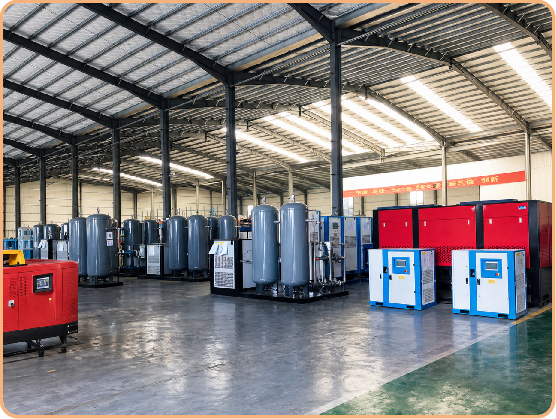
Considering a compact screw compressor for a space-limited upgrade? UMW Air supplies single units from its Micro series with factory pre-shipment testing and 24/7 technical support, so a workshop can validate the fit on one machine before standardising across a line.
Have Questions or Need More Details?
Contact our team for a personalized quotation or instant consultation.
Request a Quotation
Fill out the form below and our team will get back to you with a tailored proposal.
WhatsApp Direct Chat
Prefer to chat in real-time? Message us on WhatsApp for instant assistance & quick answers.
- Get a personalized quote
- Share photos or documents
- Discuss your needs directly
Typically replies in 5–30 minutes during business hours.