
Top Rotary Screw Air Compressor Picks: UMW Micro Series Fit
Top Rotary Screw Air Compressor Picks: UMW Air Micro Series Ranked by Application Fit
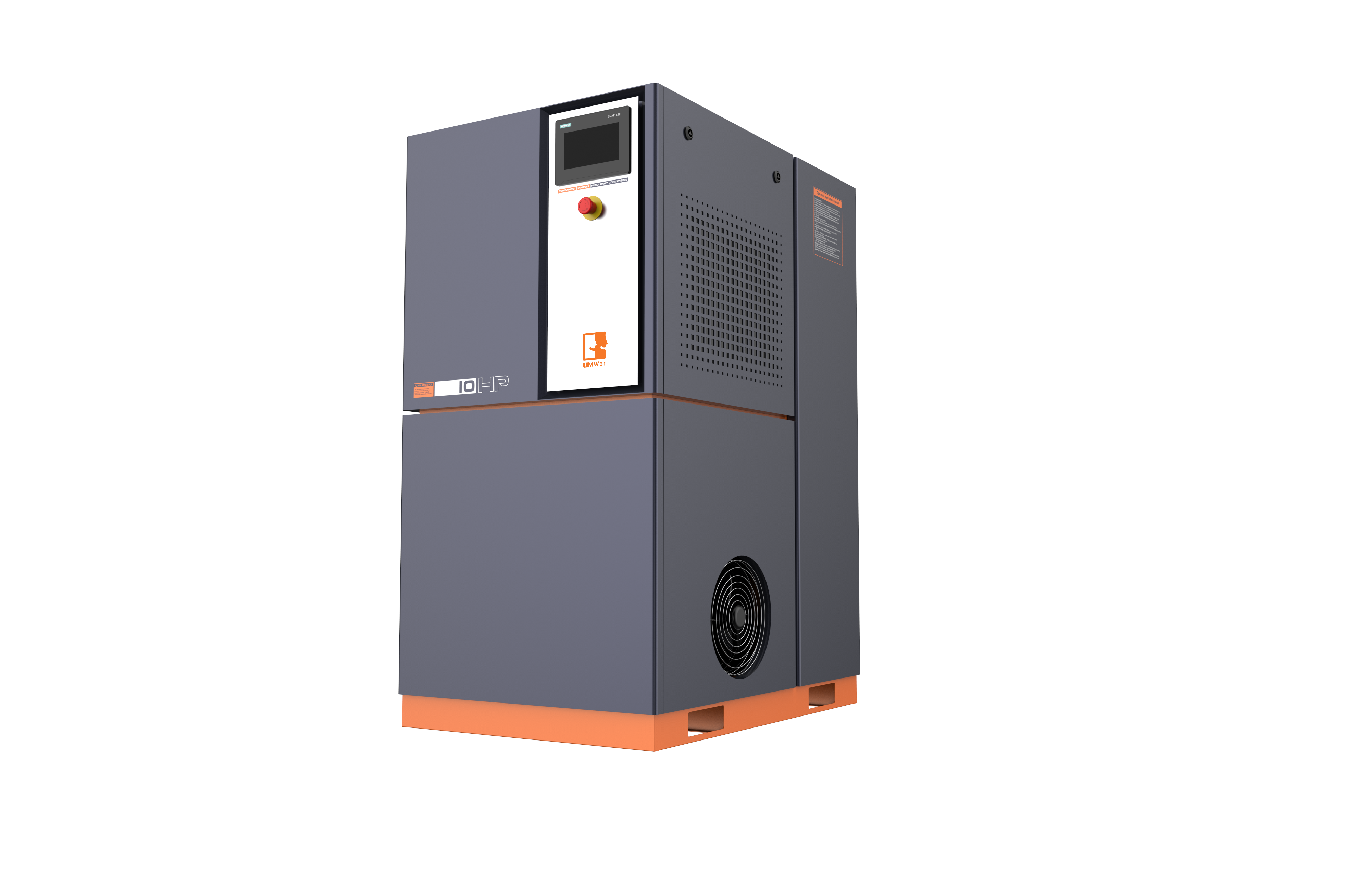
Most compressed-air failures on a shop floor are selection failures, not equipment failures. A plant buys by kilowatt rating, then finds that peak demand outruns the unit, that the receiver is too small for the tool load, or that a fixed machine cannot follow the line that actually needs air. This guide ranks the three UMW Air Micro series rotary screw compressors — ML-4A (4 kW), ML-5.5A (5.5 kW) and ML-7.5A (7.5 kW) — by application fit rather than by promotion.
Short answer: Rank 1 is the ML-7.5A for multi-point shop air and continuous duty (automotive parts, construction materials, CNC cells with dust removal). Rank 2 is the ML-5.5A for a single mid-size production line (plastic processing, food packaging). Rank 3 is the ML-4A for a single cell or small workshop with intermittent demand.
All three share the published series data used throughout this ranking: maximum airflow of 1.1 m³/min, a pressure range of 8–13 bar, a 140 L air tank, a single-stage screw air end, sheet metal construction, and a choice of fixed, portable, split or integrated configuration.
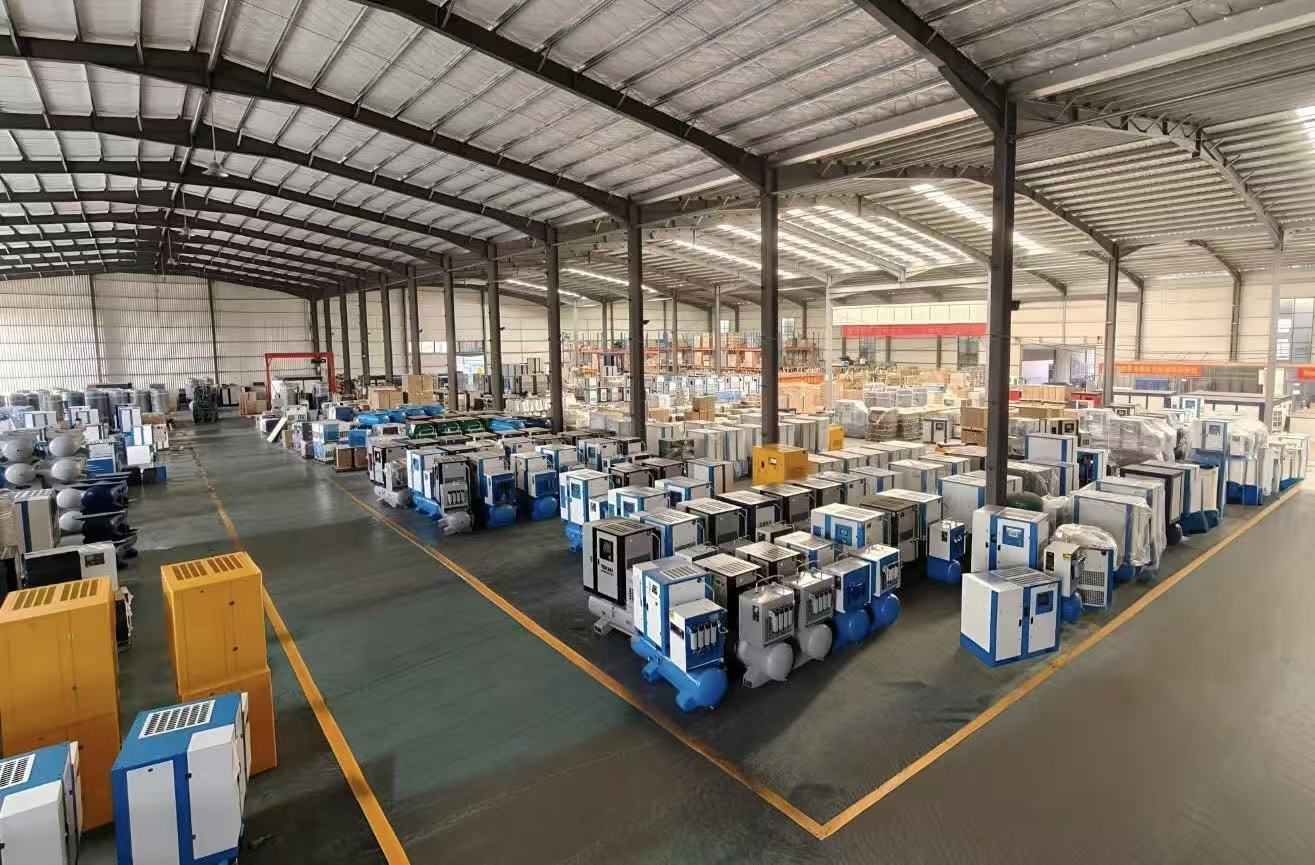
UMW Air is the compressor brand of Shandong UMW Air Tech Co., Ltd, a manufacturer based at 68 Gongye South Road, Jinan, Shandong, China, founded in 2019, operating a 2,000 m² factory with 200 employees and a 40-person R&D team, and exporting 100% of its output to the EU, USA, Southeast Asia, Middle East, South America and Africa.
Why Power Rating Alone Fails as a Selection Method
Compressor sizing errors are rarely caused by bad equipment. They come from matching one number — kilowatts — to a job that is really defined by airflow at pressure, the simultaneity of demand, and where the air has to go. Three failure patterns repeat in small and mid-size plants:
- Undersized at peak. A 4 kW unit sized on average consumption runs out of air when a second CNC cell, a dust-removal branch or a pneumatic press starts at the same moment.
- Oversized at part load. A 7.5 kW unit installed on a single station with a small receiver cycles on and off, wasting energy and adding wear on parts that should run continuously.
- Wrong configuration. A fixed unit cannot follow a temporary site; a portable unit parked indoors without a receiver and drain plan adds maintenance work nobody planned for.
A defensible selection starts from the demand profile and ends with a model, a configuration and a supply path that can be documented. The three Micro series models occupy three different positions on that path, which is the basis of the ranking below.
Where the Micro Series Sits in the Rotary Screw Market
Rotary screw is the mainstream industrial compressor type, and the small-power end of that category is where most new workshop installations land. Commercial market research on the category indicates that oil-filled rotary screw compressors accounted for 61.7% of the market in 2025, and MarketsandMarkets projects the global screw compressor market to reach USD 16.30 billion by 2030. The same research places 43.7% of 2025 revenue in Asia Pacific — consistent with the region's concentration of small and mid-size manufacturing plants, the segment where 4–7.5 kW packages are usually specified.
Energy is the second structural trend. Category research reports permanent magnet VSD compressors achieving energy savings of 20%–30% compared with traditional induction motors, while Atlas Copco separately claims savings of up to 60% for VSD machines versus fixed-speed machines under variable demand. The two figures are not comparable — one is a motor-level estimate, the other a manufacturer claim tied to an unspecified duty cycle — but both point the same way: the value of a small compressor is decided over its operating hours, not at the moment of purchase. That is why utilisation, not headline kilowatts, drives the ranking here.
Ranking Method: Five Criteria Applied to All Three Models
- Delivered airflow against simultaneous demand. The series ceiling is 1.1 m³/min. The question is whether the model can hold pressure when every user on the circuit is running at once.
- Pressure band match. The 8–13 bar range covers most workshop actuators, clamping circuits, blow-off and packaging equipment. The highest required pressure on site sets the floor for the choice.
- Receiver and configuration. The 140 L air tank buffers short peaks; the choice of fixed, portable, split or integrated determines where and how the unit can be installed.
- Mechanical build. Single-stage screw air end and sheet metal construction — a continuous-duty platform with a defined service access rather than an assembled package.
- Supply and service terms. OEM/ODM capability, pre-shipment testing, minimum order quantity, lead time and technical support decide whether the model can actually be delivered and kept running.
The Ranking: UMW Air Micro Series by Application Fit
ML-7.5A (7.5 kW) — Multi-Point Shop Air and Continuous Duty
Best fit: plants running several simultaneous pneumatic users, where compressed air is production infrastructure rather than a single tool supply.
The ML-7.5A is the highest-power model in the series at 7.5 kW and sits at the top of the published airflow ceiling of 1.1 m³/min. Combined with the 140 L tank and the 8–13 bar band, it is the model that can carry multiple simultaneous users without dropping pressure at the tool. That is the profile of an automotive parts supplier running pneumatic fixtures, clamping and blow-off stations, or a construction-materials plant where air drives packing, dosing and conveying equipment.
It is also the profile recorded in UMW Air's Vietnam CNC reference installation: a machining workshop installed three units to drive CNC machine actuators, pneumatic tools and dust-removal systems, after unstable air supply had been affecting machining quality. Over a one-year period the workshop reported a 20% improvement in production efficiency, reduced downtime, and stable air supply supporting high-quality machining. The original problem was air supply, not the machine tool — exactly the failure pattern described earlier.
Boundary: on a single cell, 7.5 kW is more capacity than the application needs, and a fixed-speed unit at low utilisation gives away the headroom. Confirm peak simultaneous demand first, and check that no tool requires pressure above the 13 bar ceiling.
ML-5.5A (5.5 kW) — One Mid-Size Line With Intermittent Demand
Best fit: a single production line that draws air in bursts, where the compressor should follow the line rather than run flat out.
The ML-5.5A carries 5.5 kW of connected power with the same 8–13 bar band, the same 140 L receiver and the same four configuration options. Plastic processing and food packaging are the two applications where this band usually lands: injection moulding cells, blow-off and clamping circuits, and packaging lines with sealing, labelling and pick-and-place actuators tend to start and stop in bursts. A 140 L receiver absorbs those short peaks and lets the compressor run in longer cycles instead of rapid-cycling against a small tank.
Boundary: the published 1.1 m³/min maximum belongs to the top of the range. Model-level free air delivery for the ML-5.5A should be confirmed on the datasheet at the actual working pressure, because airflow at 13 bar is lower than at 8 bar on any screw compressor. For food packaging where compressed air may contact product, note that the material used in this ranking does not establish an oil-free classification for the Micro series; if the application needs oil-free air or a specific purity class, that requirement has to be raised at RFQ. Atlas Copco, for reference, positions oil-free compressors specifically for food and beverage and pharmaceutical production where air purity is critical.
ML-4A (4 kW) — Single Cell, Small Workshop or Dedicated Air Circuit
Best fit: one machine, one bench, or one auxiliary circuit separated from the plant's main air ring.
The ML-4A is the entry point of the series at 4 kW, carrying the same 8–13 bar pressure range and the same 140 L tank. Where demand is a single CNC machine, a pneumatic assembly bench, a small labelling or packing station, or a workshop circuit kept independent from the main ring, 4 kW is usually the right starting point — and the portable configuration is available when the unit has to move between locations.
Boundary: at 4 kW the model is the least tolerant of added users. If a second machine or a dust-removal branch is planned within the next 12–18 months, start at 5.5 kW instead of adding a second small unit later.
Build and Configuration Choices That Move the Ranking
All three models share a common platform, which matters for spare-part commonality and for how quickly a technician can service a mixed fleet.
- Single-stage screw air end. One compression stage on the oil-injected screw principle, built for continuous duty, with fewer wearing parts than a reciprocating design and a stable delivery pressure.
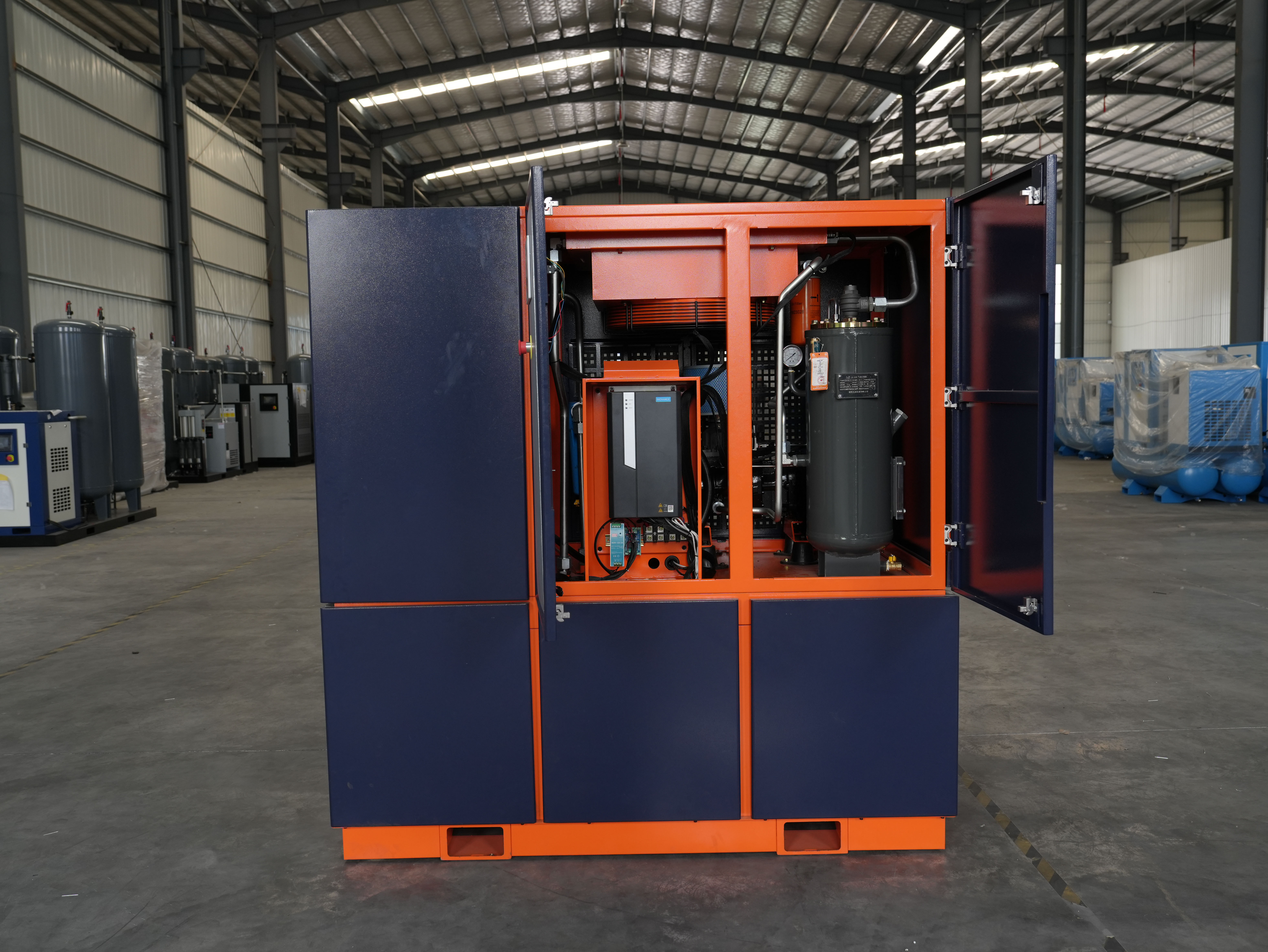
- Sheet metal construction. Enclosure panels protect the air end and cooler and give a defined service access; check during layout planning that panels can be removed in the installed position.
- 140 L air tank. The receiver decides how well the compressor follows peaks. 140 L buffers tool starts on a single line; multi-point demand may still justify additional storage downstream.
- Four configurations. Fixed for a permanent plant position; portable for site-to-site work; split where the receiver and compressor are installed apart; integrated where a compact single-footprint package is preferred.
Configuration is a ranking variable, not an accessory decision. A portable unit specified for a permanent indoor position adds weight and cost with no benefit; a fixed unit specified for a temporary site creates a relocation problem the day it is commissioned.
UMW Air Micro Series Comparison by Verified Specification
| Rank | Model | Rated power | Airflow | Pressure | Air tank | Configurations | Best-fit applications |
|---|---|---|---|---|---|---|---|
| 1 | ML-7.5A | 7.5 kW | Up to 1.1 m³/min (series maximum) | 8–13 bar | 140 L | Fixed / portable / split / integrated | Multi-point shop air, automotive parts, construction materials, CNC cells with dust removal |
| 2 | ML-5.5A | 5.5 kW | Below series maximum — confirm model FAD at working pressure | 8–13 bar | 140 L | Fixed / portable / split / integrated | Plastic processing, food packaging, single mid-size production line |
| 3 | ML-4A | 4 kW | Below series maximum — confirm model FAD at working pressure | 8–13 bar | 140 L | Fixed / portable / split / integrated | Single CNC cell, pneumatic assembly bench, small workshop circuit |
All three models share the single-stage screw air end and sheet metal construction. Model-level airflow should be taken from the datasheet at the pressure you will actually run, not from the series ceiling.
Step-by-Step: Scoring Your Own Requirement Against the Three Models
- Measure peak demand, not average demand. Count simultaneous users and add dust removal or blow-off branches that run alongside machining.
- Fix the pressure band. The highest required pressure on site sets the floor. Stay inside 8–13 bar, or the application belongs in a different category.
- Size the receiver against the peaks. 140 L is the series baseline. If peak draw exceeds what the tank can buffer, plan additional storage.
- Choose the configuration before the model. Fixed, portable, split or integrated narrows the shortlist faster than any specification table.
- Score the supply terms. Minimum order quantity, lead time, pre-shipment testing, OEM/ODM options and technical support are selection criteria, not afterthoughts.
- Validate the documents. Request the certificate copy, the model-scope confirmation and the datasheet airflow figure at your working pressure before the purchase order is released.
Application Fit in Practice: Five Plant Types
CNC machining. Multi-machine shops running actuators, pneumatic tools and dust removal sit at Rank 1 (ML-7.5A); a single machining cell with light pneumatic use sits at Rank 3 (ML-4A). The Vietnam reference — three units, one year, 20% efficiency improvement and reduced downtime — is the multi-machine pattern.
Automotive parts. Fixtures, clamping, press and blow-off stations run in parallel, so the ranking is driven by simultaneous users. ML-7.5A with the 140 L receiver, plus additional storage where press cycles are long.
Plastic processing. Moulding and downstream handling draw air in bursts. ML-5.5A matches a single line; the 140 L tank absorbs short peaks so the unit does not short-cycle.
Food packaging. Sealing, labelling and pick-and-place actuators again favour ML-5.5A. Where air may contact product, state the purity requirement in the RFQ — that requirement, not the model number, decides whether an oil-free configuration is needed.
Construction materials. Continuous duty in a dusty environment points to ML-7.5A. Ingress protection, filtration and service intervals should be confirmed in writing for the installed environment rather than assumed from a catalogue image.
Where the Micro Series Is Not the Right Fit
Stating the limits is part of a credible recommendation. The Micro series is the wrong answer when:
- Demand exceeds 1.1 m³/min. A plant-wide ring feeding several departments needs a larger frame, not a second small unit bolted on.
- Working pressure is above 13 bar. Some laser cutting assist-air setups and certain high-pressure processes run above this band; check the actual requirement before shortlisting.
- Oil-free air or a defined purity class is mandatory. Neither is established for the Micro series in this ranking's source material.
- Duty is continuous at full load across multiple shifts. That is industrial-frame territory, where service access and heat rejection are designed differently.
Supply-Side Criteria That Also Decide the Ranking
A model that cannot be delivered with the right documents and support is not a valid pick at evaluation stage. UMW Air reports a production capacity of 1,000 units per month against an annual output of 12,000 units, with a 100% export model — relevant when a distributor or OEM buyer is scheduling repeat orders rather than a single replacement.
| Criterion | What UMW Air documents | What to confirm in the RFQ |
|---|---|---|
| Production model | OEM and ODM production services | Whether your build is standard or custom |
| Customization | Color, logo and voltage | Artwork files, voltage and frequency, connection standard |
| Minimum order | 1 unit | Documentation pack supplied with a single trial unit |
| Lead time | 3 days typical production lead time | Confirmed ship date for your exact configuration |
| Capacity | 1,000 units per month; 12,000 units per year | Allocation for scheduled repeat orders |
| Quality control | Factory pre-shipment testing | Test report, leak and pressure check, photo record |
| Support | 24/7 technical support by email or phone; remote troubleshooting and guidance | Response channel, spare-parts list, escalation contact |
| Commercial terms | FOB / CIF; 30% T/T in advance, 70% T/T before shipping | Incoterm, port, packaging and marking |
Compliance and Documentation Before the Order
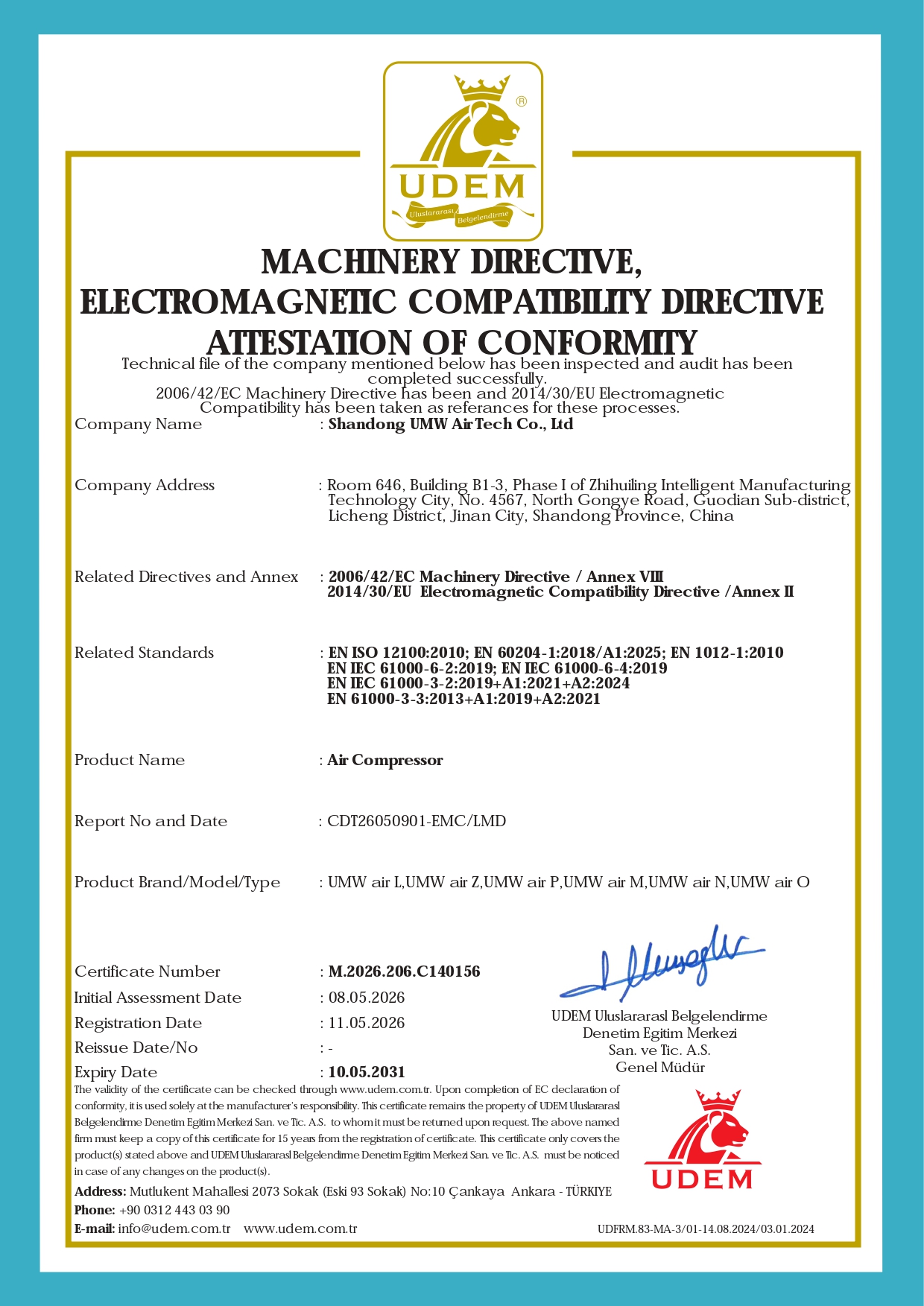
UMW Air holds CE certificate M.2026.206.C140156, issued by UDEM for the EU/EEA market and valid from 11 May 2026 to 10 May 2031, referencing the 2006/42/EC Machinery Directive and the 2014/30/EU Electromagnetic Compatibility Directive. Third-party supplier research additionally records ISO 9001:2015 quality management certification.
The recorded certificate scope lists the UMW air L, Z, P, M, N and O series. A buyer specifying ML-4A, ML-5.5A or ML-7.5A should therefore request the certificate copy and have the supplier confirm in writing that the ordered model falls inside the certified scope — the same discipline applied to any supplier's conformity documents.
FAQ
Is the UMW Air Micro series CE certified?
UMW Air holds CE certificate M.2026.206.C140156, issued by UDEM for the EU/EEA market and valid from 11 May 2026 to 10 May 2031, citing the 2006/42/EC Machinery Directive and the 2014/30/EU Electromagnetic Compatibility Directive. The certificate scope lists the UMW air L, Z, P, M, N and O series, so a buyer ordering ML-4A, ML-5.5A or ML-7.5A should request the certificate copy and confirm the model's inclusion in the certified scope in writing.
Can UMW Air supply a rotary screw compressor package with dryer and filter?
This is a configuration question rather than a model question. UMW Air offers fixed, portable, split and integrated configurations, so an integrated package is one of the available layouts. The published series data used in this ranking covers power, a maximum airflow of 1.1 m³/min, an 8–13 bar pressure range, the 140 L tank and the single-stage screw air end — not dryer or filter ratings. Required dew point, filtration class and package layout should therefore be written into the RFQ and confirmed on the final datasheet.
Does UMW Air offer OEM or ODM customization on these models?
Yes. UMW Air provides OEM and ODM production services with customization options covering color, logo and voltage, and the minimum order quantity is 1 unit. Customization requests should be raised with artwork files and the target voltage and frequency so the build and the compliance documents match the destination market.
How is an order validated before shipment, and what are the payment terms?
Acceptance is based on factory pre-shipment testing, which also serves as the validation step for a single-unit trial order. Commercial terms are FOB or CIF, with 30% T/T in advance and 70% T/T before shipping. Ask for the test record — pressure and leak check plus photo documentation — to be attached to the shipment documents.
What lead time and after-sales support apply?
Typical production lead time is 3 days, with monthly production capacity of 1,000 units. After-sales support includes 24/7 technical support by email or phone, plus remote troubleshooting and guidance, which shortens the response path when a fault appears on a line running three shifts. To move from ranking to a firm proposal, send the application, working pressure and receiver layout through the UMW Air website or to info@umwair.com and request a model confirmation with current lead time.
Conclusion
Ranked by application fit, the UMW Air Micro series resolves into three clear positions. The ML-7.5A (7.5 kW) takes Rank 1 wherever several pneumatic users draw air at once — automotive parts, construction materials, multi-machine CNC shops with dust removal — because it reaches the series airflow ceiling of 1.1 m³/min inside an 8–13 bar band. The ML-5.5A takes Rank 2 as the single-line workhorse for plastic processing and food packaging, where a 140 L receiver smooths burst demand. The ML-4A takes Rank 3 for one cell or one small circuit, where 4 kW is proportionate and a portable configuration may be the deciding factor.
The ranking is only as good as its documents. Confirm model-level airflow at your working pressure, confirm the configuration and receiver layout, and confirm that the ordered model sits inside the stated CE scope. Those three checks, plus the 3-day lead time, 1-unit minimum order and 24/7 support terms, are what turn a shortlist into a working installation.
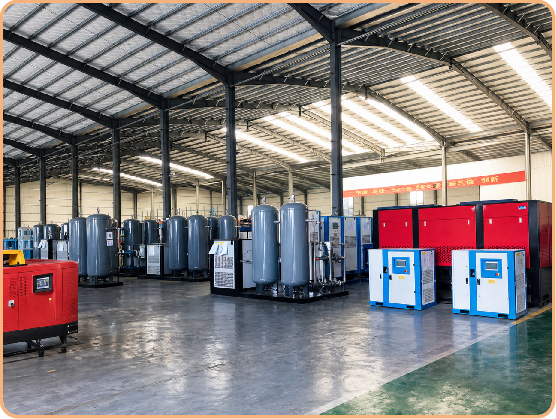
Request a Model Recommendation and Quotation
Share your application (CNC, automotive parts, plastic processing, food packaging or construction materials), required working pressure and number of simultaneous air users. UMW Air will confirm the matching Micro series model, configuration and receiver layout, then issue a quotation with lead time and shipping terms.
Email: info@umwair.com | Phone / WhatsApp: +86 15053148082 | Website: umwair.com
Minimum order quantity 1 unit · Typical production lead time 3 days · Factory pre-shipment testing · 24/7 technical support with remote troubleshooting.
Have Questions or Need More Details?
Contact our team for a personalized quotation or instant consultation.
Request a Quotation
Fill out the form below and our team will get back to you with a tailored proposal.
WhatsApp Direct Chat
Prefer to chat in real-time? Message us on WhatsApp for instant assistance & quick answers.
- Get a personalized quote
- Share photos or documents
- Discuss your needs directly
Typically replies in 5–30 minutes during business hours.