
Ranked: 5 UMW Screw Air Compressor Types for Metal, Plastics, Automotive, and Food Plants
Five UMW Air screw compressor families cover most factory air demands, but they do not rank equally for a plant that runs around the clock. For metal processing, plastics, automotive and food production, the order is: 1) Heavy-Duty, 2) Direct-Driven, 3) Air-Cooled, 4) Stationary, 5) Diesel Mobile. Heavy-Duty takes first place because continuous 24/7 duty is the one requirement those four industries share. Diesel Mobile sits last for a fixed plant, yet it is the first choice when the work itself moves — construction sites, remote installations and positions without reliable grid power.
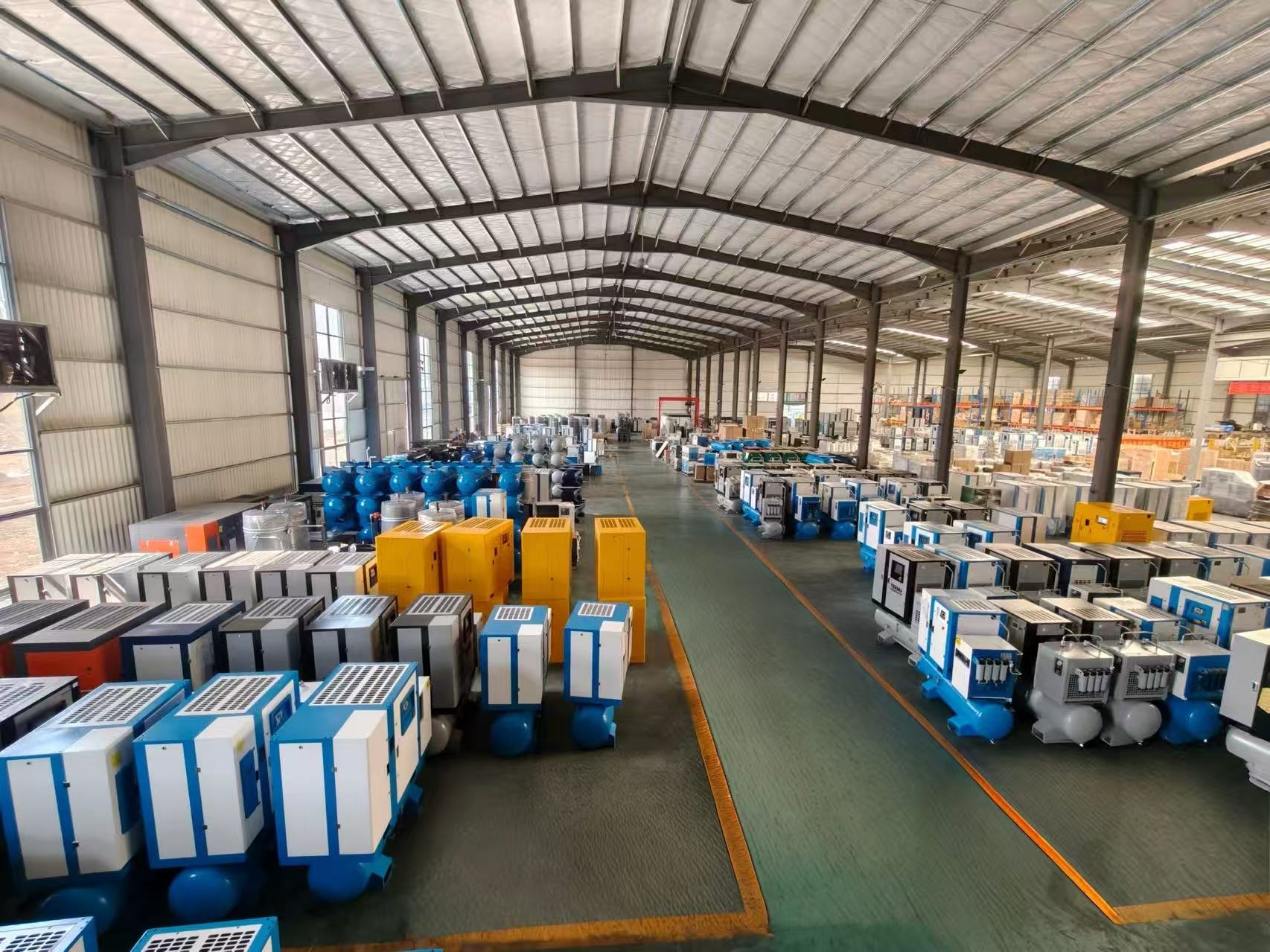
This guide is written for the buyer who has already chosen screw technology and now has to decide the family, the pressure band and the supporting equipment for a specific plant. It orders the five families by fit for continuous industrial production, then states plainly where each one stops being the right answer.
Why the Type Decision Comes Before the Model Number
Most compressed air problems in a factory begin with the wrong family, not the wrong model. A diesel mobile unit standing inside a food hall, or an air-cooled package pushed into a sealed room, will disappoint the plant no matter how closely its flow and pressure match the tools. Choosing the family first narrows the specification work: once the duty cycle and the installation conditions are fixed, the flow, pressure and control type can be matched with far less risk of oversizing.
The five families also behave differently over a multi-year horizon. A unit ordered for the wrong duty either runs outside its design pattern, which raises service attention, or runs comfortably below its capacity, which means the plant paid for capability it never uses. Both outcomes are avoidable at the selection stage, which is what this ranking is for.
How This Ranking Was Built
Each family was assessed on five criteria that decide whether a compressor survives a production environment rather than merely passing a commissioning test:
- Duty-cycle fit. Whether the family suits continuous 24/7 operation or occasional, intermittent use. This is the single largest differentiator between screw and piston technology and it drives the whole ranking.
- Application fit. How closely the family matches the air demand pattern of metal processing, plastics, automotive, food and construction work.
- Energy behaviour under continuous load. What happens to efficiency when the unit runs loaded for long periods rather than in short bursts.
- Installation requirements. Cooling method, fixed or mobile mounting, room volume, ventilation and service clearance.
- System completeness. How easily the family integrates with an air dryer, a controller, filtration and a receiver tank to become a working compressed air system rather than a single machine.
This is an editorial ranking of UMW Air's five product families for the plant types named in the title. It is not a market-share ranking, and position reflects application fit for continuous production rather than a quality verdict between families — each one is the correct purchase somewhere.
| Rank | UMW Air family | Strongest plant fit | Why it holds this position |
|---|---|---|---|
| 1 | Heavy-Duty Screw Air Compressor | Metal processing, automotive, plastics on three shifts | Built for continuous high-load duty; screw technology supports 24/7 operation with efficiency up to 95% under continuous load |
| 2 | Direct-Driven Screw Air Compressor | Automotive assembly and paint, food packaging lines | Direct-coupled drive removes the belt transmission, supporting steady output where pressure stability affects the product |
| 3 | Air-Cooled Screw Air Compressor | Plastics plants and metal workshops without cooling water | No cooling water circuit needed; heat rejected through a high-efficiency radiator and cooling fans |
| 4 | Stationary Screw Air Compressor | Food and beverage, fixed factory installations | Fixed, hard-piped installation that organises dryer, filters, receiver and controller in one place |
| 5 | Diesel Mobile Screw Air Compressor | Construction, remote and mobile sites (first choice there) | Carries its own power; the wrong purchase for a plant whose compressor never leaves the building |
Rank 1 — Heavy-Duty Screw Air Compressor
Heavy-duty ranks first because the four industries in this article share one operating pattern: production that does not stop. A metal fabricator running a laser cutter alongside a bank of CNC machines, an automotive parts line, a plastics plant with injection moulding machines on three shifts, and a food plant holding process pressure all draw air continuously. In that setting, an interruption costs considerably more than the electricity the compressor consumes.
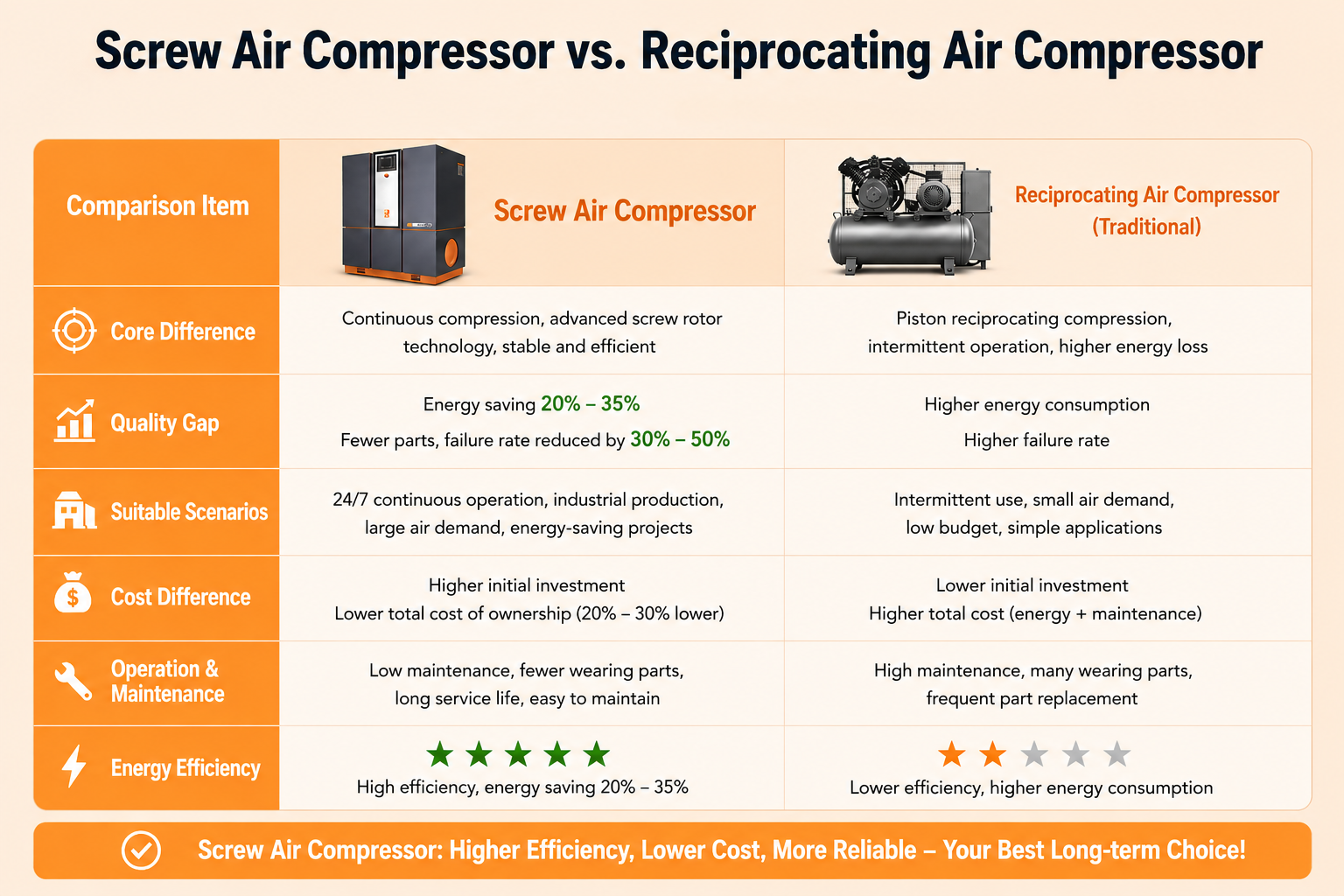
The documented case for screw technology in this duty is direct. A screw compressor is built for 24/7 operation, where a piston compressor is an intermittent machine; under continuous high-load conditions a screw unit reaches energy efficiency up to 95%, against roughly 65–70% for a piston compressor that is better suited to intermittent work. It also carries fewer moving parts and a longer service interval, which reduces maintenance load on a plant that cannot afford unplanned stops. The heavy-duty family is the configuration positioned for exactly that profile.
Sizing matters as much as the family. UMW Air states that its screw compressor range covers 4 kW to 355 kW and 8 bar to 25 bar working pressure, so the heavy-duty unit can be matched to measured flow and pressure instead of being oversized for reassurance. Oversizing is a common cause of poor part-load behaviour, because the plant pays for capacity that stays idle through most of the shift.
Where it stops being the right answer: a single-shift workshop with modest air demand rarely consumes what a heavy-duty frame provides. If the plant runs one shift with long idle periods between jobs, the additional capability is bought and not used, and a smaller family in the same range deserves the comparison.
Rank 2 — Direct-Driven Screw Air Compressor
Direct-driven ranks second because it removes one of the few wearing links in a screw compressor: the belt drive. In a direct-driven unit the motor is coupled to the airend without a belt transmission, so there is no belt tension to check and no belt to replace in the drive path, and output is not affected by belt slip as the machine ages.
That characteristic matters most where pressure stability is part of product quality rather than operator comfort. Automotive assembly and paint operations react badly to pressure swings, and food lines can see filling, capping and packaging disturbed by an unstable supply. Where the plant's air demand is steady and the compressor runs loaded for most of the day, a direct-coupled drive keeps the relationship between motor speed and airend speed fixed.
Where it stops being the right answer: direct coupling relocates maintenance attention rather than eliminating it — coupling condition and alignment move onto the service schedule in place of belt checks. It also does not, by itself, solve part-load inefficiency; that is the function of variable speed control. Drive type and control type should be specified together, because they answer two different questions.
Rank 3 — Air-Cooled Screw Air Compressor
Air-cooled ranks third because it is the configuration that makes a screw compressor installable almost anywhere — at the cost of being more sensitive to the room it stands in. The unit rejects heat to air through a radiator and cooling fans, so no cooling water circuit, no water treatment and no water-side maintenance are needed. For a plastics plant or a metal workshop where water infrastructure is not available at the compressor position, that removes an entire project scope from the installation.
UMW Air's documented approach to the main risk in this design is specific: overheating is controlled with a high-efficiency radiator and cooling fans, and thermal tests are performed on every unit before shipment to confirm that radiators and fans are functioning properly. That test addresses the failure mode buyers worry about most in air-cooled machines.
Where it stops being the right answer: an air-cooled compressor is only as good as its ventilation. In a closed room, or in a plant where summer ambient temperature climbs well above the design point, the same unit delivers less air and runs hotter. If the compressor room cannot be given adequate airflow and intake conditions, the location or the cooling arrangement should be reconsidered before the order, not after commissioning.
Rank 4 — Stationary Screw Air Compressor
Stationary ranks fourth because it describes an installation as much as a product family: a fixed unit, hard-piped into the plant, usually standing in a dedicated compressor room and designed to be part of a built compressed air system rather than moved between jobs.
For a food plant that needs a defined air quality at the point of use, or a factory where the compressor room doubles as the maintenance workshop, a stationary installation is the cleanest way to organise the whole system — dryer, filtration, receiver and controller in one place, with pressure and flow designed once and validated at commissioning. It also keeps service access predictable, which matters more over a ten-year horizon than it does on the day of delivery.
Where it stops being the right answer: it cannot follow the work. Plants that relocate equipment between sites, or that need air at a temporary position, gain nothing from a fixed installation — and a fixed unit asked to serve a shifting load pattern will usually be either oversized or under-served.
Rank 5 — Diesel Mobile Screw Air Compressor
Diesel mobile ranks fifth for the four fixed plant types in this article, and first for work that moves. Site work — construction, remote installations, pipeline and road work, and any location where a grid connection is unavailable or unreliable — needs an air source that carries its own power. A diesel-driven mobile screw compressor does that; a stationary electric unit cannot.
The position in this ranking is therefore not a verdict on the machine. It reflects one fact about the buyer's situation: a diesel mobile unit is the wrong purchase for a plant whose compressor never leaves the building, because fuel supply, engine servicing and exhaust management are then added to the plant's workload for no operational gain.
Where it stops being the right answer: indoor food and automotive environments, where exhaust and engine noise are incompatible with the process; and fixed sites with continuous, large air demand, where the running-cost structure of an electric drive is the more sensible basis for a long-term decision.
Matching the Five Types to Metal, Plastics, Automotive, Food and Construction
The ranking answers the general question. The application decides the specific one, because two plants with the same air demand can need different families once duty hours, ambient conditions and air quality are taken into account.
| Plant type | First choice | Also evaluate | Decision driver |
|---|---|---|---|
| Metal processing (CNC machining, laser cutting) | Heavy-Duty (Rank 1) | Direct-Driven | Continuous draw across several machines; pressure stability affects cut quality and tool life |
| Plastics (injection moulding, extrusion) | Heavy-Duty (Rank 1) | Air-Cooled | Three-shift duty in a warm hall; ventilation and radiator performance become decisive |
| Automotive (assembly, paint, components) | Direct-Driven (Rank 2) | Heavy-Duty | Steady line pressure; long loaded hours with little tolerance for fluctuation |
| Food and beverage | Stationary with dryer (Rank 4) | Direct-Driven | Fixed installation, defined air quality at the point of use, dryer selected with the compressor |
| Construction and remote sites | Diesel Mobile (Rank 5) | — | No grid power; the air source must be transportable and self-powered |
Two patterns in that table are worth stating explicitly. First, the top two ranks overlap in most plants: a heavy-duty frame and a direct-driven unit are frequently compared for the same automotive or metalworking line, and the deciding question is whether pressure stability or raw continuous capacity matters more. Second, the food industry is the one case where the compressor family alone does not settle the specification — the air treatment package has to be chosen with it.
Why 24/7 Operation Reorders the List
Continuous duty is the factor that separates these families more than any single specification. A plant running three shifts accumulates roughly three times the running hours of a single-shift operation in the same calendar year, which changes both the energy calculation and the maintenance calendar.
On energy, the documented comparison is between screw and piston technology rather than between the five UMW Air families: a screw compressor reaches energy efficiency up to 95% under continuous high-load conditions, while a piston compressor sits around 65–70% and is designed for intermittent operation. A screw compressor also carries a slightly higher initial investment than a piston unit, which it recovers over time through lower downtime and lower maintenance cost — a difference that grows with running hours, not with purchase price.
Two specification points matter when that comparison is applied to a real quotation. The first is variable speed control. UMW Air standardises PM VSD technology and low-resistance system design across its range, which matters in plants where demand swings during the shift rather than staying flat; a fixed-speed unit running at part load is where the energy argument is usually lost. The second is the motor. The motor efficiency class stated for the UMW Air range is IE4, the highest class defined under IEC 60034-30-1, and it is worth confirming on the datasheet of the exact model quoted, because motor losses compound over thousands of running hours.
The same logic explains why the pressure band in the range — 8 bar to 25 bar — is a purchasing tool rather than a headline figure. A plant that needs 8 bar should not be sold a 13 bar machine and a regulator; matching the band to the application is part of what keeps the efficiency figures meaningful.
The Supporting Equipment That Decides Whether the Ranking Holds
A compressor on its own is not a compressed air system. The ranking above describes how air is produced; what reaches the CNC machine, the moulding tool or the filling line depends on what is installed after the compressor.
- Air dryer. Removes moisture that would otherwise travel down the pipe and appear as corrosion, tool wear or product contamination. The required dryness level at the point of use — not the compressor model — determines the dryer type and size.
- Filters. Remove particulates and oil carry-over downstream of the dryer, protecting sensitive equipment on the line.
- Receiver tank. Buffers demand spikes so the compressor is not asked to respond to every short draw, which supports stable pressure and reduces load cycling.
- Controller. Coordinates one or more compressors, sequences them by demand and provides the operating data used for maintenance planning.
The practical consequence is that dryer and controller should be specified in the same conversation as the compressor. A heavy-duty unit sized correctly and then installed without drying will still deliver wet air to a laser cutter or a food line, and the plant will blame the compressor. Buyers should confirm in the quotation which items UMW Air supplies together with the compressor and which are sourced locally, so responsibility for the completed system is clear before shipment.
Heat, Ventilation and Service Access
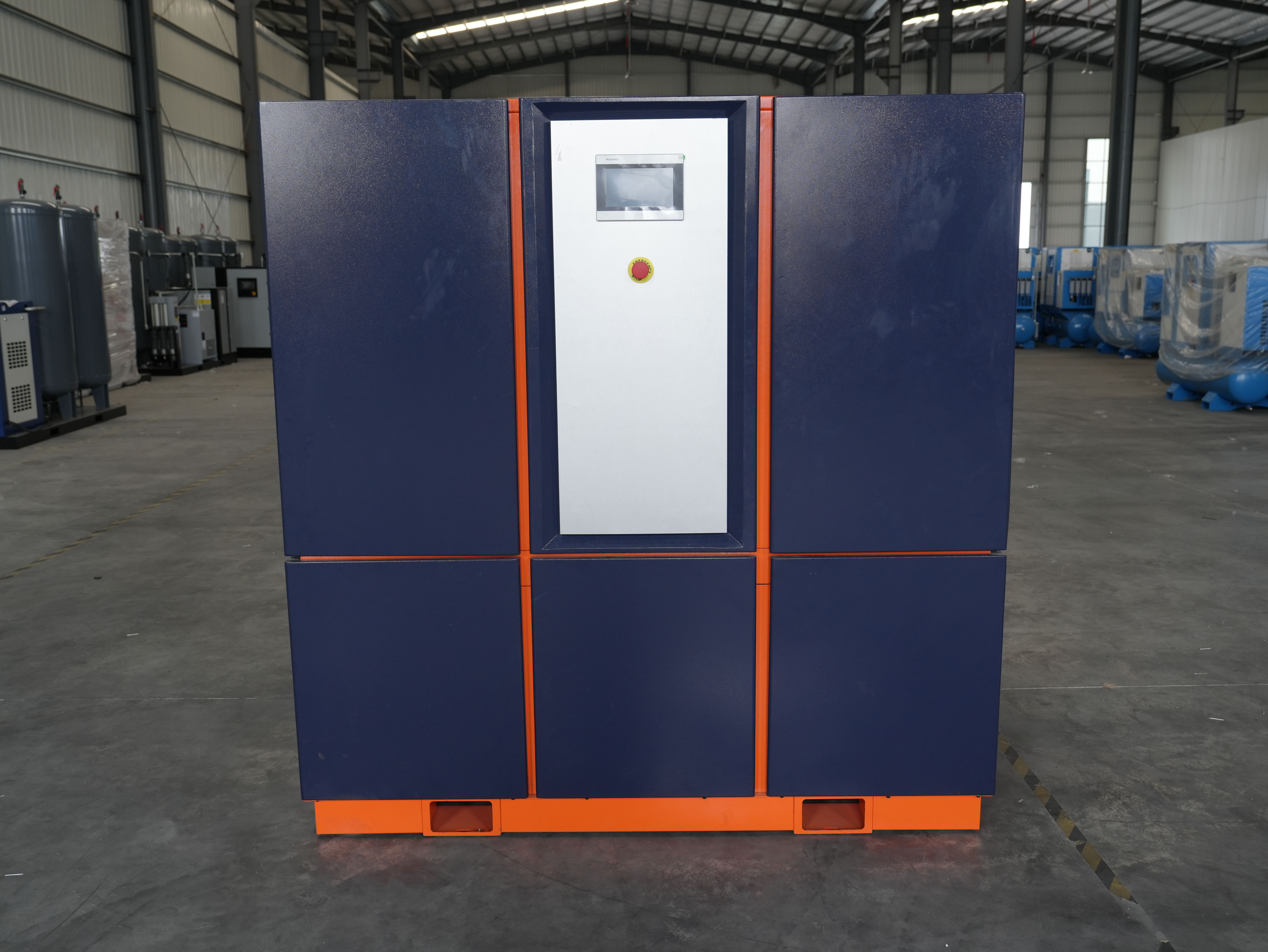
Overheating is the failure mode that most often shortens compressor life in continuous plants, and it is a room problem as much as a machine problem. UMW Air controls it on the equipment side with a high-efficiency radiator and cooling fans, and performs thermal tests on every unit before shipment to verify that both are working correctly. That test transfers a known-good unit to the site; it does not compensate for a room that cannot supply adequate air.
Before the order is placed, three installation questions should be answered: how much air the compressor room can exchange, what the highest ambient temperature in that room will be in summer, and how much clearance the service team needs for radiator cleaning and filter changes. A plant that answers these three questions before delivery avoids the most common reason a correctly sized unit underperforms in its first summer.
What Long-Term Supply Looks Like Behind the Ranking
The ranking above is only useful if the supplier can keep the selected family running for the life of the plant. UMW Air, formally Shandong UMW Air Tech Co., Ltd, is an industrial screw air compressor manufacturer based in Jinan, Shandong, China, founded in 2019.
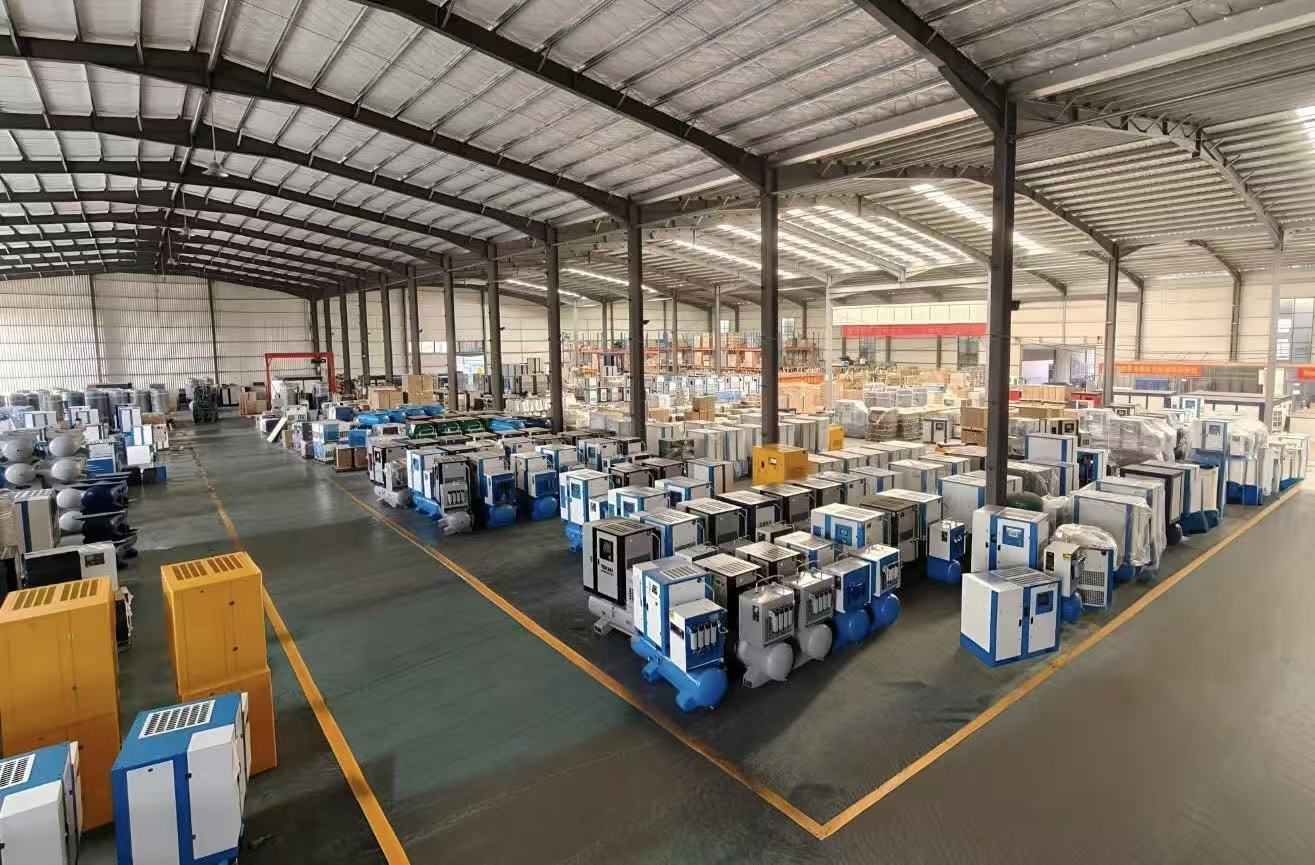
- Manufacturing footprint: a 2,000 m² facility with 200 employees and an annual output of 12,000 units, consistent with a monthly production capacity of 1,000 units.
- Engineering: a 40-engineer R&D team, relevant when a plant needs a pressure band, control arrangement or configuration adjusted rather than taken from a catalogue.
- Delivery: a typical production lead time of 3 days for standard builds, which should be confirmed for the exact model and specification at the time of order.
- Export focus: 100% export orientation, with markets covering the EU, USA, Southeast Asia, the Middle East, South America and Africa — the regions where the five families in this ranking are most often installed.
- Purchase terms: minimum order quantity of 1 unit, FOB or CIF delivery terms, pre-shipment test as the acceptance criterion, and payment of 30% T/T in advance with 70% T/T before shipping.
For a buyer at the decision stage, that combination matters in a specific way. A single-unit minimum allows one family to be evaluated on a live line before a plant-wide order; a consistent export focus means documentation and shipping experience for the destination market already exist; and an engineering team of that size is what makes a non-standard pressure or control requirement a specification conversation rather than a rejection.
Frequently Asked Questions
What is checked before a UMW Air screw compressor ships?
The stated acceptance criterion is a pre-shipment test, and thermal tests are performed on every unit before shipment to confirm that radiators and cooling fans are functioning properly. For a plant buying against a specification, the practical step is to agree in writing which test record you will receive — flow, pressure and the thermal check — because acceptance is tied to that document rather than to the visual condition of the unit on arrival.
Can the dryer, filters and controller be supplied with the compressor?
The compressor is the production side of a compressed air system; the system also needs an air dryer, filters, a receiver tank and a controller. Which of these UMW Air supplies and which are sourced locally should be fixed in the quotation, together with the air quality the plant actually needs at the point of use, because the required dryness and filtration level — not the compressor — determine the dryer type and size.
Is a screw compressor worth the higher purchase price than a piston unit?
A screw compressor carries a slightly higher initial investment than a piston compressor and recovers it through lower downtime and maintenance cost. The documented differences are duty cycle, efficiency and maintenance load: a screw unit is built for 24/7 operation and reaches energy efficiency up to 95% under continuous high-load conditions, while a piston compressor is an intermittent machine at roughly 65–70% efficiency with more moving parts and more frequent maintenance. Whether that payback appears in your plant depends on annual running hours and how heavily the unit is loaded.
Can a single unit be evaluated before a larger order?
Yes. The minimum order quantity is 1 unit, on FOB or CIF delivery terms, with 30% T/T in advance and 70% T/T before shipping. That structure allows one unit to run on a live production line before a plant-wide or multi-site order is discussed.
What is the production lead time and how much capacity stands behind it?
A typical production lead time of 3 days is stated alongside a monthly production capacity of 1,000 units, which corresponds to the stated annual output of 12,000 units. Buyers planning a line installation should confirm the lead time for the exact model, pressure band and any non-standard specification, since the stated figure is typical rather than a commitment for every configuration. To match a family and model to your plant's flow and pressure, send the duty details to UMW Air and request a configuration quotation.
Conclusion: Choose the Rank That Matches Your Duty Cycle
For metal processing, plastics, automotive and food plants running continuous production, the order is clear: Heavy-Duty first for continuous high-load capacity, Direct-Driven second where line pressure must stay steady, Air-Cooled third where cooling water is not available, and Stationary fourth where a fixed, system-built installation with dryer and controller is the operating model. Diesel Mobile ranks fifth in that context and first in the one context this ranking deliberately sets aside — work that moves, or sites without power.
The decisions that follow are then straightforward: confirm the duty hours, match the pressure band to the tools rather than to a rule of thumb, specify air treatment with the compressor, and verify the installation conditions that no datasheet can fix. A correctly chosen family, installed in a room that supports it and backed by a supplier with capacity and export experience, is what turns a compressor purchase into a reliable compressed air system.
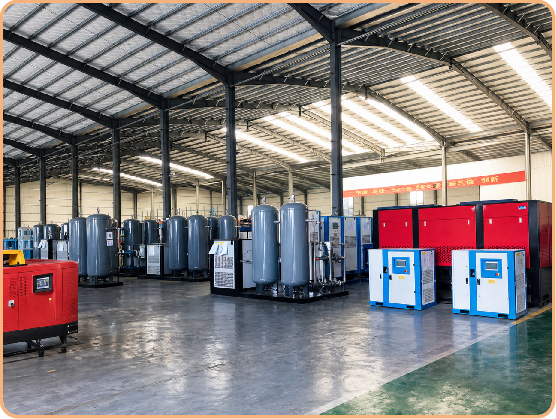
If you are comparing two families for the same line, the fastest route is to send the duty profile — required flow, pressure, shift pattern and ambient conditions — and ask for both configurations quoted against it. That comparison answers the ranking question for your plant rather than in general.
Have Questions or Need More Details?
Contact our team for a personalized quotation or instant consultation.
Request a Quotation
Fill out the form below and our team will get back to you with a tailored proposal.
WhatsApp Direct Chat
Prefer to chat in real-time? Message us on WhatsApp for instant assistance & quick answers.
- Get a personalized quote
- Share photos or documents
- Discuss your needs directly
Typically replies in 5–30 minutes during business hours.