
What Is an Industrial Air Compressor? A Practical Guide for Factory Buyers
What Is an Industrial Air Compressor? A Practical Guide for Factory Buyers
Industries across the world rely on industrial air compressors to deliver compressed air, but that is only the simplest answer to a question that carries real purchasing consequences. For factory engineers and procurement teams exploring their options, choosing a unit involves understanding product categories, key specifications, operating conditions, and the exact functions that an air compressor must perform inside a facility. This guide covers the fundamentals an industrial buyer needs before evaluating suppliers, with UMW Air as a working example of a Chinese manufacturer serving export markets.
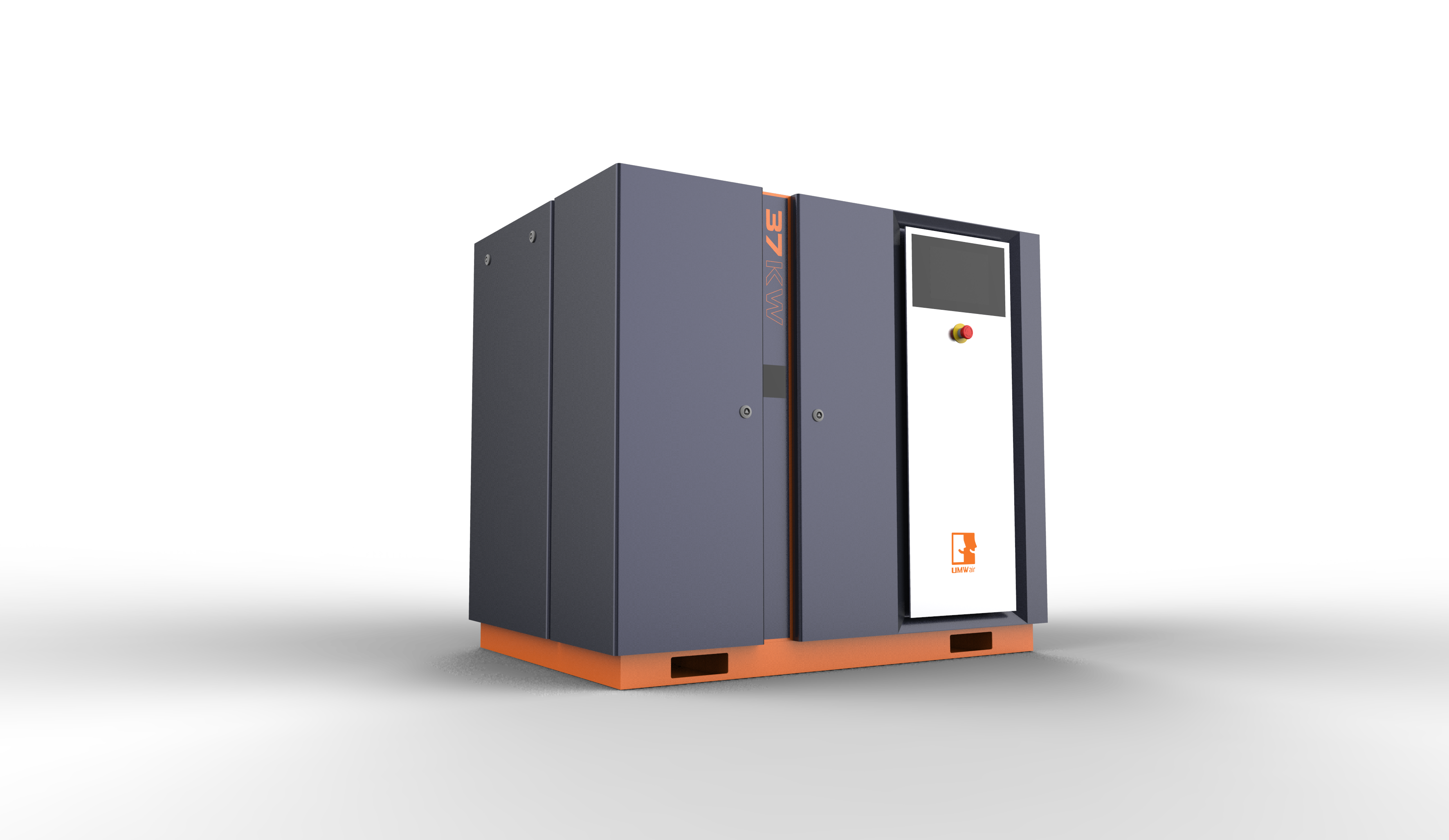
Industrial air compressors are machines that convert power into potential energy stored in pressurized air. That pressurized air powers tools, pneumatic systems, production machinery, and other equipment across factories in metal processing, automotive parts, plastics, electronics, packaging, materials, food, and energy production. In many plants, the compressed air network is treated as a “fourth utility” because so many processes depend on it. Understanding how these systems are configured and matched to production needs is the first step toward avoiding costly mismatches.
How the Industrial Air Compressor Market Is Evolving
The industrial air compressor market is not static. Demand for energy-efficient systems and continuous-duty production capability is visible in market research. The global industrial air compressor market was valued at USD 20.0 billion in 2025 and is projected to grow to USD 28.3 billion by 2033, according to Grand View Research. Asia Pacific held the largest regional revenue share in 2025 at 42.8%, with China playing a leading role both as a manufacturing base and as a center of demand.
Buying patterns have shifted in parallel. Today’s buyer is less likely to purchase an industrial compressor as a standalone appliance. The more common approach is to look at a compressed air system, meaning the compressor, receiver tank, dryer, filters, and controls must be matched to real working conditions. UMW Air describes this shift in its own positioning: instead of competing on brand premiums, the manufacturer says it focuses on peace of mind for users, treating energy efficiency and low-carbon manufacturing as core design principles.
For a first-time buyer, the most important takeaway is that the category is broad. The right fit depends on pressure, airflow, runtime, ambient temperature, and clean-air requirements. Market share data shows that rotary screw air compressors led the segment in 2025, holding a 47.0% share because they operate efficiently in continuous industrial applications. That is why many factory managers’ first question is not “which compressor type is best in general” but rather “which type fits my factory’s duty cycle and air quality needs.”
Industrial Air Compressor Types Used in Factories
Fundamentally, three types of air compressors show up in factory settings: reciprocating or piston compressors, rotary screw compressors, and specialized variants such as oil-free, variable frequency, and high-pressure units. For continuous production environments, rotary screw machines have become the reference solution. They dominate industrial applications because they deliver steady airflow, tolerate long runtimes, and operate with less vibration than piston units.
Manufacturers such as UMW Air classify their product ranges around the major screw air compressor families. UMW Air lists the following main categories in its portfolio:
- Air-cooled screw air compressor — uses ambient air to cool the compressor oil and system, common where water supply is limited.
- Direct-driven screw air compressor — couples the motor directly to the air end without a gear transmission, reducing mechanical losses.
- Stationary screw air compressor — a fixed installation for continuous, in-plant operation.
- Diesel mobile screw air compressor — a portable, engine-driven unit for remote project sites where grid power is not accessible.
- Heavy-duty screw air compressor — built for demanding continuous environments in industrial production.
Within these broader families, compressor builders strategically subdivide by configuration and by application duty. For example, UMW Air offers a screw air compressor range that can be delivered as an integrated screw air compressor, split/separate unit, portable unit, or fixed unit. The models cover the ML-7.5/8A, L-7.5/8A, L-1516A, and L-2216A designations. Their published power range runs from 4 kW up to 355 kW; pressure range is 8 to 25 Bar; direct-driven operation and air cooling are standard on the range, and the drive motor meets IE4 efficiency class.
Configuration matters as much as model family. In an integrated air compressor, the compressor and dryer are installed as a single ready-to-run unit. A split or separate arrangement keeps the dryer and receiver tank in separate positions in the piping network. Portable screw compressors serve temporary loads or project use. Fixed screw compressors provide the backbone of permanent factory supply. All four forms have legitimate roles in industrial facilities, which is why buyers should be clear about layout and installation conditions before requesting a quotation.
Core Compressed Air System Components
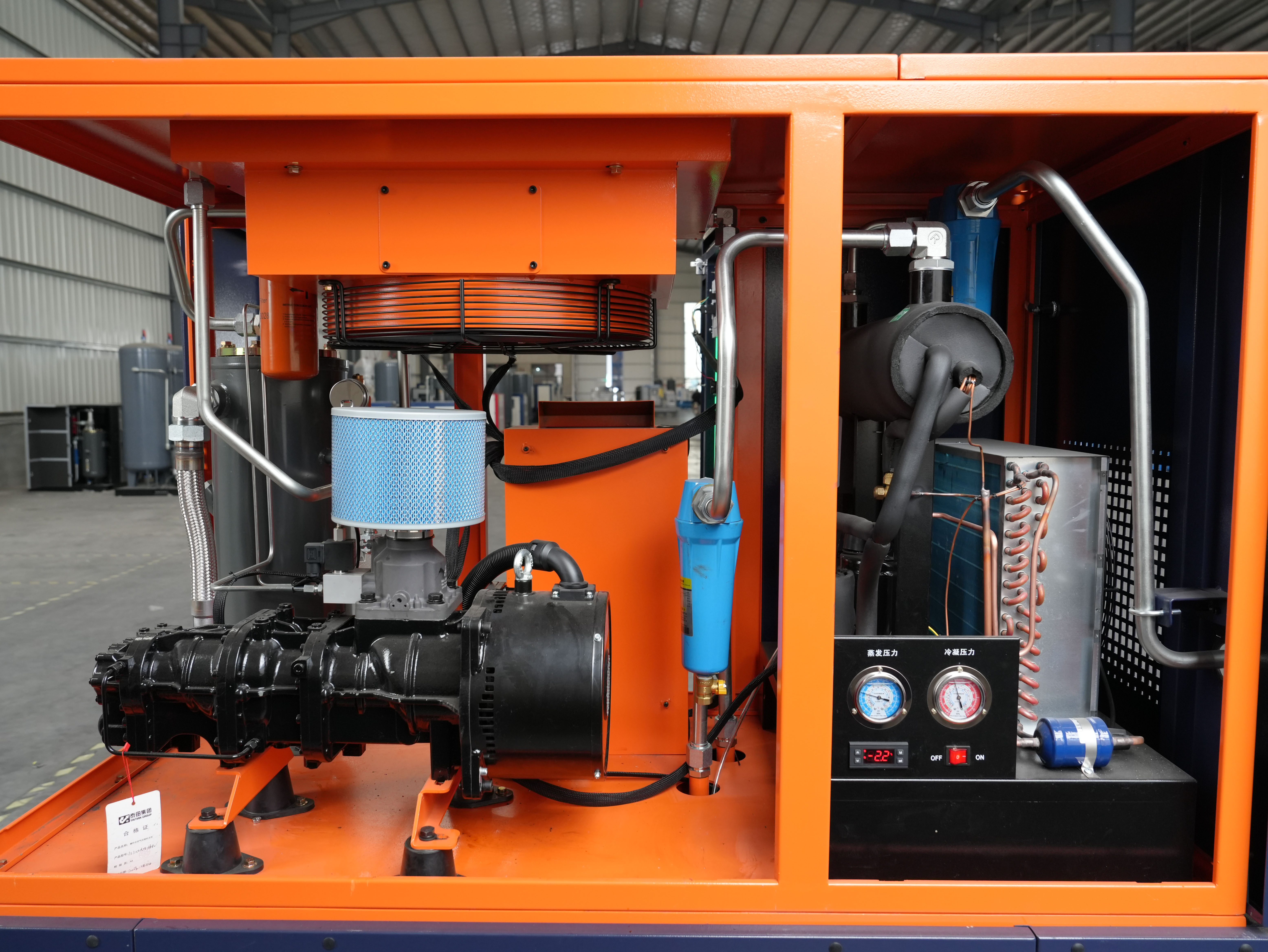
It also helps to understand the broader compressed air system rather than focusing only on the compressor itself. Although a buyer often starts by specifying the compressor package, actual operation depends on all the elements that treat, store, and distribute the compressed air:
- Air compressor package: converts mechanical work into compressed air.
- Air receiver or gas tank: stores compressed air and helps handle peak demand and pulsation.
- Air dryer: removes water vapor that would otherwise damage tools, piping, or products.
- Line filter: removes particulates, oil aerosol, and other contamination before the air enters critical equipment.
- Inverter or variable frequency drive: adjusts motor speed to match real-time demand, reducing energy waste.
- Controller: sequences compressor operation and alerts maintenance teams.
UMW Air’s published customer-facing material confirms this perspective. Its compressors serve the metal processing, plastics and rubber, automotive and machinery parts, food and packaging, construction and materials, and energy and chemical sectors. It recommends matching the compressor with auxiliary elements such as an air dryer, air tank, line filter, inverter, and controller. This system-level view gives buyers a better vocabulary when comparing quotations from different suppliers.
What an Industrial Air Compressor Does in Specific Industries
It can be difficult to understand why factory buyers use different compressor classes until the working conditions become concrete. An industrial air compressor does more than simply supply air. It must provide stable pressure for tools and processes, handle specific environmental extremes, and support continuous production without excessive downtime.
Manufacturing and Metal Processing
In metal processing and manufacturing, compressed air drives cutting tools, pneumatic clamping systems, chip removal equipment, plasma cutters, and robotic handling systems. These processes require a stable supply because pressure drops can interrupt automated lines. UMW Air specifies continuous operation as a normal mode for its applicable industries, which is why stationary screw units and integrated systems are common in manufacturing plants.
CNC Machine Operations
CNC machining centers rely on compressed air for tool changes, spindle sealing, coolant systems, and workpiece clamping. A dedicated machine-side compressor is often chosen to keep the CNC line independent. Buyers typically look for a reliable screw unit with dryer integration so that moisture does not corrode fixtures or compromise precision.
Laser Cutting
Laser cutting offers one of the most demanding examples of clean-air requirements. Industry guidance from Atlas Copco confirms that oil-free air, classified as Class 0 under ISO 8573-1, is critical for laser cutting because it prevents contamination of sensitive optics and maintains cut quality. While not every factory starts with an oil-free requirement, a buyer for a laser line must plan for proper filtration from day one.
Using compressed air as an auxiliary gas can also deliver meaningful operating cost savings. DXTECH CNC research has reported that using compressed air in laser cutting can reduce production costs by up to 50% compared with nitrogen or oxygen. This explains why buyers should evaluate the compressor not simply as a capital purchase but as an operating-cost decision.
Automotive, Plastics, Packaging, and Energy
Automotive parts production uses compressed air for assembly tools, pneumatic testing, painting preparation, and conveying. Plastics and rubber processing uses air for cooling, blowing, mold cleaning, and material transport. Food and beverage packaging operations often require clean, dry, oil-reduced air because of hygiene constraints. Construction materials, energy, and chemical plants use air for instrumentation and process equipment. Across these sectors, the common requirement is reliable compressed air with well-managed humidity and contamination levels.
Key Specifications to Understand Before Buying
Specification sheets can be confusing before a buyer learns where to look. If a factory engineer is reading a rotary screw air compressor datasheet for the first time, these are the parameters that matter most.
Power Rating
Power is expressed in kilowatts (kW) and describes the installed motor capacity. Small factory machines commonly run from 4 kW to 7.5 kW, while large industrial networks can require hundreds of kilowatts. The UMW Air Micro air compressor series, for example, is available with 4 kW, 5.5 kW, and 7.5 kW options. By contrast, UMW Air’s full screw air compressor line starts at 4 kW and extends to 355 kW to cover small workshops and large industrial plants.
Airflow and Pressure
Airflow is usually expressed in cubic meters per minute (m³/min) at a specified pressure. This value tells you how much air the machine can produce to power equipment. Pressure, expressed in Bar, describes the required operating pressure range. Typical industrial units operate from 8 to 13 Bar, with some high-pressure variants extending to 25 Bar. A compressor rated for 8 to 13 Bar covers most common factory tools and production machinery.
Drive and Cooling Method
Direct-driven units connect the motor directly to the air end, reducing energy transfer losses compared with older gear-driven or belt-driven designs. Many exporters now standardize direct drive. Air-cooled units are common because they avoid the need for a separate water supply and simplify installation. UMW Air’s screw compressor range uses direct drive and air cooling architecture, which lowers installation complexity for overseas buyers.
Motor Efficiency
Efficiency class indicates how well the motor converts electrical energy into shaft power. Higher-efficiency motors reduce electricity bills over the long life of an air compressor. IE4 efficiency, used in UMW Air’s screw compressor range, is one of the higher efficiency classes available in modern industrial equipment. Buyers can use efficiency classification as a baseline when comparing two otherwise similar units.
Construction and Tank Capacity
The physical construction determines durability in dusty or demanding factory environments. Many UMW Air compressors use sheet metal housings to protect the internal components. Tank capacity, often expressed in liters, matters when peak demand exceeds what the compressor can deliver instantaneously. UMW Air’s Micro series includes a 140 L gas tank, which is practical for small and mid-size workshops operating intermittent tools and machinery.
Energy Efficiency in Compressed Air Systems
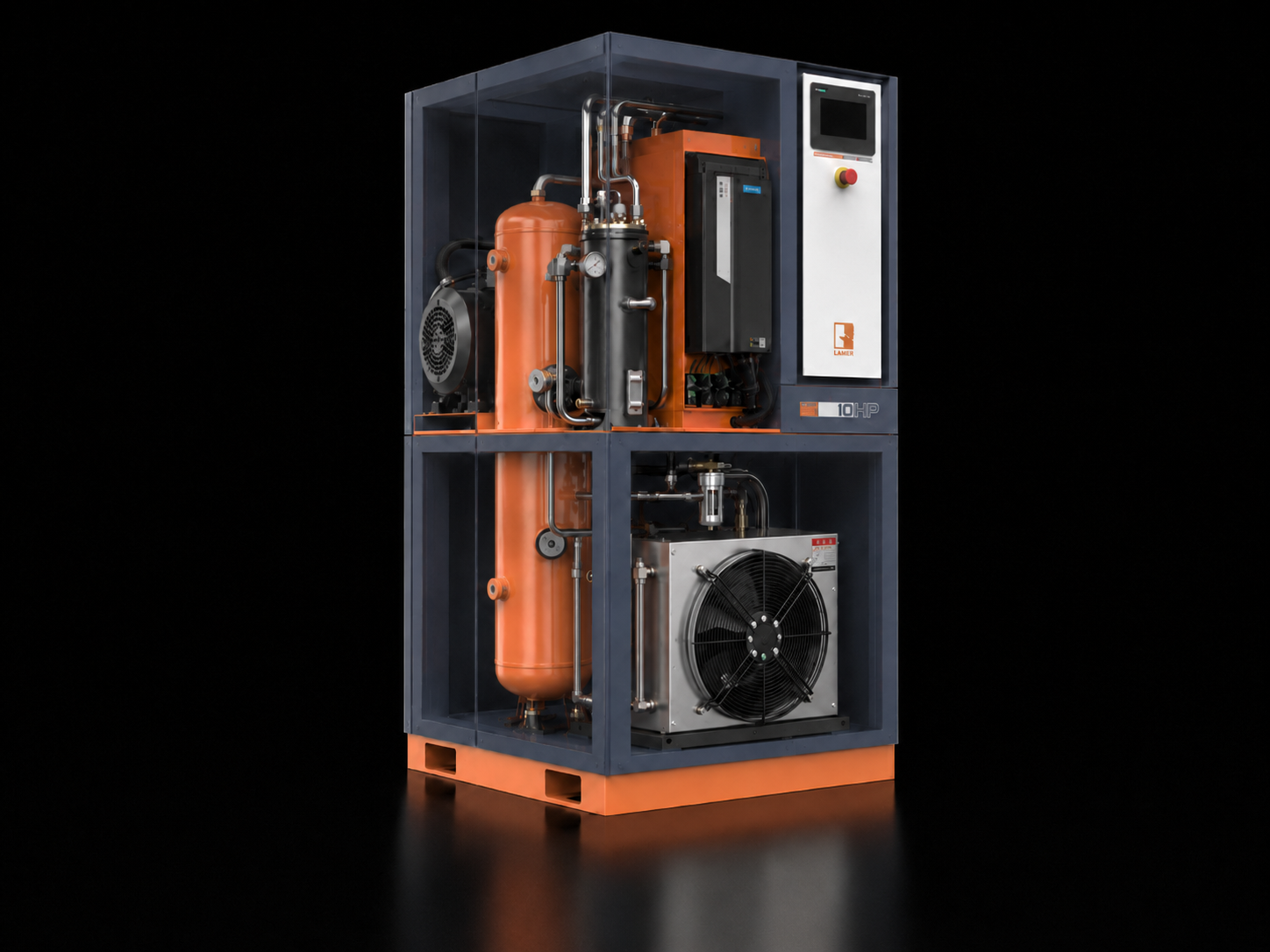
Energy consumption is often the single largest ownership cost for an air compressor across its lifecycle. This explains why energy efficiency has become a primary message not only from UMW Air but across the entire sector. U.S. Department of Energy sources report that variable frequency drive compressors can save up to 35% in energy costs by matching motor speed to actual air demand. Rather than forcing a compressor to run at full speed and then vent or unload, a variable frequency machine modulates its output to follow changing production loads.
UMW Air has adopted PM VSD technology as a standard reference in its product approach. A permanent-magnet motor combined with a variable frequency drive allows the compressor to ramp production up and down with demand. In partial-load factories, this reduces the waste that occurs when conventional fixed-speed machines spend hours in unloaded operation. Combined with low-resistance system design, UMW Air positions this as converting each kilowatt-hour into productive output across the full lifecycle of a compressor.
For a factory buyer, this matters at the budgeting stage. A machine with a higher purchase price can still deliver a lower total cost of ownership if it consistently saves energy and reduces unloaded running time. Buyers should therefore ask any potential supplier for a realistic load-profile analysis based on their own production schedule.
Screw Air Compressor vs. Piston: Why Rotary Screw Units Dominate Industrial Duty
New buyers often ask whether a piston air compressor can replace a rotary screw unit at lower cost. For intermittent light-duty applications, piston models can work. But for factories operating lines continuously or relying on steady pressure, rotary screw machines generally deliver better reliability and operating economics. This is consistent with the 47.0% segment share held by rotary screw compressors in 2025.
Rotary screw air compressors compress air through two interlocking rotors. They produce a continuous flow without the pulsing characteristic of piston machines. With fewer reciprocating parts, screw compressors tend to require lower maintenance in continuous service. Their quieter operation also improves the working environment.
Screw compressors carry a higher initial cost in many cases, but the decision should not rest on sticker price alone. Buyers should factor in duty cycle, operating hours, air quality needs, and expected life. For a CNC machine line, laser cutter, or continuous assembly operation, a direct-driven integrated screw compressor with a dryer is often the more defensible choice.
What to Look for in an Industrial Air Compressor Supplier
Once a buyer understands compressor technology, the next question concerns the supplier. A factory manager wants confidence that their manufacturer can actually deliver, support, and stand behind the product. That is how first evaluation visits to companies such as UMW Air usually begin.
Shandong UMW Air Tech Co., Ltd., founded in 2019, specializes in energy-efficient air compressors and compressed air systems. The manufacturer sits in Jinan, Shandong Province, China, and emphasizes low-carbon manufacturing, PM VSD technology, and lifecycle value. Its public profile explains the company philosophy as more than equipment supply: the company describes itself as an “always-on partner” for workspaces, seeking to give users peace of mind rather than asking them to pay for brand premiums.
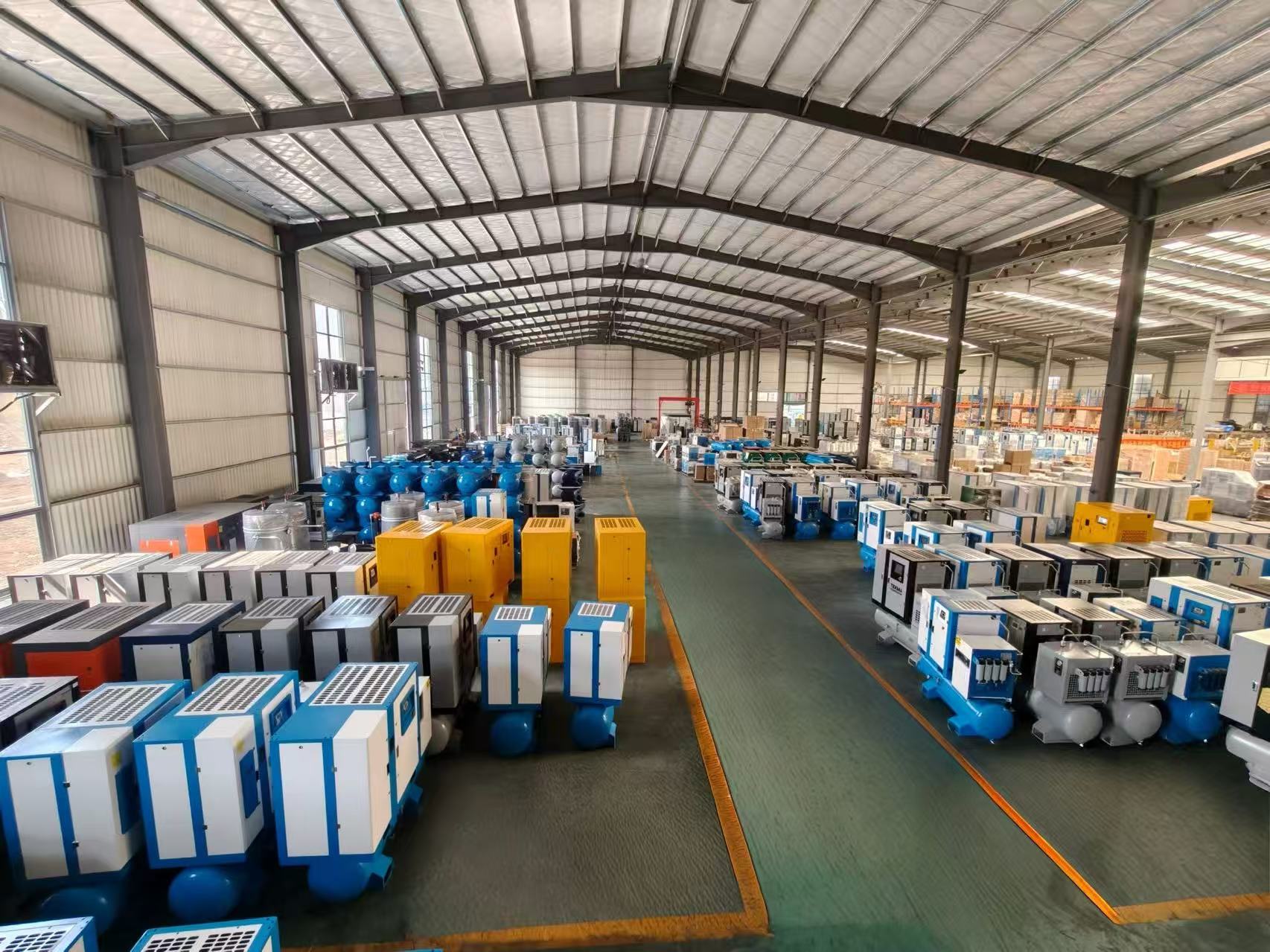
Size and production capability are relevant reference points. UMW Air reports that its manufacturing facility covers 2000 square meters and employs about 200 people, with annual production capacity of 12,000 units. The R&D team consists of 40 engineers. Export business accounts for 100% of total sales, with major markets in the EU, USA, Southeast Asia, Middle East, South America, and Africa. This export-heavy profile means the company has experience meeting the requirements of buyers outside China.
When evaluating any supplier, a practical buyer should verify the following:
- Production capacity: Can the supplier fulfill current volume and future expansion?
- R&D investment: Does the manufacturer have in-house engineering support for customization and problem solving?
- Export experience: Does the supplier understand global documentation, packaging, and compliance needs?
- Product breadth: Can the supplier offer integrated, split, portable, fixed, and high-pressure configurations within one relationship?
- Certification and technical standards: Do the machines meet internationally recognized requirements for the buyer’s application?
Example Comparison: UMW Air Screw Compressor Range
To make the technology discussion more concrete, the table below shows representative configurations drawn from UMW Air’s published product families. It is a useful visual reference for how one manufacturer organizes its portfolio around different industrial needs.
| Series / Feature | Micro Air Compressor | Screw Air Compressor Range |
|---|---|---|
| Example models | Micro ML-4A, ML-5.5A, ML-7.5A | ML-7.5/8A, L-7.5/8A, L-1516A, L-2216A |
| Compressor category | Single-stage screw air end within Micro category | Integrated, split/separate, portable, fixed screw compressor |
| Power range | 4 kW / 5.5 kW / 7.5 kW | 4–355 kW |
| Airflow | Max 1.1 m³/min | From 2.39 m³/min upward depending on model |
| Pressure range | 8–13 Bar | 8–25 Bar |
| Tank | 140 L gas tank | Configured by system design |
| Drive / Cooling | Single-stage screw compressor air end | Direct driven, air cooled |
| Motor efficiency | — | IE4 class |
| Typical role | Small workshop, point-of-use compressed air | Continuous factory production lines |
This table is not intended to suggest that every model in a series shares identical performance. It simply shows what a buyer can expect to see in product portfolios and how to interpret the differences before requesting a specification sheet.
Step-by-Step Approach for First-Time Industrial Air Compressor Buyers
A structured selection process can protect a factory from buying the wrong machine. First-time buyers often benefit from following these steps:
- Map the actual compressed air demand. List every tool, machine, and process that uses compressed air. Note their pressure requirements and operating cycles. Avoid selecting a compressor based only on the largest machine nameplate.
- Separate continuous duty from intermittent duty. A CNC machine line running two shifts needs a different compressor class than a maintenance workshop where compressed air is used a few times per shift.
- Define air quality requirements. Check whether production requires dry air, filtered air, or oil-free air. Laser cutting and sensitive electronics applications demand higher purity levels.
- Calculate pressure and airflow margin. Include pipe losses and future expansion allowance. Many buyers select a unit rated slightly above current consumption to avoid capacity bottlenecks.
- Evaluate energy efficiency. Compare annual energy costs across compressor configurations. Use realistic load profiles rather than assuming full-load operation.
- Determine physical and environmental constraints. Is the machine going inside a workshop or in an outdoor yard? Is water cooling available? Ambient temperature and humidity affect system choice.
- Shortlist integrated or split configurations. Determine whether a single integrated air compressor with dryer is better than separate units, depending on floor space and maintenance access.
- Verify supplier qualifications. Look at company background, production capacity, R&D capability, export history, and after-sales support before making a final decision.
When the process seems overwhelming, a good next step is to ask a manufacturer like UMW Air for a detailed specification and application recommendation. A credible supplier will ask about your industry, duty cycle, pressure requirements, and air quality expectations before recommending a model.
Frequently Asked Questions
What is an industrial air compressor used for in a factory?
An industrial air compressor provides a continuous source of compressed air to power pneumatic tools, machinery, automation, packaging equipment, and industrial processes. It is commonly described as a critical utility in factories because so many systems depend on stable compressed-air pressure.
What is the best type of air compressor for continuous manufacturing use?
Rotary screw air compressors are widely used in continuous industrial applications because they deliver steady airflow with less vibration and lower maintenance than piston units. Market data from Grand View Research shows the rotary screw segment led the global industrial air compressor market in 2025 with a 47.0% share. A buyer with continuous production should usually evaluate screw compressors first.
How do I decide between an air-cooled and water-cooled screw air compressor?
Air-cooled units remove heat using ambient air and do not require a separate water supply, which simplifies installation. Water-cooled units may make sense in high-ambient-temperature facilities where water is cheap and reliably available. UMW Air’s published screw compressor range, for example, uses air-cooled architecture and direct-driven motors, reflecting a common export-market preference for simpler installation.
When does an air compressor need to be oil-free?
An oil-free air compressor is required when the end process cannot tolerate oil contamination. Laser cutting is one prominent example: industry guidance from Atlas Copco states that oil-free air, classified as Class 0 under ISO 8573-1, is critical to prevent contamination of sensitive optics. The same logic applies to certain food, beverage, pharmaceutical, and electronics applications.
How many kilowatts do I need for my factory air compressor?
Required power depends on the combined demand of all tools and machines. Compact workshop machines commonly run from 4 kW to 7.5 kW, while large industrial systems may exceed 100 kW. UMW Air offers models from 4 kW to 355 kW, so there is normally a product tier matched to each facility size.
Can a variable frequency drive save energy in my factory?
Variable frequency drive compressors save energy by matching motor speed to actual compressed-air demand. The U.S. Department of Energy reports that VFD compressors can cut energy costs by up to 35%. Facilities with widely fluctuating airflow benefit the most from this technology.
How can I get an industrial air compressor recommendation for my application?
Contact UMW Air with details about your industry, machine type, working pressure, airflow needs, and expected operation hours. The company serves metal processing, automotive parts, plastics, packaging, construction, food, electronics, chemicals, and energy industries. For a specification review or quotation, email info@umwair.com or send a WhatsApp message to +86 15053148082.
Conclusion
An industrial air compressor is not a generic purchase; it is a long-term production investment. Understanding compressor families, system components, specifications, energy efficiency, and supplier capability gives a buyer the confidence to make the right decision. Rotary screw air compressors dominate continuous-duty factory applications, but the optimum choice depends on pressure, airflow, environmental conditions, and air purity.
First-time buyers should start with a clear demand profile rather than a preferred brand. That profile allows them to compare configurations on a more objective basis. UMW Air’s product portfolio offers a representative example of how a modern Chinese manufacturer organizes its air compressor range: from compact Micro units with built-in tanks to large direct-driven screw compressors with IE4 motors, all built around export-market expectations and lower lifecycle energy use.
Unsure which industrial air compressor fits your factory?
Contact UMW Air at info@umwair.com or WhatsApp +86 15053148082 for guidance, specifications, or a quotation for your next project.
Have Questions or Need More Details?
Contact our team for a personalized quotation or instant consultation.
Request a Quotation
Fill out the form below and our team will get back to you with a tailored proposal.
WhatsApp Direct Chat
Prefer to chat in real-time? Message us on WhatsApp for instant assistance & quick answers.
- Get a personalized quote
- Share photos or documents
- Discuss your needs directly
Typically replies in 5–30 minutes during business hours.