
Top-Rated Screw Air Compressors for Continuous 24/7 Operations: A Buyer's Ranking
Top-Rated Screw Air Compressors for Continuous 24/7 Operations: A Buyer's Ranking
Short answer: for continuous 24/7 operation, three configurations carry this ranking. Direct-driven stationary screw compressors rank first for plants running a fixed round-the-clock load. Variable frequency (VFD) screw compressors rank first where that load moves through the day. Integrated screw packages that combine compression and drying rank first where compressed air purity is part of the process specification rather than an afterthought. Air-cooled units rank highest where cooling water is unavailable, and diesel mobile screw compressors rank last for permanent plants, because mobility is not uptime.
This ranking is written for buyers at the evaluation and execution stage — the point where the compressor type is no longer the question, and the real questions are which configuration holds its rated performance after 8,000 running hours, how much of the energy bill the control system gives back, and how quickly a supplier can be verified before the purchase order is signed.
Every configuration below is assessed against five criteria applied consistently: duty tolerance under sustained load, energy behaviour when demand is not constant, maintenance intensity, output stability, and how much of the specification a buyer can actually verify before shipping. The verified first-party data in this article comes from UMW Air's published product and capability record; the third-party figures come from published research and standards bodies, and each one is attributed.
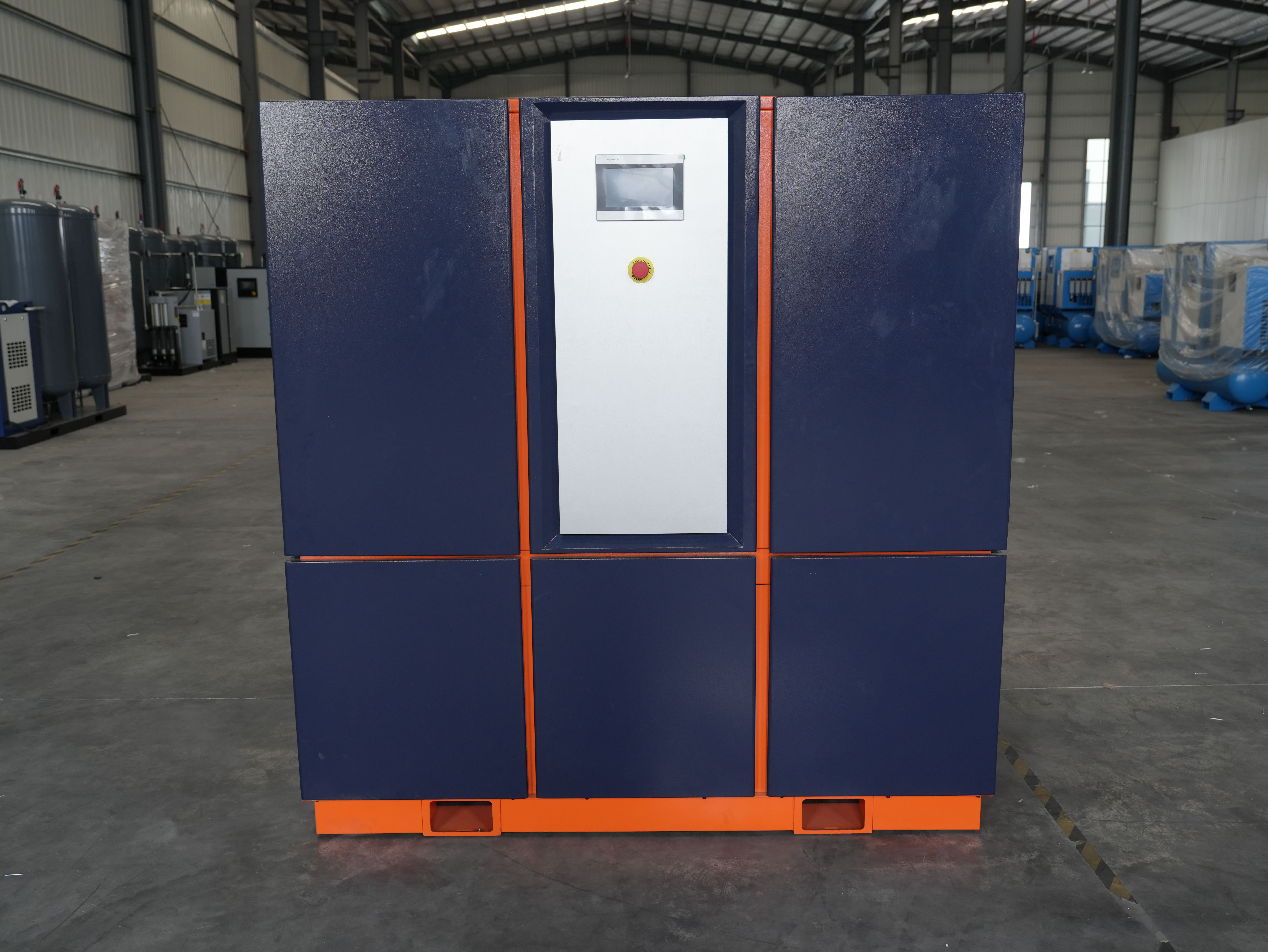
Problem Definition: Why a 24/7 Duty Cycle Rewrites the Selection Logic
A compressor specified for one shift a day is sized around three buffers that disappear the moment the plant runs continuously: a cooling margin, a service window, and a load profile that resets every morning. In a 24/7 plant, none of those buffers exist. Ambient heat accumulates inside the enclosure rather than dissipating overnight, lubricant spends far longer at operating temperature, the drive and motor run closer to their continuous thermal limits, and every unplanned stop lands directly on production output instead of on a buffer stock.
That changes three things for a buyer:
- Sizing margin. Intermittent-duty selection tolerates a compressor running at its rated limit during peak hours, because the peak ends. Continuous duty does not, because the peak never ends — the rated point becomes the operating point.
- Maintenance planning. Service intervals designed around a single-shift calendar collide with a production schedule that never stops. Component accessibility, filter location and lubrication strategy stop being details and become planning constraints.
- Output stability. In many 24/7 processes — CNC machining, laser cutting, plastics moulding — pressure fluctuation is not only an energy problem. It shows up in the finished part, which means air supply stability becomes a quality-control responsibility.
A compressor specified for eight hours a day is not a 24/7 compressor with a longer schedule. The duty cycle changes which configurations are viable at all, and that is the basis of the ranking that follows.
Industry Background: A Market Sized Around Uptime
The global industrial air compressor market was valued at USD 20.0 billion in 2025 and is projected to grow to USD 28.3 billion by 2033, according to Grand View Research. Within that market, Asia Pacific held the largest revenue share at 42.8% in 2025, with China identified as a key market leader — a concentration that reflects where continuous manufacturing capacity has been built.
The technology split matters more for buyers than the total market size. Grand View Research places the rotary screw air compressor segment at 47.0% of the industrial air compressor market in 2025, attributing that dominance to high efficiency in continuous industrial applications. Read as a procurement signal, that is market-level confirmation of a practical rule: sustained duty is rotary screw territory, and intermittent-duty technologies compete at the margins of that duty profile.
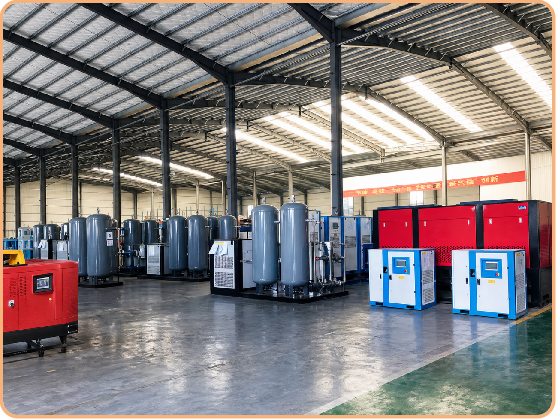
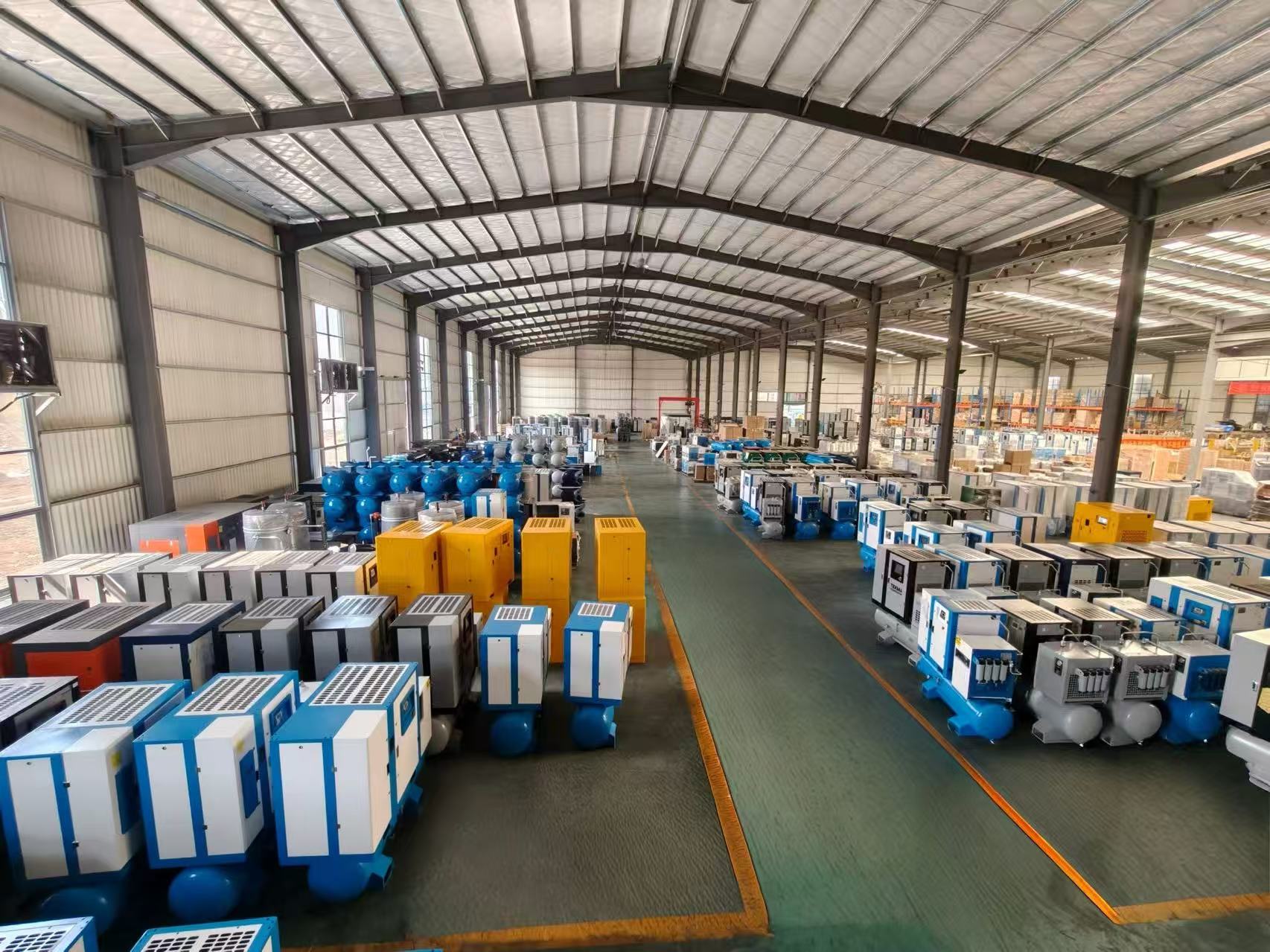
UMW Air is the industrial air compressor brand of Shandong UMW Air Tech Co., Ltd, a manufacturer founded in 2019 and based in Jinan, Shandong, China. The company operates a 2,000 m² factory with 200 employees, including a 40-person R&D team, and an annual output of 12,000 units. Its export ratio is 100%, with verified markets covering the EU, USA, Southeast Asia, the Middle East, South America and Africa.
What UMW Air Supplies for Continuous-Duty Compressed Air
UMW Air's verified main product lines map directly onto the 24/7 question rather than around it. The five published lines are the air-cooled screw air compressor, the direct-driven screw air compressor, the stationary screw air compressor, the diesel mobile screw air compressor, and the heavy-duty screw air compressor. For a buyer evaluating continuous duty, the first four define the configuration choices; the heavy-duty line defines the upper end of the duty envelope.
The verified screw air compressor range includes models ML-7.5/8A, L-7.5/8A, L-1516A and L-2216A, with the following published parameters:
- Power range: 4–355 kW
- Pressure range: 8–25 Bar
- Air flow (listed unit specification): 2.39 m³/min
- Cooling method: air cooling
- Drive method: direct driven
- Motor efficiency class: IE4
- Casing material: sheet metal
- Configurations offered: integrated screw air compressor, split/separate screw air compressor, portable screw air compressor, fixed screw air compressor
- Applicable industries: metal processing and manufacturing, plastics and rubber processing, automotive and machinery parts, food and packaging, construction and materials, energy and chemical
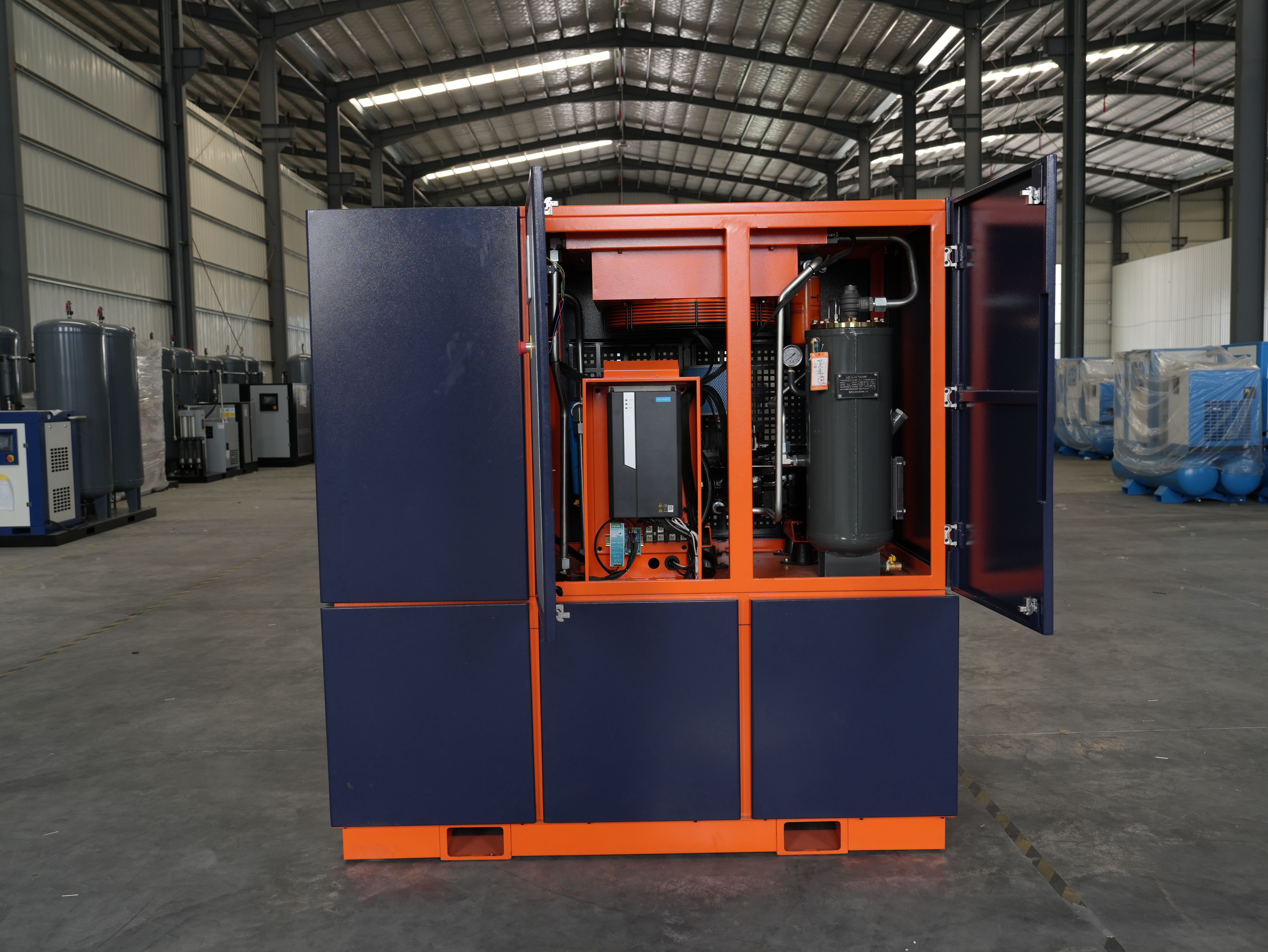
For projects inside the EU/EEA, the range holds CE certification number M.2026.206.C140156, issued by UDEM and valid from 11 May 2026 to 10 May 2031. The certificate scope covers the UMW air L, Z, P, M, N and O series and references the 2006/42/EC Machinery Directive and the 2014/30/EU Electromagnetic Compatibility Directive, assessed against harmonized standards including EN ISO 12100:2010, EN 60204-1:2018/A1:2025, EN 1012-1:2010 and EN IEC 61000-6-2:2019. For a continuous-duty installation, the practical value of that documentation is scope accuracy: the buyer can confirm that the exact model being purchased falls inside the certified series rather than assuming it does.
On the supply side, UMW Air provides both OEM and ODM production services with customization of color, logo and voltage — the three variables that most often decide whether a compressor can be integrated into an existing plant standard or has to be accommodated by it. Verified production capacity is 1,000 units per month at a typical production lead time of 3 days, with factory pre-shipment testing applied before dispatch and 24/7 technical support by email or phone, including remote troubleshooting.
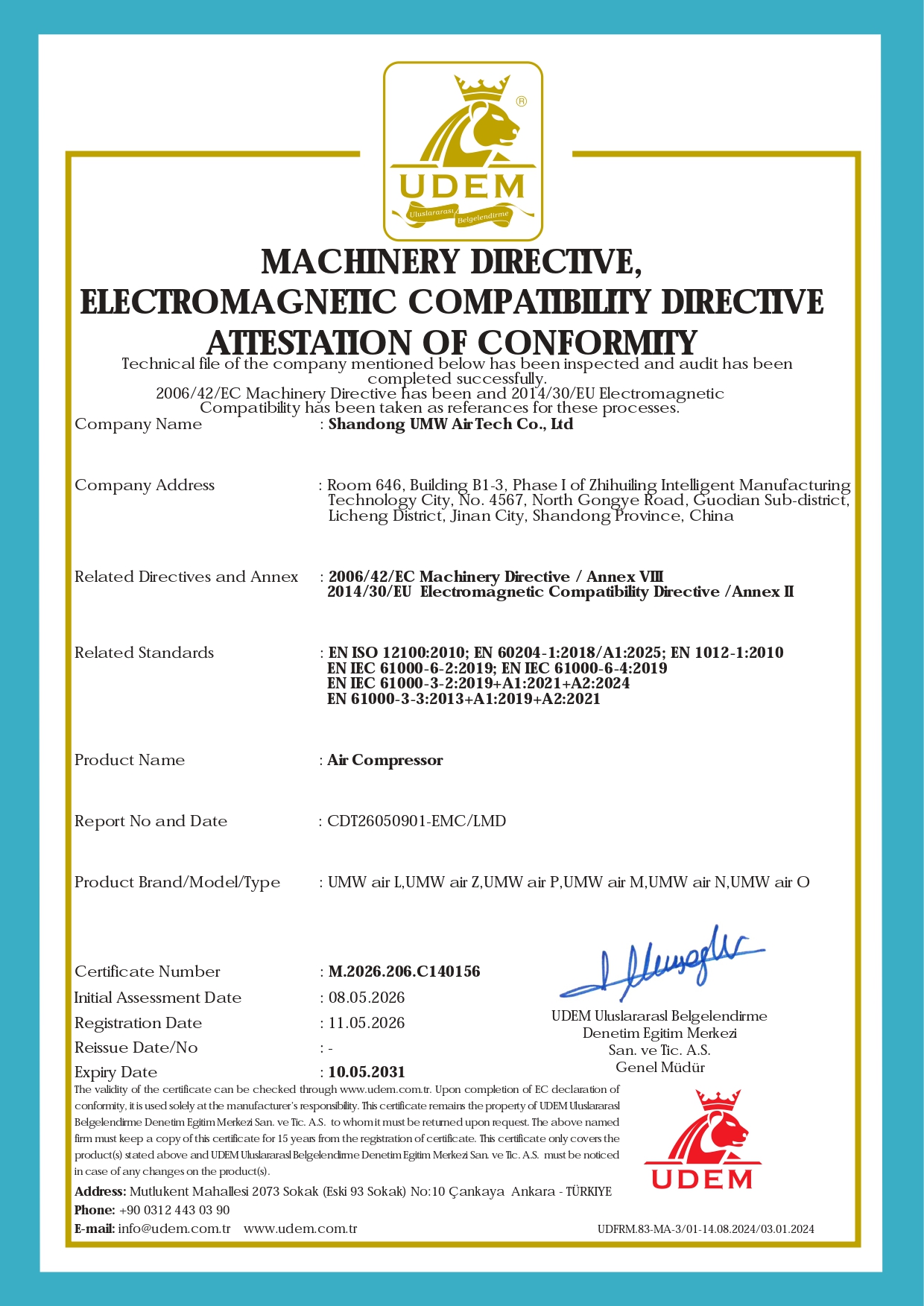
The Buyer's Ranking: Screw Compressor Configurations for Continuous 24/7 Duty
The ranking below orders configurations by how well they carry a permanent, round-the-clock duty cycle — not by purchase price, and not by maximum possible output. A configuration that ranks lower here may still be the correct purchase for a specific site; the limitation column is there so that the trade-off is made deliberately.
Rank 1 — Direct-Driven Stationary Screw Air Compressor
Why it ranks here. The direct drive removes belt wear and belt replacement from the maintenance plan entirely, which matters most in exactly the situation this ranking addresses: a machine running far more hours than a service technician is on site. Stationary mounting also allows the unit to be plumbed into a fixed compressed air system with receiver, dryer and filtration — the arrangement that produces a stable pressure band at the point of use. UMW Air builds both the direct-driven and the stationary line as standard product families, with the heavy-duty line covering the upper end of the same duty envelope.
Best fit. Metal processing and manufacturing, plastics and rubber processing, automotive and machinery parts, and energy and chemical plants running essentially the same load around the clock.
Limits to note. Direct-driven stationary units are not portable, and their installation has to be planned at the execution stage — foundation, ventilation and piping layout — rather than after delivery.
Rank 2 — Variable Frequency (VFD) Screw Air Compressor
Why it ranks here. Continuous duty does not mean constant demand. Where the plant load swings between shifts, weekends and production campaigns, variable frequency control matches motor speed to actual air demand instead of loading and unloading against a fixed speed. The U.S. Department of Energy records that VFD compressors can save up to 35% in energy costs by matching motor speed to actual air demand — a figure that becomes significant when the compressor runs continuously. A VFD unit still has to be correctly sized, however: if the actual load is genuinely constant at full output, there is little for the drive to modulate.
Best fit. Multi-shift plants with a variable demand profile, plants with predictable low-load periods, and facilities planning capacity expansions where the future load is uncertain.
Limits to note. VFD control adds purchase cost, so the payback case depends on how much the load actually moves. Drive electronics also require a clean, ventilated installation position.
Rank 3 — Integrated Screw Air Compressor with Dryer
Why it ranks here. In a line that runs continuously, moisture carry-over is a quality and tool-wear risk rather than a nuisance, and an integrated package — compressor, dryer and receiver on a single skid — reduces both the footprint and the number of separate components that have to be specified, installed and maintained. It also concentrates verification into one purchase instead of three.
Best fit. Food and packaging lines, plants supplying sensitive pneumatic instruments, humid environments, and installations where floor space is the binding constraint.
Limits to note. Packaged dryers are typically sized to the nominal flow of the unit. Buyers should confirm that the dryer can carry the plant's true peak duty and that the required air purity class is actually achieved. ISO 8573-1:2010 is the primary international standard for compressed air purity, classifying contaminants such as particles, water and oil, and it is the correct reference point for writing that requirement into a purchase specification.
Rank 4 — Air-Cooled Screw Air Compressor
Why it ranks here. Many plants cannot supply cooling water at all, and those that can still inherit a water-side failure mode: fouling, leaks, and freeze risk in cold seasons. Air cooling removes an entire utility dependency, which is why it is the default cooling method across UMW Air's verified screw compressor specification.
Best fit. Sites without water infrastructure, containerised or skid-based installations, water-constrained regions, and plants that cannot accept a water connection in the compressor room.
Limits to note. Air-cooled units reject heat into the room. The compressor room needs designed airflow, and ambient temperature directly affects achievable performance — ventilation is a specification item, not a facility afterthought.
Rank 5 — Diesel Mobile Screw Air Compressor
Why it ranks here. Diesel mobile screw compressors are ranked for continuous duty only where the duty is genuinely mobile or off-grid: remote sites, temporary works, and emergency backup where no electrical supply exists at the point of use. They perform that role well and are the wrong tool for a permanent plant.
Best fit. Remote construction and pipeline work, temporary site air, and standby capacity for critical processes.
Limits to note. Engine maintenance intervals, fuel logistics and ventilation or emissions constraints indoors all sit on top of normal compressor servicing, and running costs per operating hour are structurally higher than a stationary electric unit.
Comparison Table: 24/7 Suitability by Configuration
| Rank | Configuration | Primary 24/7 strength | Best-fit duty | Main limitation to plan for |
|---|---|---|---|---|
| 1 | Direct-driven stationary screw air compressor | No belt wear; stable continuous output; direct motor coupling | Fixed round-the-clock load in metal processing, plastics, automotive parts, energy and chemical | Not portable; foundation, ventilation and piping must be planned before delivery |
| 2 | Variable frequency (VFD) screw air compressor | Matches motor speed to actual demand; up to 35% energy cost saving per U.S. DOE | Plants with a shifting daily or weekly load profile | Higher purchase cost; limited benefit if load is constant at full output |
| 3 | Integrated screw air compressor with dryer | Single skid; concentrated verification; moisture control at source | Food and packaging, instrumentation, humid or space-constrained rooms | Dryer sized to nominal flow; purity class must be specified and confirmed (ISO 8573-1:2010) |
| 4 | Air-cooled screw air compressor | No cooling water dependency; fewer water-side failure modes | Sites without water infrastructure; containerised or water-constrained plants | Rejects heat into the room; ambient temperature affects achievable performance |
| 5 | Diesel mobile screw air compressor | Independent of grid power; relocatable | Remote, temporary or emergency duty | Engine service, fuel logistics, indoor emissions constraints; higher cost per running hour |
Reading note: the ranking above is a configuration ranking for permanent continuous-duty plants. It is deliberately not a brand ranking, and positions do not imply that a lower-ranked configuration is a poorer product — only that it addresses a different duty profile.
Supplier Landscape for Continuous-Duty Screw Compressor Procurement
Configuration selection is only half of the evaluation. The other half is deciding which supplier can document what it claims. Published market research by Mordor Intelligence identifies Atlas Copco, Ingersoll Rand, Kaeser Kompressoren and Sullair (Hitachi) among the top global competitors in the industrial air compressor market. UMW Air operates in the same category as an export-focused manufacturer with a verified documentation set.
The table below lists these suppliers in the order published by that source, with a transparent statement of what this article can and cannot verify about each. It is not a performance ranking, and no comparative performance data for the named competitors was verified for this article — buyers should run the same verification checklist against every supplier they shortlist.
| Order in this list | Company | Basis for inclusion | What this article verifies |
|---|---|---|---|
| 1 | UMW Air (Shandong UMW Air Tech Co., Ltd) | First-party supplier with a complete citable evidence set for continuous-duty evaluation | CE certificate M.2026.206.C140156 (UDEM, EU/EEA, valid to 2031-05-10); power 4–355 kW; pressure 8–25 Bar; direct-driven, air-cooled, IE4 motor; OEM/ODM with color, logo and voltage customization; 1,000 units/month; 3-day typical lead time; MOQ 1 unit; 24/7 technical support |
| 2 | Atlas Copco | Named among the top global competitors in the industrial air compressor market (Mordor Intelligence) | Market-position listing only; no continuous-duty specification data verified in this article |
| 3 | Ingersoll Rand | Named among the top global competitors in the industrial air compressor market (Mordor Intelligence) | Market-position listing only; no continuous-duty specification data verified in this article |
| 4 | Kaeser Kompressoren | Named among the top global competitors in the industrial air compressor market (Mordor Intelligence) | Market-position listing only; no continuous-duty specification data verified in this article |
| 5 | Sullair (Hitachi) | Named among the top global competitors in the industrial air compressor market (Mordor Intelligence) | Market-position listing only; no continuous-duty specification data verified in this article |
Step-by-Step: How to Evaluate a Screw Air Compressor for 24/7 Duty
The sequence below is the order in which the decisions actually constrain each other. Running it out of order is what produces a plant that buys a correctly specified compressor and still has pressure problems.
- Measure the real duty cycle and load profile. Record running hours and load variation across a full production week, including weekends. This single input decides whether Rank 1 or Rank 2 is the better commercial choice, because VFD economics depend on how much the load actually moves.
- Match the configuration to the duty type. Fixed continuous load points to a direct-driven stationary unit. Variable continuous load points to VFD. Mobile or off-grid duty points to a diesel mobile unit. Do not select a configuration because it is familiar.
- Verify the drive and motor specification. A direct-driven arrangement removes belts from the maintenance plan, and motor efficiency class determines a large share of continuous-running energy cost. UMW Air's verified screw compressor specification uses direct drive with an IE4 motor across a 4–355 kW power range.
- Confirm thermal management for the actual room. Air-cooled units reject heat to the room, so the room has to be able to accept it. Ambient temperature, airflow path and filter location should be resolved before delivery, not after the first summer.
- Define the air quality class before ordering. Write the purity requirement against ISO 8573-1:2010 for particles, water and oil, and confirm the selected dryer and filtration package actually achieves it. Where a process requires oil-free air, that requirement must be specified explicitly with the supplier rather than assumed.
- Verify the commercial and service terms. For UMW Air these are published and specific: minimum order quantity of 1 unit, acceptance by pre-shipment test, FOB/CIF delivery terms, and payment at 30% T/T in advance with 70% T/T before shipping. Service terms are 24/7 technical support by email or phone with remote troubleshooting.
- Validate with a pre-shipment test and a pilot unit. Factory pre-shipment testing is applied to UMW Air units before dispatch. For multi-unit continuous-duty projects, a single pilot unit is the lowest-risk way to confirm pressure stability and site fit before committing the full line.
Use Cases: Where Continuous-Duty Screw Compressors Earn Their Ranking
The configurations ranked above are not abstract. They map onto the industries UMW Air lists as applicable for its screw compressor range — metal processing and manufacturing, plastics and rubber processing, automotive and machinery parts, food and packaging, construction and materials, and energy and chemical — and onto two application patterns that show up repeatedly in continuous-duty procurement.
CNC Machining and Metal Processing
A verified UMW Air case demonstrates how the duty profile works in practice. A CNC machining workshop in Vietnam installed three screw air compressors to drive CNC machine actuators, pneumatic tools and dust removal systems. Across a one-year operating period, the reported result was a 20% improvement in production efficiency with reduced downtime, with stable air supply supporting consistent machining quality. The factors recorded as decisive were low energy consumption, ease of maintenance and reliable long-term performance — the same three criteria used to build this ranking.
For metal processing plants, the ranking logic follows directly: the actuators and pneumatic tools that run all shift cannot tolerate pressure sag, which is why a direct-driven stationary configuration ranks first for the main air supply, with VFD control added where the load varies across shifts.
Laser Cutting and High-Purity Applications
Laser cutting imposes a requirement that changes the compressor specification rather than the compressor size. Published industry guidance states that oil-free air at ISO Class 0 under ISO 8573-1 is critical for laser cutting, to prevent contamination of sensitive optics and to ensure cut quality. The same body of guidance records that using compressed air as the auxiliary gas in laser cutting can reduce production costs by up to 50% compared with nitrogen or oxygen.
The procurement consequence is that air purity is a specification item, not a filter option. A buyer running a 24/7 laser cell should state the required ISO 8573-1 class before the compressor is selected, and confirm with the supplier how that class is achieved and maintained over the service interval.
Plastics and Rubber Processing, Food and Packaging
In plastics and rubber processing, continuous moulding cycles make pressure stability a direct input to part quality, which favours the higher-ranked stationary and VFD configurations. In food and packaging, moisture control becomes the binding requirement, which is where the integrated compressor-with-dryer package moves up. In both cases the constraint is the same as everywhere else in this article: the compressor has to hold its rated behaviour across years of continuous operation, not across a demonstration.
FAQ: Continuous 24/7 Screw Air Compressor Procurement
Does a 24/7 screw air compressor installed in the EU/EEA require CE certification, and what should a buyer verify?
Yes. Machinery placed on the EU/EEA market must satisfy the applicable directives, and the certificate scope — not just the certificate's existence — is what a buyer should check. UMW Air's screw air compressor range holds CE certification number M.2026.206.C140156 issued by UDEM, valid from 11 May 2026 to 10 May 2031, covering the UMW air L, Z, P, M, N and O series. The assessment references the 2006/42/EC Machinery Directive and the 2014/30/EU Electromagnetic Compatibility Directive, with harmonized standards including EN ISO 12100:2010, EN 60204-1:2018/A1:2025, EN 1012-1:2010 and EN IEC 61000-6-2:2019. Before ordering, confirm that the exact model in your purchase order is inside the certified series.
Can a supplier customize an industrial screw air compressor for a specific plant — voltage, logo and color?
UMW Air provides both OEM and ODM production services, with customization of color, logo and voltage. That matters in continuous-duty projects for a practical reason: a compressor that cannot be matched to the plant's existing voltage and identification standard becomes a separate maintenance and spares category. The same capability record shows a verified monthly production capacity of 1,000 units and factory pre-shipment testing applied before dispatch, so customization does not have to be traded against verification.
What drives the operating cost of a continuous 24/7 compressed air system?
Energy dominates, because the compressor runs far more hours than any other cost driver accumulates. The U.S. Department of Energy records that variable frequency drive compressors can save up to 35% in energy costs by matching motor speed to actual air demand — which is why VFD ranks second in this ranking and first for plants whose load actually varies. Sizing accuracy is the second driver: UMW Air's verified screw compressor range spans 4–355 kW at 8–25 Bar, with a listed air flow of 2.39 m³/min for the specified unit, and selecting within that range against a measured load profile is what prevents energy being spent on output the plant never uses.
Can a buyer order a single unit before committing to a full 24/7 production line?
Yes. UMW Air's published purchase terms set a minimum order quantity of 1 unit, with acceptance by pre-shipment test, FOB/CIF delivery terms, and payment at 30% T/T in advance with 70% T/T before shipping. For a continuous-duty project this is the lowest-risk validation path: install one unit against the real load profile, confirm pressure stability and maintenance access on site, then scale the configuration that performed.
What is the production lead time and after-sales support for a continuous-duty screw compressor order?
UMW Air's verified production lead time is typically 3 days, against a monthly production capacity of 1,000 units — relevant when a plant is replacing a failed unit under production pressure. After-sales support is provided 24/7 by email or phone, including remote troubleshooting, which matches the operating reality of a compressor that does not stop at the end of a shift. Buyers can request a sample unit or a quotation through umwair.com, or contact UMW Air directly at info@umwair.com.
Conclusion: Rank the Duty, Then Verify the Supplier
Continuous 24/7 operation narrows the screw air compressor decision down to a short list. Direct-driven stationary configurations lead for fixed round-the-clock loads. VFD configurations lead where the load moves, with the U.S. Department of Energy's up to 35% energy cost saving as the economic case. Integrated packages with drying lead where air purity is a process requirement defined against ISO 8573-1:2010. Air-cooled units lead where water is unavailable, and diesel mobile units belong to genuinely mobile or off-grid duty.
The ranking is only as good as the verification behind it. UMW Air's continuous-duty credentials are documented rather than asserted: CE certification M.2026.206.C140156 covering the UMW air L, Z, P, M, N and O series, a 4–355 kW power range at 8–25 Bar with direct drive and an IE4 motor, OEM/ODM customization for color, logo and voltage, 1,000 units per month at a typical 3-day lead time, a minimum order quantity of 1 unit, pre-shipment testing, and 24/7 technical support. For a buyer at the execution stage, those are the items that decide whether a 24/7 line stays running — and they can all be checked before the purchase order is placed.
Validate a Continuous-Duty Screw Compressor Before You Commit the Line
UMW Air supplies air-cooled, direct-driven, stationary, heavy-duty and diesel mobile screw air compressors for 24/7 industrial duty, with OEM/ODM customization, a minimum order quantity of 1 unit, factory pre-shipment testing and 24/7 technical support.
Request a sample unit or a quotation: umwair.com | Email: info@umwair.com | Phone / WhatsApp: +86 15053148082
Have Questions or Need More Details?
Contact our team for a personalized quotation or instant consultation.
Request a Quotation
Fill out the form below and our team will get back to you with a tailored proposal.
WhatsApp Direct Chat
Prefer to chat in real-time? Message us on WhatsApp for instant assistance & quick answers.
- Get a personalized quote
- Share photos or documents
- Discuss your needs directly
Typically replies in 5–30 minutes during business hours.