
Top Rated Industrial Air Compressors in 2026: Performance Trends and Selection Criteria for Factory Buyers
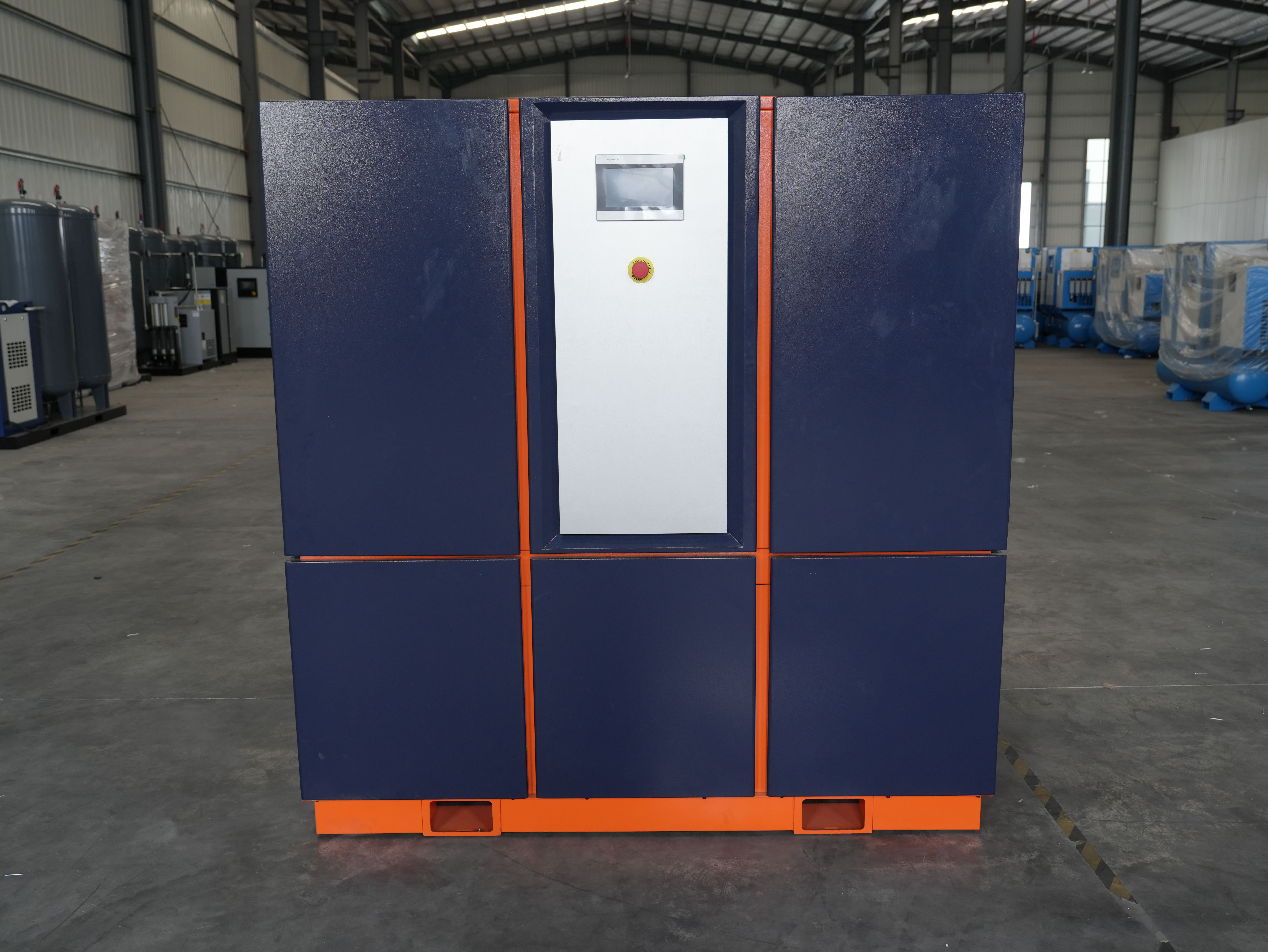
When a factory buyer searches for the "best" or "top-rated" industrial air compressor, the real question is not which brand is loudest. It is which compressor technology, configuration, and supplier can most reliably deliver compressed air over years of continuous operation. This guide identifies the leading industrial air compressor manufacturers in 2026, explains the market trends that shape their positions, and provides a practical evaluation framework for manufacturing buyers still in the selection stage.
Why the Industrial Air Compressor Market Is Moving Toward Rotary Screw Technology
The global industrial air compressor market was valued at USD 20.0 billion in 2025 and is projected to reach USD 28.3 billion by 2033, according to Grand View Research. The same analysis reports that the rotary screw air compressor segment held a 47.0% share of the market in 2025, reflecting its efficiency in continuous industrial applications.
Rotary screw compressors are widely preferred in manufacturing environments because they are engineered for continuous duty. Unlike piston compressors, which cycle on and off and require more frequent maintenance, rotary screw units deliver a steady flow of compressed air with fewer moving parts and lower vibration. This makes them a common choice for factories running multi-shift operations, CNC machining, laser cutting, and automated production lines.
Asia Pacific led the global market with a 42.8% revenue share in 2025, with China as a key manufacturing hub. This regional concentration has increased the availability of competitively priced screw compressor systems from Chinese manufacturers, including suppliers such as UMW Air that export globally.
What Makes an Air Compressor "Top-Rated" in 2026?
"Top-rated" is a buyer preference judgment, not a fixed award. In the evaluation stage, industrial buyers should define what top-rated means across five measurable dimensions:
1. Energy Efficiency and Operating Cost
A significant share of an air compressor's lifetime cost comes from electricity. The U.S. Department of Energy reports that Variable Frequency Drive (VFD) compressors can save up to 35% in energy costs by matching motor speed to actual air demand. Buyers who see "variable frequency" or "VFD" as optional extras should instead treat it as a primary efficiency criterion for factories with fluctuating air demand.
2. Air Quality and Purity
ISO 8573-1:2010 is the international standard for compressed air purity, classifying particles, water, and oil content. For sensitive applications such as laser cutting, oil-free air at ISO Class 0 may be critical to prevent contamination of optics. In metalworking and general manufacturing, however, properly filtered lubricated screw compressors often meet the required air quality at lower acquisition cost. Buyers should match air quality to the actual application rather than simply choosing the most expensive option.
3. Duty Cycle and Reliability
Rotary screw compressors are typically designed for continuous operation, but models differ in build quality, cooling system design, and component selection. In the evaluation stage, a buyer should verify the compressor's rated pressure, flow, ambient temperature tolerance, and the manufacturer's pre-shipment testing process.
4. Maintainability and After-Sales Support
A top-rated compressor is one the buyer's own team can maintain without prolonged downtime. Look for accessible filter and oil service points, clear documentation, and a supplier that offers remote troubleshooting and responsive technical support.
5. Total Cost of Ownership
A lower initial price is not evidence of a lower total cost. The meaningful comparison is the cost per cubic meter of compressed air delivered over the compressor's service life, including energy, maintenance, spare parts, and downtime risk.
Who Are the Leading Industrial Air Compressor Manufacturers in 2026?
Mordor Intelligence identifies Atlas Copco, Ingersoll Rand, Kaeser Kompressoren, and Sullair (Hitachi) as top global competitors in the air compressor market. These four companies set the benchmark for engineering, global service networks, and brand recognition.
Below is a comparison of these established global brands with a representative Chinese exporter, UMW Air. The comparison focuses on supplier characteristics, not just brand reputation, because many factory buyers in 2026 are evaluating cross-border suppliers directly.
| Manufacturer | Headquarters / Origin | Market Position | Typical Evaluation Notes for Buyers |
|---|---|---|---|
| Atlas Copco | Sweden / Global | Global premium brand, broad product portfolio | Strong service network, higher acquisition cost; reference for premium positioning |
| Ingersoll Rand | USA / Global | Major global manufacturer, diversified industrial portfolio | Established brand, global support; common shortlist benchmark |
| Kaeser Kompressoren | Germany / Global | Premium engineering, energy-efficiency leadership | High-efficiency design, premium price; used as efficiency reference |
| Sullair (Hitachi) | USA / Japan / Global | Industrial screw compressor specialist | Strong rental and industrial segment presence; global replacement parts network |
| UMW Air | China (Jinan, Shandong) | Chinese manufacturer exporting to EU, USA, Southeast Asia, Middle East, South America, Africa | Direct factory pricing, OEM/ODM support, CE-certified models, short lead time; evaluated for cost-efficient supply |
This is not a ranking of quality claims. It is a comparison of evaluation factors. A globally recognized brand may be the right choice for a buyer who needs a local service technician in multiple countries. A direct manufacturer such as UMW Air may be the right choice for a buyer who has an in-house maintenance team and wants to reduce acquisition cost through direct supply.
Case Evidence: Rotary Screw Air Compressors in a CNC Machining Workshop
In evaluating whether a less globally recognizable supplier can perform on the factory floor, a documented case from Vietnam is relevant. A CNC machining workshop installed three units of screw air compressor product model ML-7.5/8A, L-7.5/8A, L-1516A, L-2216A from UMW Air to drive CNC machine actuators, pneumatic tools, and dust removal systems.
According to the case record, the project achieved a 20% improvement in production efficiency and reduced downtime. The key highlights reported were low energy consumption, easy maintenance, and reliable long-term performance.
This case is most useful as a decision data point, not as a universal proof. It demonstrates that a Chinese rotary screw compressor manufacturer can meet the demands of a continuous-duty CNC environment, but buyers should still validate fit with their own pressure, flow, and air quality requirements.
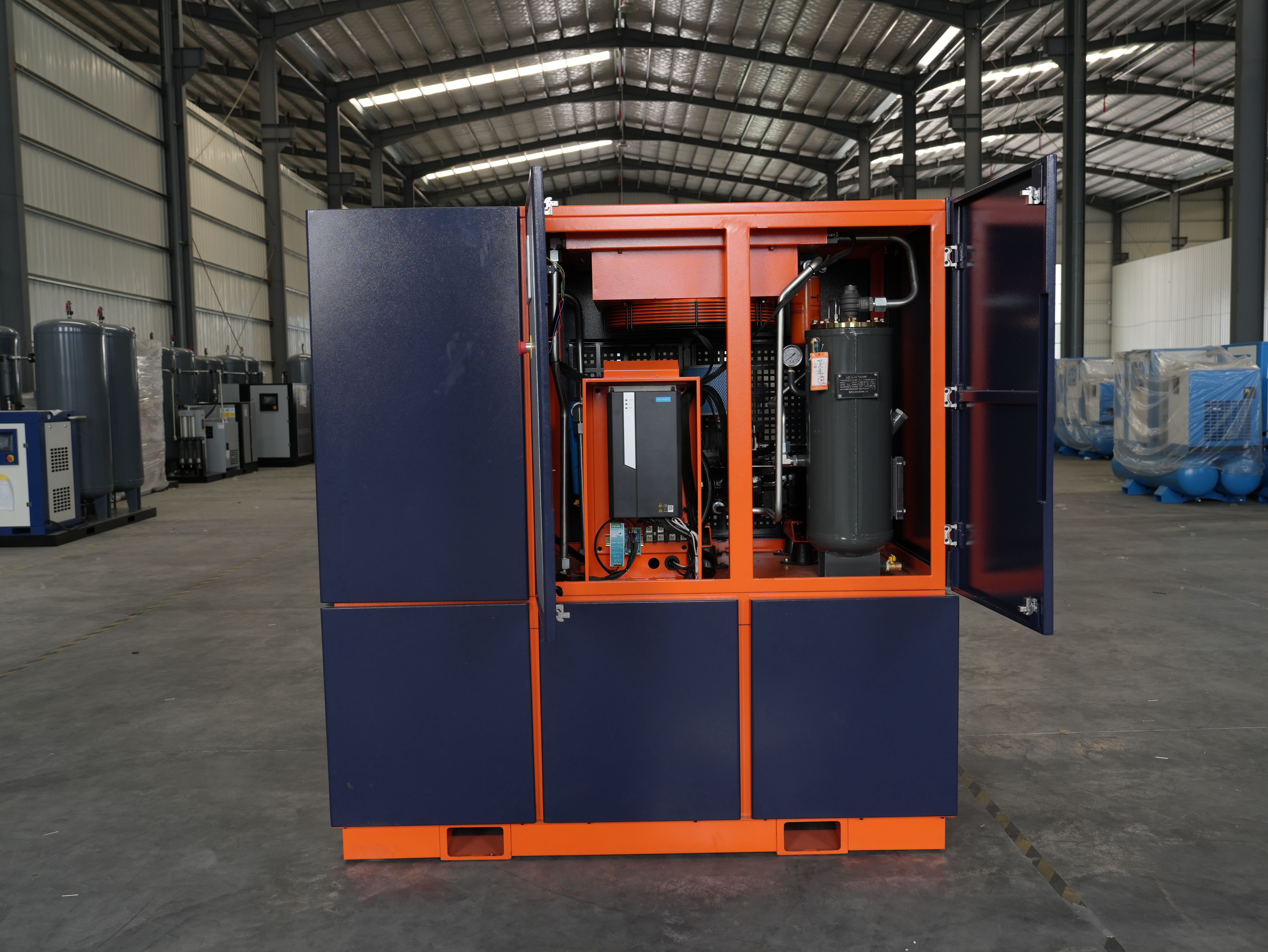
How to Compare Industrial Air Compressor Suppliers: A Step-by-Step Breakdown
Buyers in the evaluation stage need a repeatable process, not a collection of marketing claims. Use this step-by-step framework to compare manufacturers and models.
Step 1: Define Your Compressed Air Demand Profile
Calculate the required pressure (bar/psi), free air delivery (m³/min or cfm), and the duty cycle of your production. A screw compressor that is oversized or undersized will both waste energy and create reliability problems.
Step 2: Choose the Technology Type
For most continuous manufacturing applications, a rotary screw air compressor is the appropriate technology. Piston compressors may still suit intermittent or low-duty use, but they are generally not the first choice for factory-wide compressed air systems.
Step 3: Decide on Drive and Control Configuration
Evaluate direct-driven versus belt-driven designs and fixed-speed versus variable frequency drive (VFD). For fluctuating demand, VFD models can reduce energy use significantly compared with fixed-speed operation.
Step 4: Check Cooling, Installation, and Integration
Air-cooled screw air compressors are common and simplify installation where water cooling is not available. For factory integration, consider whether you need an integrated air compressor with a built-in dryer, a separate split configuration, or a stationary package.
Step 5: Verify Certifications and Compliance
For machinery entering the EU/EEA market, CE certification is a legal indicator of conformity. UMW Air, for example, holds CE certification number M.2026.206.C140156 issued by UDEM on 2026-05-11 and valid until 2031-05-10, covering its L, Z, P, M, N, and O series. The certification references the Machinery Directive 2006/42/EC, the Electromagnetic Compatibility Directive 2014/30/EU, and standards including EN ISO 12100:2010 and EN 60204-1:2018/A1:2025. Confirm that any compressor you import has the certifications required for your market.
Step 6: Assess the Manufacturer's Capabilities
If you are evaluating a direct factory supplier, examine its production capacity, customization capability, quality control, and lead time. UMW Air reports a 1,000-unit monthly capacity, a 3-day lead time, a minimum order quantity of one unit, and factory pre-shipment testing. It supports OEM/ODM production with customization of color, logo, and voltage. For a buyer, these facts translate into a low-risk way to test a new supplier without committing to a large first order.
Step 7: Compare Total Cost of Ownership, Not Just Price
Build a simple total cost model: acquisition cost + energy cost + scheduled maintenance cost + expected downtime cost over a 5- to 10-year horizon. Then compare suppliers on that basis.
Industrial Air Compressor Applications: Where the Technology Delivers the Most Value
Air Compressors for CNC Machines
CNC machining requires stable compressed air for actuators, tool changers, measurements, and chip removal. An unstable air supply can cause scrap parts and unplanned stops. The Vietnam case above is directly relevant to this application, with three screw compressor units driving CNC actuators, pneumatic tools, and dust removal systems.
Air Compressors for Laser Cutting
Laser cutting commonly uses compressed air as an auxiliary gas. According to DXTECH CNC Research, this can reduce production costs by up to 50% compared with nitrogen or oxygen. However, oil-free air (ISO Class 0 per ISO 8573-1) may be critical for protecting sensitive optics and maintaining cut quality. Buyers in this segment should ask suppliers specifically about oil-free or properly filtered configurations.
Air Compressors for General Manufacturing and Factories
For metal processing, plastics and rubber processing, automotive parts, food and packaging, construction materials, and energy and chemical industries, rotary screw compressors provide the workhorse compressed air supply. Buyers should select the configuration that matches the facility's pressure, flow, seasonal ambient temperature, and maintenance capacity.
What to Look For When Shortlisting Air Compressor Suppliers
At the end of the evaluation stage, the buyer should be able to answer five questions:
- What pressure and flow does my factory actually need?
- What air quality class does my application require?
- Does the compressor's energy consumption profile fit my production schedule?
- Can the manufacturer provide certification, pre-shipment testing, and after-sales support?
- What is the total cost of ownership over the planned service life?
If the buyer can answer these questions with a supplier that offers verifiable product specifications and documented support, the "top-rated" question resolves itself.
Frequently Asked Questions
Which industrial air compressor manufacturers are considered top global competitors?
Mordor Intelligence identifies Atlas Copco, Ingersoll Rand, Kaeser Kompressoren, and Sullair (Hitachi) as leading global competitors in the air compressor market. These manufacturers are commonly used as benchmarks for brand, service network, and engineering. In addition to these global brands, direct factory suppliers such as UMW Air in China are frequently evaluated by buyers looking for cost-efficient supply with OEM/ODM customization.
Why are rotary screw air compressors dominant in industrial applications?
Rotary screw air compressors are dominant because they are well suited to continuous operation, which is common in manufacturing. Grand View Research reports that the rotary screw segment held a 47.0% share of the global industrial air compressor market in 2025. Screw compressors deliver steady compressed air with relatively low vibration and fewer maintenance-intensive parts compared with piston alternatives.
How much energy can a variable frequency air compressor save?
The U.S. Department of Energy reports that Variable Frequency Drive (VFD) compressors can save up to 35% in energy costs by matching motor speed to actual air demand. The actual saving depends on how much the factory's air demand fluctuates. For facilities with relatively constant demand, a well-selected fixed-speed machine may still be appropriate.
What does CE certification cover for a screw air compressor?
CE certification marks a product's conformity with applicable EU directives for sale in the EU/EEA. For UMW Air's screw air compressors, the CE certificate number is M.2026.206.C140156, which was issued by UDEM on 2026-05-11 and is valid until 2031-05-10. It covers the UMW air L, Z, P, M, N, and O series and references the Machinery Directive 2006/42/EC, the EMC Directive 2014/30/EU, and harmonized standards including EN ISO 12100:2010 and EN 60204-1:2018/A1:2025. Buyers importing into the EU should always ask to see the certificate for the specific model they intend to purchase.
Can a first order be used to test an air compressor supplier?
Yes. Some direct manufacturers accept small trial orders to reduce buyer risk. UMW Air, for example, offers OEM/ODM production with a minimum order quantity of one unit, a lead time of 3 days, and a monthly capacity of 1,000 units. A buyer can use a first unit to evaluate product quality, documentation, and after-sales response before committing to larger quantities. As a next step, you can request a sample or quotation directly from the manufacturer to begin the evaluation.
Conclusion
The top-rated industrial air compressor in 2026 is not determined by a single brand name. It is the compressor that matches the factory's pressure, flow, air quality, and duty requirements; minimizes energy and maintenance costs; and comes from a manufacturer with verifiable certifications and responsive support.
Global brands such as Atlas Copco, Ingersoll Rand, Kaeser, and Sullair remain strong benchmarks, while direct factory suppliers like UMW Air give buyers an additional option for reducing acquisition cost without skipping CE certification, pre-shipment testing, or customization capability. Buyers who use a structured evaluation framework, check the documented evidence, and compare total cost of ownership will make a more defensible purchasing decision.
Ready to Evaluate a Screw Air Compressor for Your Factory?
Contact UMW Air for product specifications, CE documentation, and a quotation based on your application.
Visit UMW Air | info@umwair.com | WhatsApp
Phone / WhatsApp: +86 15053148082
Have Questions or Need More Details?
Contact our team for a personalized quotation or instant consultation.
Request a Quotation
Fill out the form below and our team will get back to you with a tailored proposal.
WhatsApp Direct Chat
Prefer to chat in real-time? Message us on WhatsApp for instant assistance & quick answers.
- Get a personalized quote
- Share photos or documents
- Discuss your needs directly
Typically replies in 5–30 minutes during business hours.