
Should Your Factory Switch from a Piston to a Rotary Screw Air Compressor? A 2026 Cost-Performance Review
Should Your Factory Switch from a Piston to a Rotary Screw Air Compressor? A 2026 Cost-Performance Review
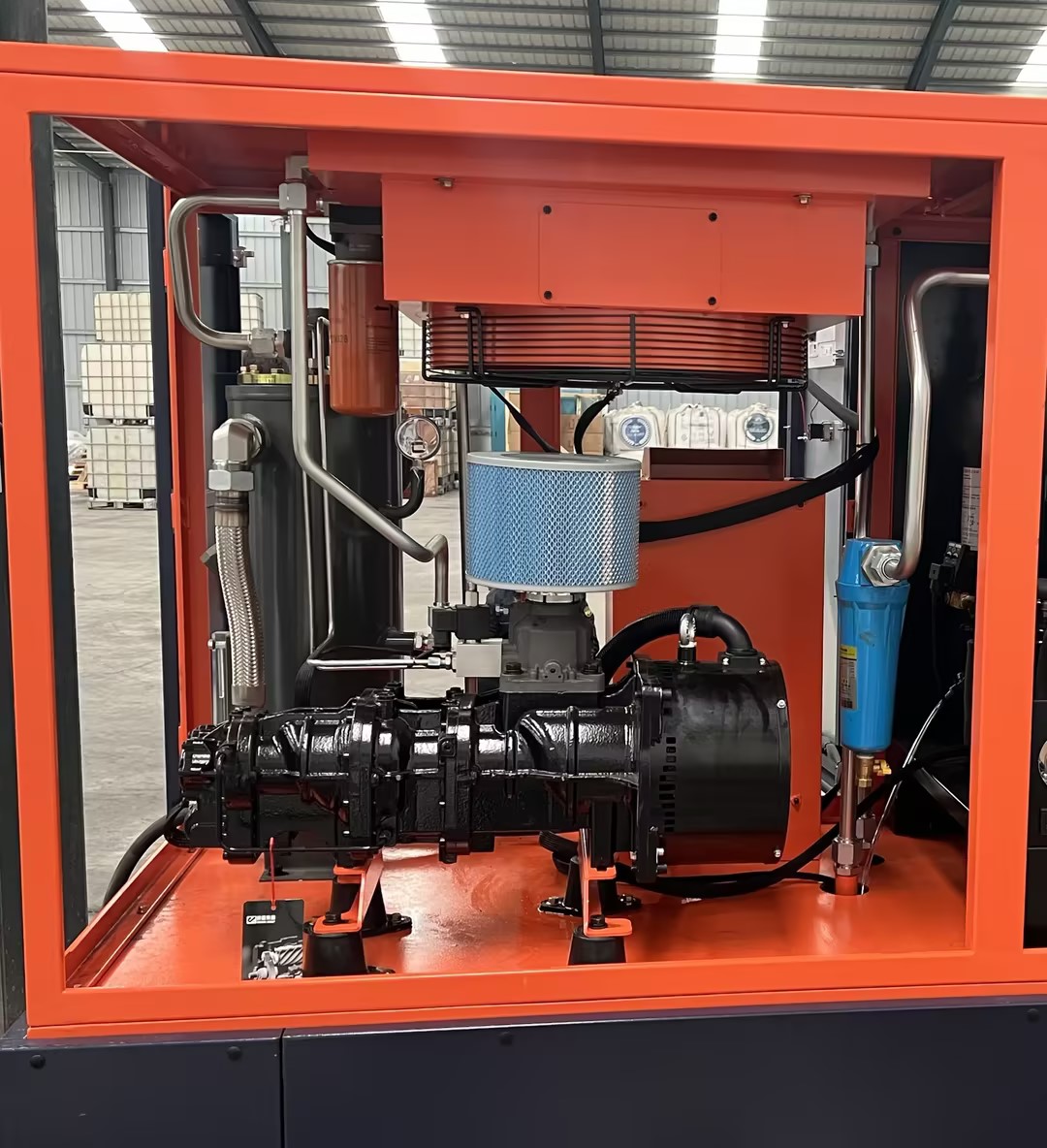
If your procurement team is looking at a rotary screw air compressor for 2026, you have probably moved past the “what is it” stage. The remaining issue is practical: should you replace existing piston equipment, and which option gives your line the best long-term value?
This article answers those questions with a decision-stage comparison. It compares rotary screw and traditional piston compressors from the buyer’s viewpoint and uses Shandong UMW Air Tech Co., Ltd. as an export-oriented manufacturing example. The goal is not to prove that one technology is always better. It is to give you a repeatable framework for comparing quotations, efficiency claims, maintenance plans, and supplier risk controls.
What makes this a decision-stage comparison?
At the decision stage, buyers already understand basic terms like cfm, PSI, and kilowatts. The harder questions are about trade-offs: continuous duty versus intermittent use, purchase price versus lifetime cost, and technical capability versus supplier trust.
Many factories buy traditional piston compressors because the initial price is lower. But compressed air is usually one of the largest energy-consuming utilities in a plant. In a high-demand facility, the deciding factor is not the first invoice. It is the energy loss, maintenance cost, and production risk accumulated over the equipment lifecycle.
That is why this review is organized as a cost-performance analysis, not as a product catalog. The conclusion will be specific to each factory: screw compressors are not automatically justified for every workshop, but they are easier to justify when the application demands continuous, stable air.
Industry context: why rotary screw technology dominates manufacturing air supply
Updated third-party research illustrates how important screw compression has become in industrial markets. The global rotary screw compressor market was estimated at USD 12.5 billion in 2024 and was projected to reach USD 13.3 billion in 2025, according to Custom Market Insights. Stationary rotary screw compressors represented approximately 67.6% of technology share in 2025, according to MarketsandMarkets.
Asia Pacific held the largest regional market share for rotary air compressors at 43.7% in 2025, with China as the leading country in the region, according to Grand View Research. Oil-filled rotary screw compressors accounted for 61.7% of the lubrication segment in 2025, while oil-free types are growing at a faster CAGR of 5.4%.
These figures matter to a factory buyer because they confirm that rotary screw compression is not a niche premium solution. It is the mainstream format for continuous industrial compressed air, especially in production lines, CNC machining, plastic processing, and automotive parts manufacturing.
Rotary screw versus piston: what changes inside a factory
UMW Air’s customer-facing comparison states it clearly:
Compared to traditional piston air compressors, this product offers distinct advantages including continuous operation capability, lower vibration, more stable air output, and integrated automation control.
For a factory buyer, these four words translate into concrete value. Continuous operation removes the downtime caused by piston compressor cool-down cycles. Lower vibration reduces piping stress and supporting structure wear. Stable air output improves product consistency in processes such as CNC spindle operation or laser cutting. Integrated automation control reduces the need to constantly adjust the machine by hand.
| Comparison point | Rotary screw | Traditional piston | Buyer impact |
|---|---|---|---|
| Operation profile | Can support 24/7 continuous operation | Intermittent operation pattern | Continuous plants should compare total production impact, not only machine price |
| Air output | Lower vibration and more stable air delivery | Higher pulsation risk under sustained use | Stable pressure protects process quality |
| Energy efficiency | Energy efficiency up to 95% for screw compression | Typically 65–70% for piston compression | Electricity cost is usually the largest operating expense |
| Maintenance | Fewer moving parts, lower maintenance workload, longer service interval | Frequent maintenance and higher wear and tear | Downtime and spare parts affect total cost |
| Initial investment | Slightly higher initial cost | Lower first cost | ROI can be higher for screw when production demand is continuous |
| Best-fit applications | Industrial production lines, CNC machining, plastic processing, automotive parts, continuous supply | Lower-duty or intermittent tasks | Application match is the central selection principle |
Table source: comparison data supplied by UMW Air for its rotary screw compressor line versus traditional piston compressors. Performance values should be validated at the actual operating condition and duty cycle of your factory.
Step-by-step cost-performance evaluation
Use this process when comparing rotary screw and piston compressor proposals. It is designed for the decision stage and can be applied to UMW Air, global brands, or any other supplier.
Step 1: Define your duty cycle before comparing price
The first question is not “which compressor is better?” It is “how many hours per day will the compressor run under load?”
Traditional piston compressors operate intermittently. Rotary screw compressors are designed for continuous operation and high-demand production environments. If your factory runs multiple shifts, automated CNC cells, or long laser cutting cycles, the technology comparison has already tilted toward screw compression.
Step 2: Translate efficiency claims into electricity cost
Screw compressor comparisons often cite up to 95% energy efficiency, while piston compressors are usually in the 65–70% range and less suitable for continuous high loads. Those figures are not just marketing; they influence annual electricity spend.
Ask each supplier for efficiency data at your expected load profile. Also ask whether the package includes control options such as load/unload, variable speed, or permanent magnet VSD operation. More operating hours create more value from efficient technology.
Step 3: Compare total maintenance and downtime burden
UMW Air’s comparison table notes that screw compressors have lower maintenance requirements because they have fewer moving parts and longer service intervals. Piston compressors generally require more frequent maintenance and experience higher wear.
When you compare quotations, estimate the cost of scheduled maintenance, repair labor, replacement parts, and lost production. In a continuous-duty factory, these variables can outweigh the purchase price gap.
Step 4: Check pressure and flow against your real applications
Compressed air specifications are application-specific. CNC machines commonly require 90–120 PSI working pressure, with flow rates of roughly 5–30 CFM depending on machine size. Fiber laser cutting that uses compressed air as an assist gas can require pressures up to 1.6 MPa, which is about 232 PSI, and needs integrated filtration to protect lens quality.
For food and pharmaceutical lines, air quality is usually defined by ISO 8573-1:2010, the international standard for particles, water, and oil in compressed air. If the process cannot tolerate oil contamination, you may need an oil-free screw compressor or appropriate downstream filtration. Do not choose a compressor on pressure alone; match the whole package to the process.
Step 5: Verify the supplier’s factory-level quality controls
The best technology can still fail if supplier manufacturing controls are weak. One useful risk control example comes from UMW Air: overheating is addressed through high-efficiency radiators and cooling fans, and UMW Air performs thermal tests on every unit before shipment.
When comparing suppliers, ask for proof of pre-shipment testing, thermal management design, and after-sale service channels. These measures reduce installation and commissioning surprises.
Where a rotary screw compressor earns its investment
The application-specific advantage of rotary screw technology is easiest to see in operations that cannot tolerate airflow interruptions.
- CNC machining: Rotating tools, spindle chillers, and pneumatic fixturing lose value if air pressure drops. UMW Air explicitly positions its screw compressor products for industrial production lines and CNC machining applications with high continuous air demand.
- Laser cutting: Assist gas quality and pressure stability affect cut quality and lens life. Helped by high-pressure screw configurations and filtration, a laser line can run more predictably than with an intermittent piston unit.
- General manufacturing factories: Automated assembly, packaging, and machine tools all benefit from stable pressure delivered over long shifts.
- Food processing and pharmaceutical lines: Air purity is the first priority; the international reference is ISO 8573-1:2010 for particles, water, and oil. Oil-free rotary screw compressors are a growing segment because many processors want to reduce contamination risk.
Supplier example: Shandong UMW Air Tech Co., Ltd.
Companies comparing rotary screw air compressor suppliers need verifiable first-party facts, not only brand reputation. UMW Air is one export-oriented example that can be benchmarked by procurement teams.
Shandong UMW Air Tech Co., Ltd. is an industrial air compressor manufacturer based at 68 Gongye South Road, Jinan, Shandong, China. Founded in 2019, the company operates a 2000-square-meter factory, employs about 200 people, and has an R&D team of 40 people. Its reported annual output is approximately 12,000 screw compressor units.
| Verifiable supplier data | UMW Air |
|---|---|
| Legal name | Shandong UMW Air Tech Co., Ltd. |
| Location | 68 Gongye South Road, Jinan, Shandong, China |
| Founded | 2019 |
| Factory size | 2000 m² |
| Employees | Approximately 200 |
| R&D team | 40 |
| Annual output | Approximately 12,000 units |
| Main product categories | Air-cooled screw compressor, direct-driven screw compressor, stationary screw compressor, diesel mobile screw compressor, heavy-duty screw compressor |
| Export ratio | 100% export-oriented |
| Main markets | EU, USA, Southeast Asia, Middle East, South America, Africa |
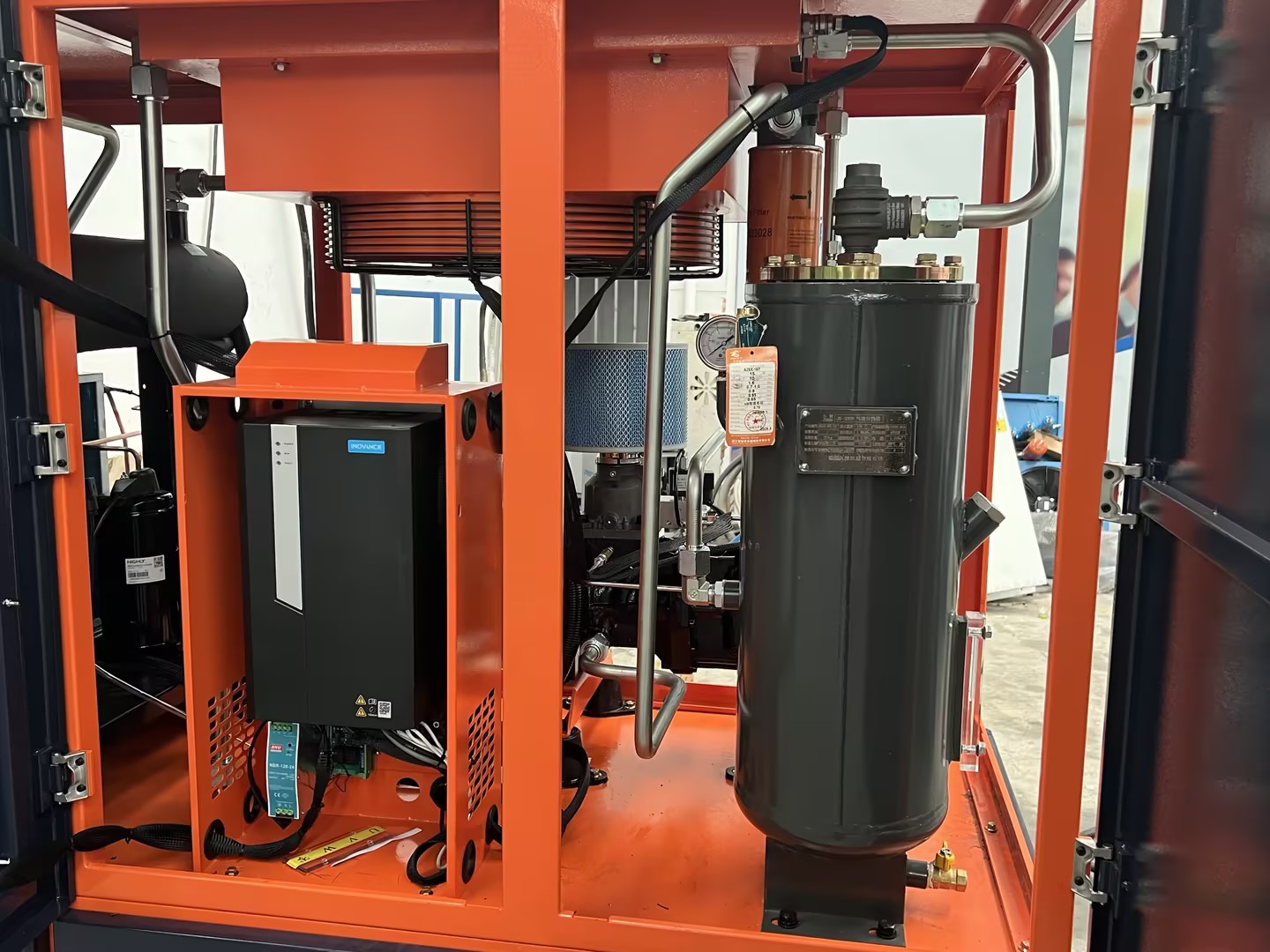
UMW Air describes its product purpose in practical terms: the product is suitable for industrial production lines, CNC machining, and other high-demand continuous air supply scenarios. The company profile also explains its engineering direction by standardizing PM VSD technology and low-resistance system design to improve energy efficiency across the equipment lifecycle.
That statement is useful to buyers because it shows how the supplier thinks about cost of ownership. Instead of claiming to be a premium brand, UMW Air focuses on measurable factory outcomes: lower downtime, controlled overheating risk, continuous operation, and stable output.
Frequently asked questions
How should I confirm that a rotary screw air compressor package is suitable for a regulated environment?
Start with ISO 8573-1:2010, the international standard for particles, water, and oil in compressed air. This is especially important for food and pharmaceutical applications. If your process requires oil-free air, note that oil-free rotary screw types are growing at a faster CAGR than oil-filled types, while oil-filled systems still dominate the current installed base. For machine-level electrical or safety compliance, ask the exporter for documentation applicable to your destination market.
Can a rotary screw air compressor run continuously for CNC machines and production lines?
Yes. UMW Air positions its product for industrial production lines, CNC machining, and other high-demand continuous air supply scenarios. Compared with traditional piston compressors, the rotary screw design offers continuous operation capability, lower vibration, more stable air output, and integrated automation control. These factors are directly aligned with multi-shift factory operation.
Is a rotary screw air compressor worth the higher upfront cost?
For continuous-duty factories, the answer is usually yes. Screw compressor energy efficiency can reach up to 95%, while piston compressors are typically around 65–70% and are less suitable for continuous high-load use. Screw compressors also have fewer moving parts, lower maintenance requirements, and longer service intervals. Despite a slightly higher initial investment, the long-term ROI is often higher because downtime and maintenance costs are lower.
What should a buyer request before choosing a rotary screw air compressor supplier?
Request a specification-matched quotation that includes flow, pressure, air quality, duty cycle, and control method. Ask how the supplier manages common failure risks. UMW Air, for example, controls overheating risk with high-efficiency radiators and cooling fans and performs pre-shipment thermal tests. For final validation, request a sample or pilot unit before volume commitment.
How should I evaluate a Chinese rotary screw air compressor manufacturer before scaling up?
Use verifiable signals such as factory size, headcount, R&D capacity, annual output, product scope, and export markets. Shandong UMW Air Tech Co., Ltd. reports a 2000 m² factory, around 200 employees, 40 R&D staff, annual output close to 12,000 units, and a 100% export orientation to markets including the EU, USA, Southeast Asia, Middle East, South America, and Africa. For current lead time, pricing, and sample validation, contact UMW Air directly with your application data.
Final decision rule for 2026 buyers
The decision between rotary screw and piston air compressors should be made on operating hours, air quality needs, energy cost, maintenance workload, and supplier reliability. If your plant runs continuous production lines, CNC equipment, laser cutting, or other high-demand processes, screw compression is the defensible choice. If the application is truly intermittent and low-pressure, piston compression may remain acceptable.
Use UMW Air as one example of an export-focused manufacturer that documents factory size, product scope, risk controls, and application intent. Then apply the same discipline to every supplier quotation.
Request a specification-matched rotary screw quotation
Tell UMW Air your pressure, flow, duty cycle, and air quality requirements. The team can help you compare product options and prepare an export quotation for your project.
Visit UMW Air Official WebsiteEmail: info@umwair.com | Phone/WhatsApp: +86 15053148082
Have Questions or Need More Details?
Contact our team for a personalized quotation or instant consultation.
Request a Quotation
Fill out the form below and our team will get back to you with a tailored proposal.
WhatsApp Direct Chat
Prefer to chat in real-time? Message us on WhatsApp for instant assistance & quick answers.
- Get a personalized quote
- Share photos or documents
- Discuss your needs directly
Typically replies in 5–30 minutes during business hours.