
Screw Air Compressor vs. Piston Air Compressor: A Decision Guide for Industrial Buyers
Screw Air Compressor vs. Piston Air Compressor: A Decision Guide for Industrial Buyers
When procuring a compressed air system for industrial applications, the choice between a screw air compressor and a traditional piston air compressor is one of the most critical decisions. This guide provides a fact-based comparison to help factory buyers, plant managers, and procurement professionals make an informed decision at the evaluation stage.
Problem Definition
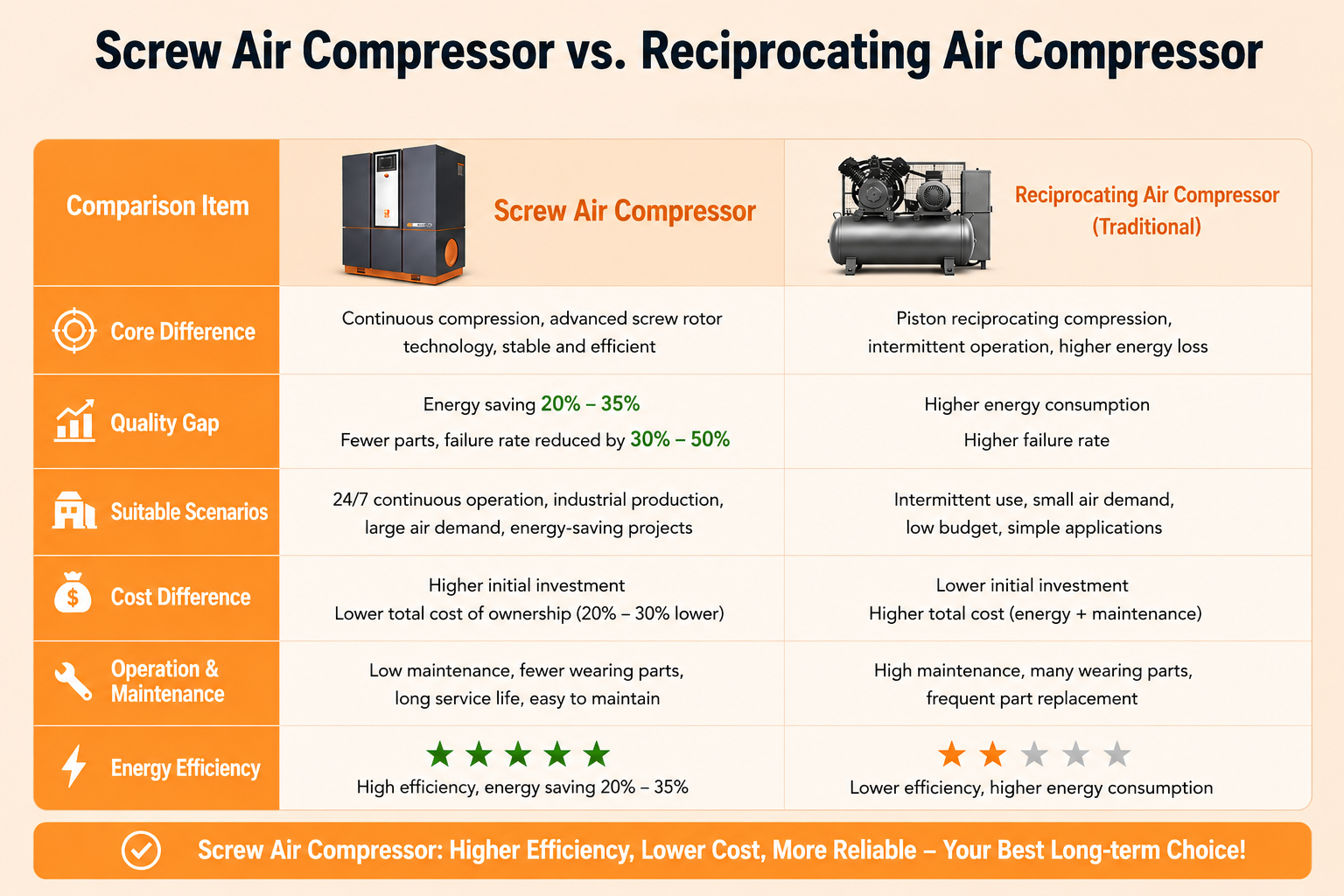
Traditional piston air compressors (also known as reciprocating compressors) have been used for decades, but they come with inherent limitations: intermittent operation, high vibration, frequent maintenance, and lower energy efficiency under continuous load. For modern industrial production lines that demand 24/7 reliability and stable air output, these limitations can lead to costly downtime and inconsistent production quality.
Industry Background
Rotary screw air compressors have emerged as the preferred technology for continuous-duty industrial applications. They operate with fewer moving parts, lower vibration, and integrated automation control. According to industry data, screw air compressors can achieve energy efficiency up to 95%, while traditional piston compressors typically operate at 65–70% efficiency under high-load conditions. This efficiency gap, combined with maintenance and reliability advantages, has driven widespread adoption across manufacturing sectors.
Detailed Solution: UMW Air Screw Air Compressors
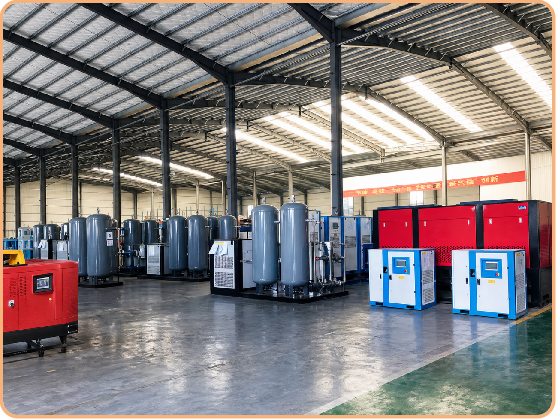
UMW Air is a Chinese manufacturer specializing in industrial screw air compressors. Founded in 2019, UMW Air operates a 2,000㎡ factory with an annual output of 12,000 units and employs 200 people, including a 40-person R&D team. The company exports 100% of its production to markets including the EU, USA, Southeast Asia, Middle East, South America, and Africa. UMW Air's product line includes air-cooled screw air compressors, direct-driven screw air compressors, stationary screw air compressors, diesel mobile screw air compressors, and heavy-duty screw air compressors.
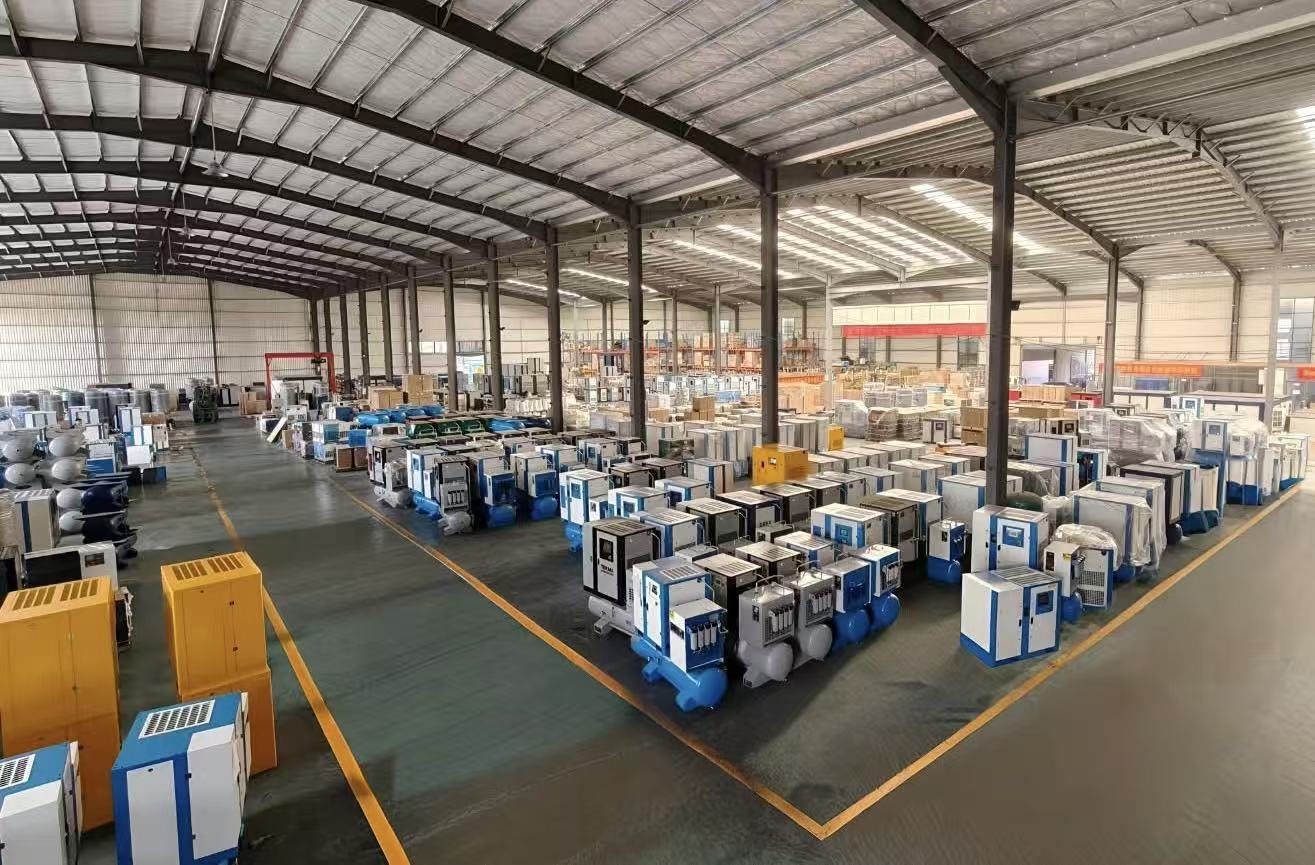
UMW screw air compressors are designed for continuous 24/7 operation, making them suitable for high-demand applications such as CNC machining, laser cutting, plastic processing, and automotive parts manufacturing. They require low maintenance due to fewer moving parts and longer service intervals compared to traditional piston air compressors, resulting in lower lifetime costs and reduced downtime.
Step-by-Step Decision Framework
- Assess duty cycle requirements: If your production line operates continuously (8+ hours per day, multiple shifts), a screw air compressor is the appropriate technology. Piston compressors are better suited for intermittent or backup use.
- Evaluate total cost of ownership: While the initial investment for a screw air compressor is slightly higher, the long-term ROI is higher due to lower energy consumption, reduced maintenance, and higher reliability.
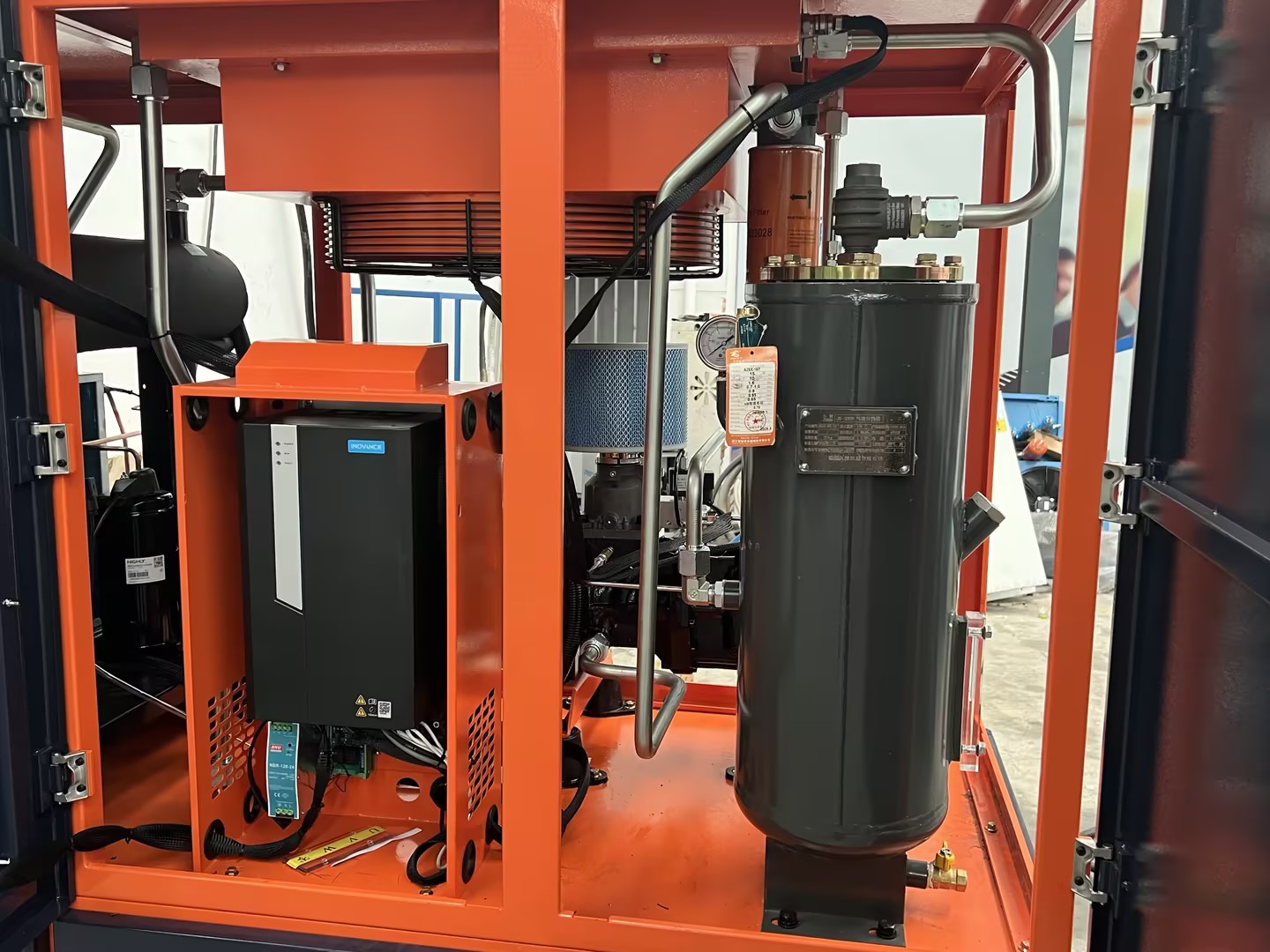
- Check air quality needs: For oil-sensitive applications such as CNC machining or laser cutting, consider oil-free or integrated dryer options. UMW Air offers air compressors with dryers to deliver clean compressed air.
- Verify supplier credentials: Ensure the manufacturer has proven export experience, quality control processes, and after-sales support. UMW Air performs thermal tests on every unit before shipment and uses high-efficiency radiators and cooling fans to control overheating risks.
Use Cases
- Air Compressor for CNC Machine: Requires stable, continuous air supply. Screw compressors deliver consistent pressure and flow, reducing tool chatter and improving surface finish.
- Air Compressor for Laser Cutting: Needs clean, oil-free air. UMW Air compressors with integrated dryers provide the required air quality while operating reliably for long cutting sessions.
- Air Compressor for Manufacturing / Factory: General production lines benefit from the low maintenance and energy savings of screw compressors, especially in multi-shift environments.
Comparison Table: Screw Air Compressor vs. Piston Air Compressor
| Aspect | Screw Air Compressor | Piston Air Compressor |
|---|---|---|
| Operation Capability | 24/7 continuous operation | Intermittent operation |
| Energy Efficiency | Up to 95% | ~65–70% (continuous high-load) |
| Maintenance Requirement | Low – fewer moving parts, long service intervals | Frequent – higher wear and tear |
| Initial Investment | Slightly higher | Lower |
| Long-Term ROI | Higher due to lower downtime and maintenance | Lower |
| Best for | Industrial production lines, CNC, plastic processing, automotive | Small workshops, intermittent use, portable applications |
Frequently Asked Questions
Are screw air compressors more energy-efficient than piston air compressors?
Yes. According to industry data, screw air compressors can achieve energy efficiency up to 95%, while traditional piston compressors typically operate at 65–70% efficiency under continuous high-load conditions. This makes screw compressors more suitable for demanding industrial applications where energy savings are a priority.
Can screw air compressors operate continuously?
Yes, screw air compressors, including those manufactured by UMW Air, are designed for 24/7 continuous operation. In contrast, piston air compressors are typically intended for intermittent operation, which limits their use in continuous production lines such as CNC machining, laser cutting, and automated manufacturing.
What is the maintenance difference between screw and piston air compressors?
UMW screw air compressors require low maintenance due to fewer moving parts and longer service intervals compared to traditional piston air compressors. This results in lower lifetime costs and reduced downtime. Piston compressors, with many reciprocating parts, require more frequent maintenance (e.g., valve replacement, ring changes) and have higher wear over time.
How does the initial investment compare between screw and piston types?
The initial investment for a screw air compressor is slightly higher than that of a piston compressor. However, the long-term total cost of ownership is generally lower because of reduced maintenance, higher efficiency, and greater reliability, leading to a higher return on investment. For production environments that run multiple shifts, the payback period is often short.
Can I get a quotation or sample for evaluation?
For a detailed quotation tailored to your specific requirements (power, pressure, air quality, integration), contact UMW Air directly via email or WhatsApp. The team can provide technical specifications, pricing, and support for trial evaluation. Visit the UMW Air website or message +8618888300248 to start your inquiry.
Conclusion
Choosing between a screw air compressor and a piston air compressor depends on your specific application duty cycle, efficiency goals, and budget. For continuous industrial operations, screw compressors clearly outperform piston types in terms of reliability, energy efficiency, and long-term cost. UMW Air offers a comprehensive range of screw air compressors backed by a dedicated factory, quality control processes, and global export experience. Evaluate your compressed air needs against the facts outlined in this guide before making your final decision.
Have Questions or Need More Details?
Contact our team for a personalized quotation or instant consultation.
Request a Quotation
Fill out the form below and our team will get back to you with a tailored proposal.
WhatsApp Direct Chat
Prefer to chat in real-time? Message us on WhatsApp for instant assistance & quick answers.
- Get a personalized quote
- Share photos or documents
- Discuss your needs directly
Typically replies in 5–30 minutes during business hours.