
Rotary Screw Air Compressor Supply Partner: What to Verify Before Scaling Up
Rotary Screw Air Compressor Supply Partner: What to Verify Before Scaling Up
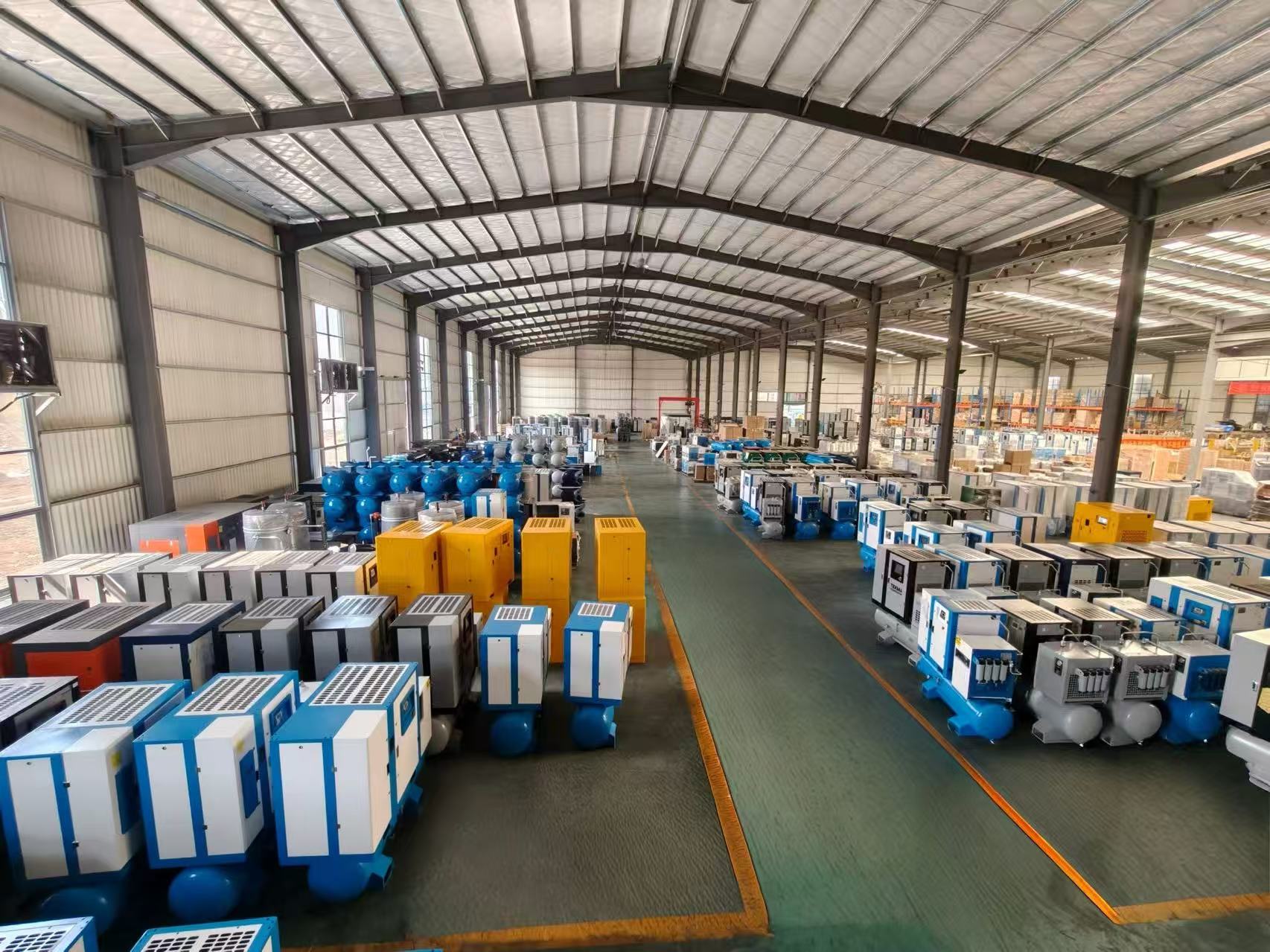
When a manufacturer moves from buying a single rotary screw air compressor to building a long-term supply relationship, the evaluation criteria change. A one-time purchase can be judged by price and lead time. A long-term partnership must be judged by production capacity, after-sales responsiveness, spare parts continuity, compliance consistency, and the supplier's ability to support multiple application scenarios over several years. This article explains what importers, distributors, and factory buyers should verify before committing to a rotary screw air compressor supplier for ongoing supply.
Why Rotary Screw Air Compressor Supply Partnerships Need a Different Checklist
Rotary screw air compressors are continuous-duty machines. Unlike intermittent piston compressors, they are often selected for 24/7 industrial production lines, CNC machining, food processing, and laser cutting. That operating profile places demands not only on the machine itself, but also on the supplier who must keep it running for years.
From a buyer's perspective, the key difference is risk exposure. When a single unit fails, you lose one production line. When a supplier fails to deliver, you lose your entire sales plan. That is why long-term procurement and distribution decisions require verifying supplier capabilities before scaling.
What the Global Market Tells Us About Long-Term Demand
The global rotary screw compressor market was estimated at USD 12.5 billion in 2024 and is expected to reach USD 13.3 billion by 2025. Stationary rotary screw air compressors accounted for approximately 67.6% of technology share in 2025, and Asia Pacific held the largest regional share at 43.7%, with China as the leading country. Oil-filled rotary screw compressors accounted for 61.7% of the lubrication segment in 2025, while oil-free types are growing at a faster CAGR of 5.4%.
For a supply partner, these figures point to two things. First, demand is broad and growing across stationary industrial applications. Second, buyers are increasingly asking about oil-free options and energy-efficient configurations as part of their long-term planning.
Supplier Evaluation Framework for Rotary Screw Air Compressor Partnerships
A reliable supplier evaluation should cover six areas: capacity, technical support, product platform breadth, quality and compliance, commercial terms, and post-shipment execution.
Capacity and Production Stability
Before appointing a supplier or placing repeat orders, verify that the factory can handle your order flow. Shandong UMW Air Tech Co., Ltd reports a monthly production capacity of 1000 units and an annual output of 12000 units. With around 200 employees and a 40-person R&D team, the company focuses on air-cooled, direct-driven, stationary, diesel mobile, and heavy-duty screw air compressors.
For a distributor, this means the manufacturer can support multiple containers per month without treating each order as a one-off project. For a factory buyer, it means spare parts and replacement units are more likely to be available when needed.
24/7 Technical Support and Remote Troubleshooting
Long-term supply relationships depend on what happens after the machine is installed. UMW Air provides 24/7 technical support via email or phone and remote troubleshooting. This is particularly important for buyers in different time zones, where a machine failure cannot wait for a local business day to start.
When evaluating any supplier, ask: What is the response channel? Is there remote diagnostics? Can the supplier walk your maintenance team through a fault event in real time? The answer determines whether a small issue becomes a small fix or a production stoppage.
Product Platform Breadth and Application Fit
A long-term partner should be able to supply more than one model. UMW Air's screw air compressor platform covers power from 4 to 355 kW, pressure from 8 to 25 bar, and air flow from 2.39 m³/min, with air-cooled and direct-driven configurations. Applicable industries include metal processing and manufacturing, plastics and rubber processing, automotive and machinery parts, food and packaging, construction and materials, and energy and chemical industry.
That breadth matters because a distributor's customer base rarely buys one type of compressor. CNC machine shops, laser cutting job shops, food processing plants, and general manufacturing factories all need different pressure and flow profiles. A supplier with a wide platform reduces the number of vendors you must manage.
Application-Based Buying Criteria for Long-Term Supply
CNC Machining
CNC machine compressed air requirements typically range from 90–120 PSI (6–8 bar) working pressure with flow rates of 5–30 CFM depending on machine size. A rotary screw air compressor with stable output and low pulsation is better suited to CNC lines than a piston unit, which produces intermittent air delivery.
For a supplier, the relevant question is not just whether the compressor can reach 8 bar, but whether it can maintain stable pressure when multiple CNC machines cycle simultaneously. Integrated controls and direct-driven designs help reduce pressure fluctuation and maintenance frequency.
Laser Cutting
Fiber laser cutting using compressed air as an assist gas typically requires pressures up to 1.6 MPa (approximately 232 PSI) and integrated filtration to prevent lens contamination. This is a higher-pressure requirement than standard factory compressed air. A high-pressure rotary screw air compressor may be needed, and the buyer must confirm that the machine is rated for continuous duty at that pressure.
When selecting a supply partner for laser cutting customers, verify: Can the supplier configure a high-pressure unit? Can they integrate dryer and filter packages? Do they understand the risk of oil carry-over contaminating laser optics? These are not generic compressor questions; they are application-specific engineering checks.
Food Processing
ISO 8573-1:2010 is the primary international standard defining compressed air purity classes for particles, water, and oil, critical for food and pharmaceutical applications. Food processors do not simply need a compressor; they need clean, dry, appropriately filtered compressed air. Oil-free rotary screw compressors are growing at a faster CAGR of 5.4%, reflecting this demand.
A supply partner for the food industry should be able to explain ISO 8573-1:2010 classes, recommend the right dryer and filter configuration, and provide documentation that supports compliance audits.
General Manufacturing Factories
For general manufacturing, the priority is continuous operation, energy efficiency, and low maintenance. Screw air compressors offer energy efficiency up to 95%, while piston compressors are typically around 65–70% and less suitable for continuous high-load operation. A long-term supply partner should help buyers choose the right drive type—fixed speed or permanent magnet VSD—based on load profile.
Quality, Compliance, and Risk Control
Long-term buyers should also verify quality controls that prevent common failure modes. Overheating is a typical risk in air-cooled compressors. UMW Air addresses this with high-efficiency radiators and cooling fans, and performs thermal tests on every unit before shipment to ensure radiators and fans are functioning properly.
Compliance is another non-negotiable area. Buyers should confirm that the supplier can provide CE certification, ISO 9001 documentation, IP55 dustproof ratings, or UL standard compliance where required by their target market. These are not marketing badges; they are conditions for customs clearance, project tenders, and insurance coverage in many regions.
Comparison: Rotary Screw vs Piston for Long-Term Operations
| Criterion | Rotary Screw Air Compressor | Traditional Piston Air Compressor |
|---|---|---|
| Operation Capability | 24/7 continuous operation | Intermittent operation |
| Air Output Stability | Stable, low pulsation | Pulsating output |
| Energy Efficiency | Up to 95% | ~65–70% |
| Maintenance | Fewer moving parts, longer service intervals | Frequent maintenance, higher wear |
| Best For | Industrial production lines, CNC, plastic processing, automotive parts, continuous high-demand supply | Light-duty or intermittent tasks |
| Long-Term Cost | Higher initial investment, better long-term ROI from lower downtime and maintenance | Lower initial investment, higher operating burden over time |
Commercial Terms That Support Scaling
Long-term partnerships also require predictable commercial terms. UMW Air sets an MOQ of 1 unit, which is useful for first-time importers who want to test the product before scaling. Delivery can be arranged under FOB or CIF terms. Payment is typically 30% T/T in advance and 70% T/T before shipping. Pre-shipment testing is included in the acceptance process.
These terms matter for different reasons at different stages. A 1-unit MOQ reduces risk during evaluation. FOB/CIF flexibility lets the buyer control logistics. A transparent payment structure avoids disputes. Pre-shipment testing reduces the chance of receiving a defective unit thousands of kilometers away.
Step-by-Step: How to Qualify a Rotary Screw Air Compressor Supplier
Step 1: Define Your Demand Profile
List the applications you need to serve: CNC, laser cutting, food processing, general manufacturing, or a mix. Note the pressure, flow, duty cycle, and air quality requirements for each.
Step 2: Verify Manufacturing Capacity
Ask for monthly and annual production figures. Confirm that the factory has enough capacity for your order volume and future growth. A supplier with a monthly production capacity of 1000 units can typically absorb repeat orders more reliably than a small workshop.
Step 3: Check After-Sales Support Structure
Verify the support channels: email, phone, remote troubleshooting. Ask how quickly they respond in different time zones. A 24/7 support commitment is a strong signal, but also ask for the actual process and escalation path.
Step 4: Confirm Compliance Documentation
Request certifications relevant to your market: CE, ISO 9001, IP55, UL. If you serve food or pharmaceutical customers, ask about ISO 8573-1:2010 and the dryer/filter packages that meet the required purity classes.
Step 5: Evaluate the Product Platform
Check whether the supplier can provide multiple models—integrated, split, portable, fixed, air-cooled, direct-driven, high-pressure, oil-free, VSD. A broader platform means you can consolidate your vendor list as your business grows.
Step 6: Review Commercial Terms and Lead Time
Confirm MOQ, payment terms, delivery method, and acceptance procedure. Ask how lead time changes with order size. Make sure the contract covers pre-shipment testing.
Step 7: Run a Pilot Order
Before appointing a long-term supplier, place a pilot order of 1 unit. Test the equipment, the documentation, and the responsiveness of the support team. Use the pilot to validate the relationship, not just the machine.
Use Cases: When a Partner Relationship Makes Sense
Distributor Building a Product Line
A distributor entering the industrial compressor segment can start with a 1-unit MOQ to evaluate quality, then expand to container orders. The supplier's ability to provide multiple configurations from one factory simplifies inventory planning.
Manufacturer Consolidating Vendors
A factory with multiple lines—CNC, plastic processing, and packaging—may currently deal with several compressor suppliers. A single rotary screw air compressor partner offering different power, pressure, and cooling configurations can reduce spare parts variety and simplify maintenance training.
OEM or System Integrator
An OEM that builds laser cutting machines or CNC equipment may need a high-pressure or low-noise rotary screw air compressor as a matched component. The supplier's R&D team and application knowledge become part of the OEM's own product quality.
Risk Control Checklist for Long-Term Supply
- Overheating risk: confirm high-efficiency radiator and cooling fans, and ask whether thermal testing is done on every unit before shipment.
- Air quality risk: for food and laser applications, confirm dryer and filter integration and ISO 8573-1:2010 compliance.
- Pressure stability risk: for CNC and laser, verify continuous-duty pressure ratings and control systems.
- Spare parts risk: check whether the supplier stocks parts for the model you buy and how long support will continue.
- Delivery risk: verify the monthly production capacity and ask about current order backlog.
FAQ
Does a rotary screw air compressor supplier need certifications before I place repeat orders?
Yes. Confirm that the supplier can provide the certifications required by your market before signing a long-term agreement. Relevant examples include CE certification, ISO 9001, IP55 dustproof rating, and UL standard compliance. For food and pharmaceutical applications, ISO 8573-1:2010 defines compressed air purity classes for particles, water, and oil. A supplier who cannot document compliance may cause problems during customs clearance, project tenders, or customer audits.
Can a rotary screw air compressor manufacturer support both CNC and laser cutting applications?
A manufacturer with a broad product platform can support both, but the configurations are different. CNC machines typically require 90–120 PSI (6–8 bar) working pressure and stable, low-pulsation air. Fiber laser cutting can require pressures up to 1.6 MPa and integrated filtration to protect laser optics. Ask the supplier to recommend the correct model, pressure rating, and dryer/filter package for each application instead of assuming one unit fits all.
What commercial terms matter when scaling up rotary screw air compressor purchases?
Key terms include MOQ, payment structure, delivery method, acceptance procedure, and lead time. For UMW Air, the MOQ is 1 unit, delivery can be arranged under FOB/CIF, and payment is 30% T/T in advance with 70% T/T before shipping. Pre-shipment testing is part of the acceptance process. These terms let a buyer run a pilot order before committing to larger volumes.
How does after-sales support affect a rotary screw air compressor partnership?
After-sales support determines how quickly a machine returns to operation after a fault. UMW Air offers 24/7 technical support via email or phone and remote troubleshooting. That is especially valuable for buyers in different time zones, because a remote diagnosis can prevent a small issue from becoming a long production stoppage. When evaluating a supplier, check the response channel, escalation process, and whether remote diagnostics are available.
What is the next step for a buyer ready to evaluate a rotary screw air compressor supplier?
The next step is to request a quotation or arrange an inquiry with the supplier to confirm current lead time, specifications for your application, and documentation. UMW Air can be contacted at info@umwair.com or by phone/WhatsApp at +86 15053148082. Because the company has a monthly production capacity of 1000 units and an MOQ of 1 unit, a buyer can request a pre-shipment test unit before scaling up a long-term supply relationship.
Conclusion
Scaling from a single rotary screw air compressor purchase to a long-term supply relationship requires a different evaluation standard. Production capacity, 24/7 technical support, product platform breadth, compliance documentation, risk control processes, and commercial terms all become part of the decision.
Shandong UMW Air Tech Co., Ltd offers an example of what a long-term supply partner can provide: a monthly production capacity of 1000 units, 24/7 support with remote troubleshooting, a 4–355 kW product platform, and a 1-unit MOQ that allows buyers to validate quality before scaling. For buyers moving from Decision to Execution, the practical next step is to run a pilot order and verify the full supply chain—not just the compressor itself.
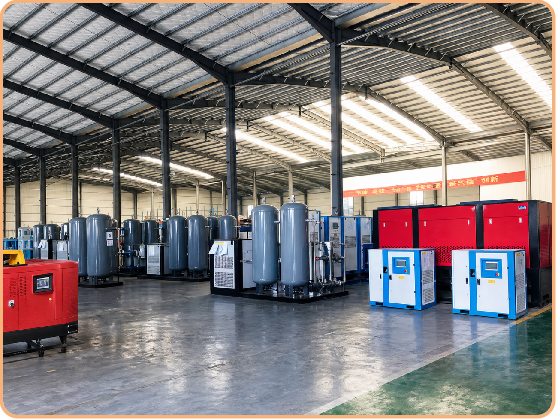
Contact UMW Air for a quotation or sample: umwair.com · info@umwair.com · Phone/WhatsApp: +86 15053148082 · 68 Gongye South Road, Jinan, Shandong, China, 250000
Have Questions or Need More Details?
Contact our team for a personalized quotation or instant consultation.
Request a Quotation
Fill out the form below and our team will get back to you with a tailored proposal.
WhatsApp Direct Chat
Prefer to chat in real-time? Message us on WhatsApp for instant assistance & quick answers.
- Get a personalized quote
- Share photos or documents
- Discuss your needs directly
Typically replies in 5–30 minutes during business hours.