
Air Compressor for CNC Machines: A Buyer's Comparison Guide
Air Compressor for CNC Machines: A Buyer's Comparison Guide
CNC machining centers rely on a steady flow of compressed air for tool clamping, chip evacuation, coolant atomization, and pneumatic actuators. Selecting the wrong air compressor can lead to frequent downtime, inconsistent cut quality, and higher energy bills. This comparison white paper helps industrial buyers evaluate the most common compressor types and understand how Shandong UMW Air Tech Co., Ltd. rotary screw solutions meet the demands of modern CNC environments.
Problem Definition: What Makes CNC Air Supply Different
A CNC production line often operates in continuous mode—sometimes 24/7—which requires a compressor that can deliver stable pressure without overheating or frequent cycling. Interruptions in air supply can ruin precision parts and trigger alarm states. Additionally, many CNC processes (e.g., laser cutting, optical measurement) demand high-purity air to avoid contaminating sensitive optics or coolant systems. According to industry standards, compressed air purity is classified under ISO 8573-1:2010, which sets limits for particles, water, and oil.
Industry Background
According to Grand View Research, the global industrial air compressor market was valued at approximately USD 20.0 billion in 2025 and is projected to reach USD 28.3 billion by 2033. The rotary screw air compressor segment captured a 47.0% share in 2025, driven by its efficiency in continuous-duty industrial applications. Asia Pacific held the largest revenue share of 42.8%, with China as a leading manufacturing hub. Key global competitors include Atlas Copco, Ingersoll Rand, Kaeser Kompressoren, and Sullair (Hitachi), while mid-market suppliers such as UMW Air are gaining traction by offering energy-optimized designs at competitive price points.
Detailed Solution: Rotary Screw vs. Piston for CNC
Two main compressor technologies dominate the market for CNC support: reciprocating (piston) and rotary screw compressors. Rotary screw air compressors use twin helical rotors to continuously trap and compress air, making them ideal for sustained operation. In contrast, piston compressors cycle on and off, which can cause pressure swings and higher wear in CNC lines that require consistent flow.
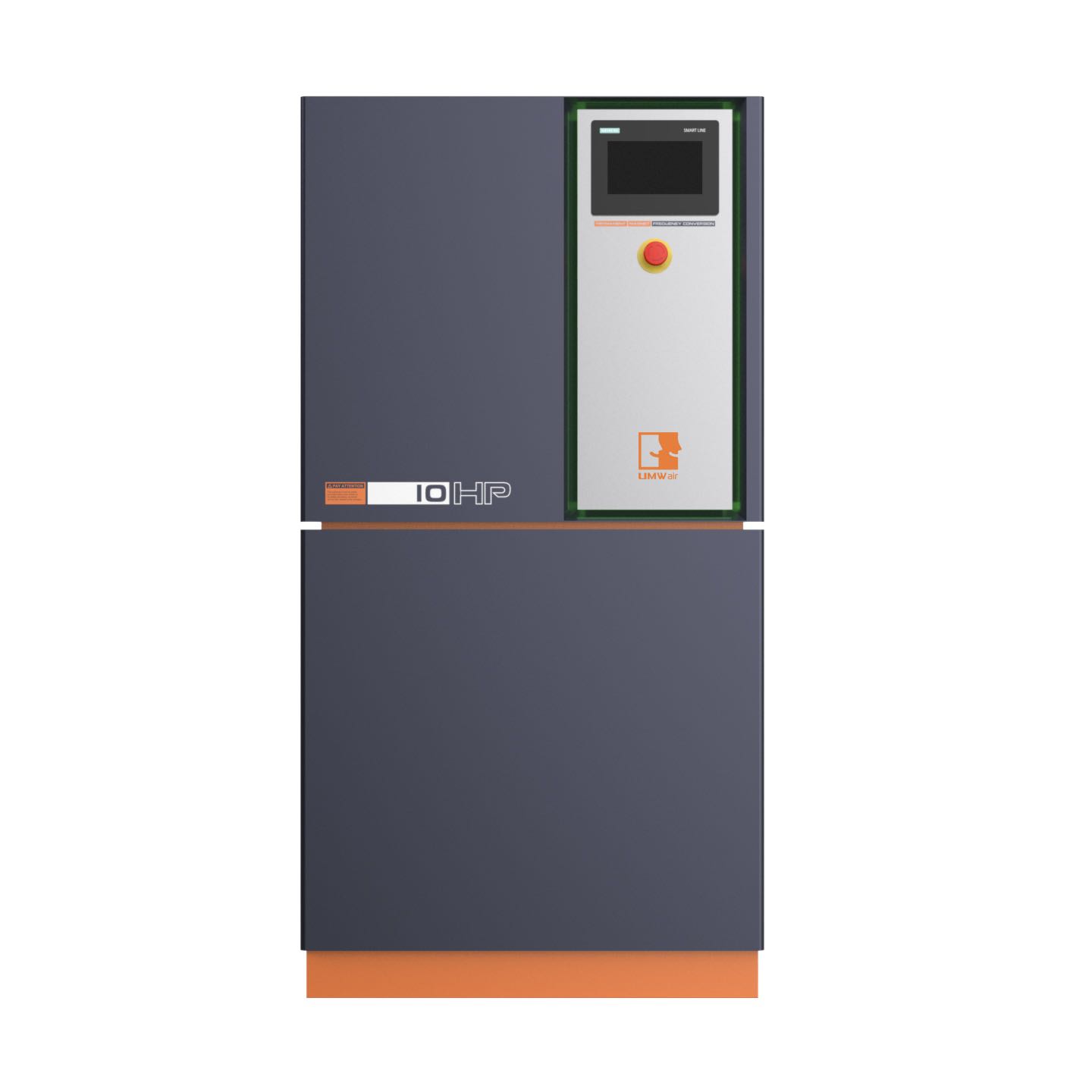
UMW Air offers a range of rotary screw compressors tailored for manufacturing environments. The integrated screw compressor models (e.g., ML-7.5/8A, L-7.5/8A, L-1516A, L-2216A) cover a power range of 4–355 kW and a pressure range of 8–25 Bar. The drive method is direct driven, cooling is air cooled, and the motors meet the IE4 efficiency class. For smaller CNC cells, the Micro series (ML-4A, ML-5.5A, ML-7.5A) delivers up to 1.1 m³/min at 8–13 Bar with a 140 L gas tank, making it a compact package for single-machine setups.
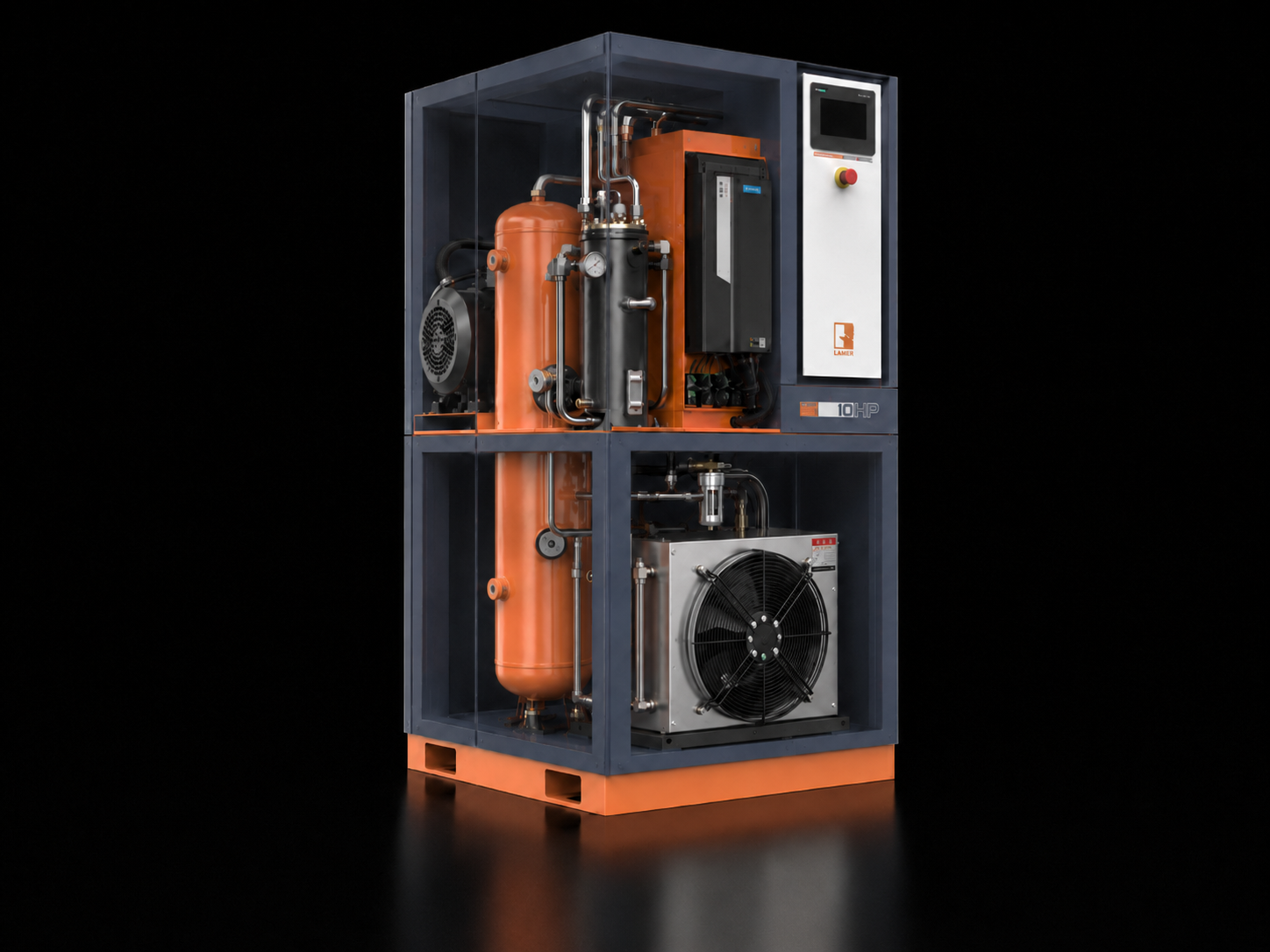
Step‑by‑Step Selection for CNC Compressed Air
- Determine air consumption (FAD) – Sum the air demand of all CNC machines, including blow‑guns and pneumatics. UMW's Micro series provides 1.1 m³/min; larger models can supply higher flows at pressures up to 25 Bar.
- Choose the right pressure – Most CNC tools require 6–8 Bar. UMW compressors operate from 8–25 Bar, giving a comfortable margin and allowing the use of pressure regulators.
- Select air quality – For laser cutting, oil-free air (ISO Class 0 per ISO 8573-1) is critical to protect optics. UMW offers configurations that can be paired with dryers and filters to meet Class 0 requirements.
- Evaluate energy efficiency – Variable Frequency Drive (VFD) compressors can reduce energy consumption by up to 35% by matching motor speed to actual demand. UMW integrates VFD technology across its product line.
- Consider integrated systems – An air compressor with an integrated dryer and tank reduces floor space and installation complexity—a benefit for crowded CNC workshops.
Use Cases Across Industries
UMW Air’s compressors serve sectors where CNC machining is core: metal processing, plastics and rubber, automotive parts, electronics manufacturing, food packaging, construction materials, chemicals, and energy. For example, in a CNC automotive parts line, the integrated screw compressor runs continuously, providing stable air for robotic grippers and coolant systems. In plastics injection molding, the same compressor can supply air for part ejection and cooling.
A 2024 DXTECH CNC report notes that using compressed air as an auxiliary gas in laser cutting can reduce production costs by up to 50% compared to nitrogen or oxygen—provided the air is oil-free (ISO Class 0). This underscores the value of selecting a compressor with proper filtration.
Comparison: Piston vs. Rotary Screw for CNC
| Parameter | Piston (Reciprocating) | Rotary Screw (UMW Air Example) |
|---|---|---|
| Duty Cycle | 50–60%, requires rest cycles | 100% continuous (product operates in continuous mode) |
| Air Quality | Higher oil carry‑over; needs frequent filter changes | Lower oil carry‑over; can achieve ISO 8573‑1 class with filtration |
| Energy Efficiency | Lower part‑load efficiency | VFD versions save up to 35% energy (DOE data) |
| Maintenance | Valve and ring replacement every 1,000–2,000 hours | Oil and filter changes every 4,000–6,000 hours; fewer wear parts |
| Noise Level | Typically 85–100 dB(A) | 75–85 dB(A) with enclosure; air‑cooled design |
| Initial Cost | Lower upfront | Higher upfront but lower TCO through energy savings |
| Best for CNC | Intermittent use, small shops with few machines | Continuous production, multi‑machine lines, laser cutting |
Frequently Asked Questions
1. What air quality standard applies to air compressors used with CNC machine tools?
ISO 8573-1:2010 is the primary global standard for compressed air purity, classifying contaminants like particles, water, and oil. For CNC applications where air contacts the workpiece (e.g., laser cutting, optical inspection), ISO Class 0 (oil-free) is often required to prevent contamination. UMW Air compressors can be equipped with appropriate filtration to meet Class 0.
2. Can a rotary screw air compressor run continuously to support a 24/7 CNC operation?
Yes. UMW’s rotary screw compressors are designed for continuous operation mode, delivering stable airflow without the cycling that causes pressure fluctuations in piston compressors. Models with direct drive and air cooling are well suited for factory environments.
3. How do I determine the required air flow for my CNC machines?
Calculate the total air consumption (in CFM or m³/min) of all connected equipment, adding a 20–30% safety margin. UMW’s Micro series delivers up to 1.1 m³/min, while larger integrated models cover flows up to 40+ m³/min at pressure up to 25 Bar. Consult the machine manufacturer’s specifications for exact demand.
4. What is the typical budget for an industrial air compressor for CNC?
Cost varies significantly by power, type (fixed speed vs. VFD), and additional components like dryers and tanks. Rotary screw models carry a higher initial investment but offer lower energy and maintenance costs over their lifecycle. UMW Air can provide a customized quote based on your specific CNC setup.
5. Can I arrange a sample test or request a compressor for trial?
UMW Air supports pre‑delivery sample arrangements and technical consultations to verify compatibility with your CNC equipment. Contact the UMW Air team at +8618888300248 or info@umw.top (WhatsApp: +8618888300248) to discuss your project and receive a tailored quotation or sample proposal.
Conclusion
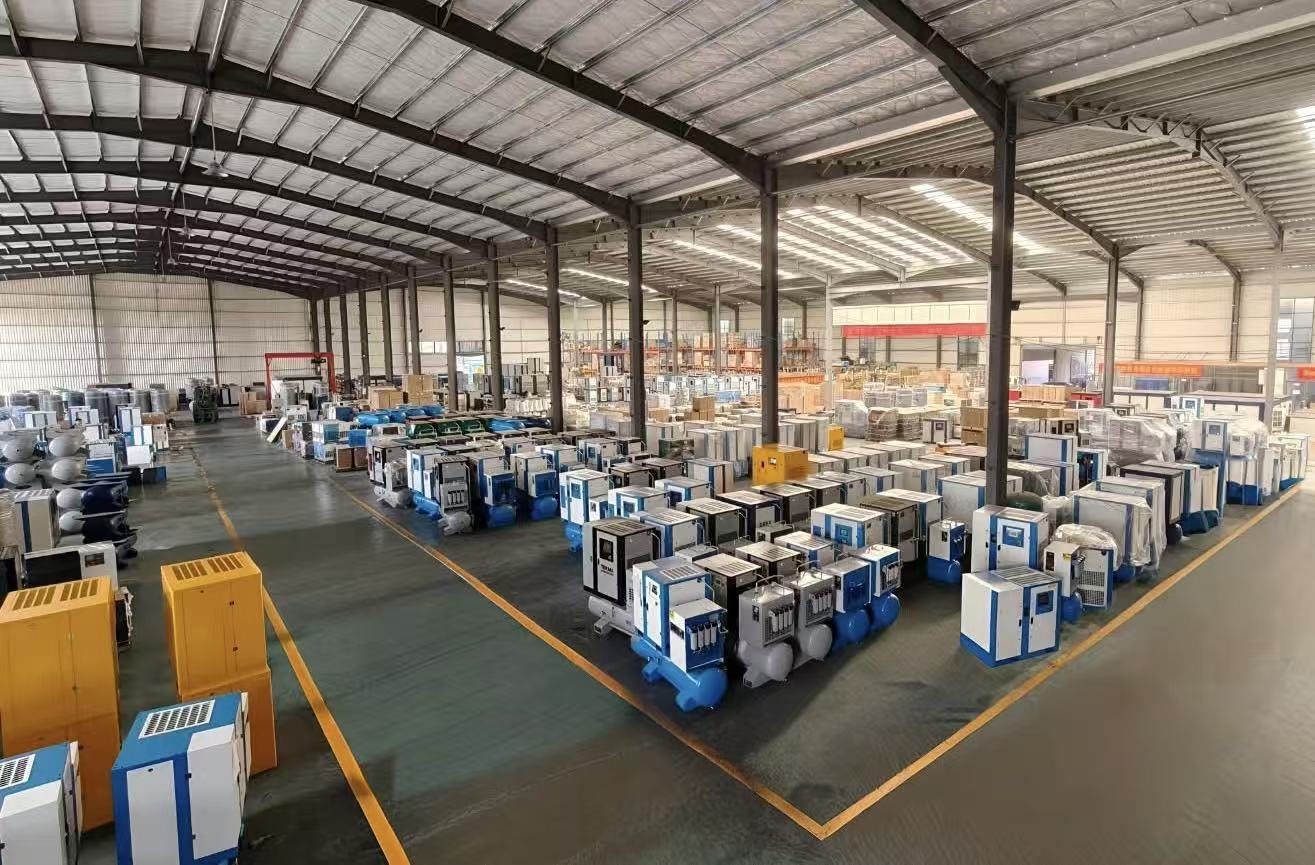
Choosing the right air compressor for CNC machining requires balancing air quality, duty cycle, energy efficiency, and total cost of ownership. Rotary screw compressors—especially those built with direct drive, IE4 motors, and VFD capability—deliver the continuous reliability that modern CNC environments demand. Shandong UMW Air Tech Co., Ltd. (founded in 2019) designs and manufactures energy-efficient industrial air compressors in a 2,000 m² facility with an annual capacity of 12,000 units. Supported by a 40‑engineer R&D team and exporting to markets including the EU, USA, Southeast Asia, Middle East, South America, and Africa, UMW Air is positioned as a capable partner for your compressed air needs. To evaluate a specific solution for your CNC line, reach out via the contact details above.
Have Questions or Need More Details?
Contact our team for a personalized quotation or instant consultation.
Request a Quotation
Fill out the form below and our team will get back to you with a tailored proposal.
WhatsApp Direct Chat
Prefer to chat in real-time? Message us on WhatsApp for instant assistance & quick answers.
- Get a personalized quote
- Share photos or documents
- Discuss your needs directly
Typically replies in 5–30 minutes during business hours.