
Does Your Factory Need a Screw or Piston Air Compressor? A Data-Driven Comparison
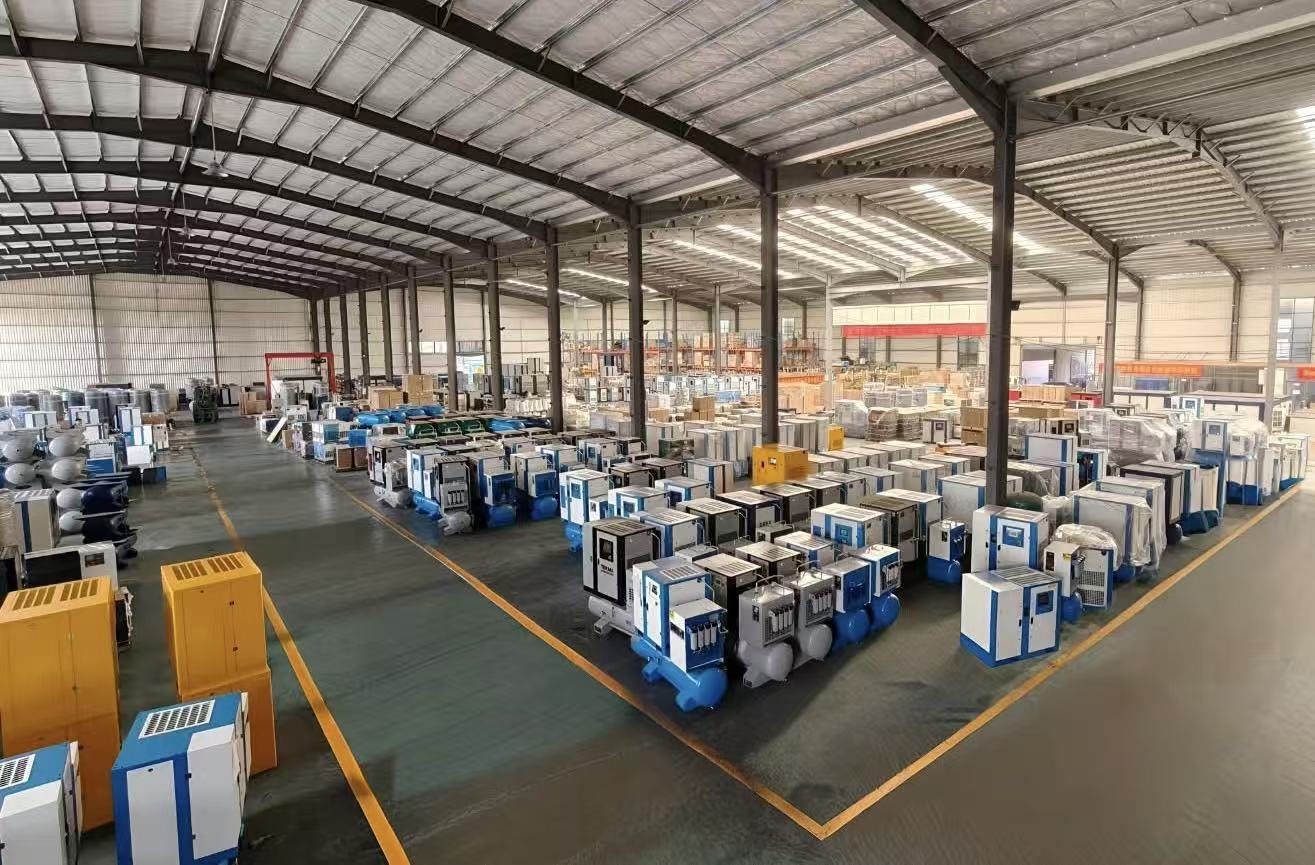
UMW Air manufacturing floor with screw air compressor units
Choosing between a rotary screw air compressor and a piston air compressor is one of the most consequential equipment decisions a factory can make. The wrong choice can lead to frequent downtime, higher energy bills, and avoidable maintenance work. According to Grand View Research, the global industrial air compressor market was valued at USD 20.0 billion in 2025 and is projected to reach USD 28.3 billion by 2033. That growth reflects a larger movement toward continuous-duty, energy-efficient compressed air systems.
This article is written for decision-makers who are evaluating compressor options. It compares screw and piston technologies across the factors that matter most at the decision stage: operating capability, maintenance demand, energy efficiency, initial cost, and long-term ROI. It also outlines the configuration choices that can make a screw compressor the right fit for CNC, laser cutting, and general factory use.
Problem Definition: Why Initial Price Is Not the Full Story
Many buyers compare only purchase prices when selecting an air compressor. That approach often hides the larger cost drivers that appear after installation: electricity, maintenance, spare parts, and downtime. Traditional piston air compressors are designed for intermittent operation. Their moving parts and higher vibration increase wear, which leads to more frequent maintenance and shorter service intervals.
Compressed air systems feed many production processes, and an unreliable supply can stop an entire line. For manufacturing operations that need continuous air, piston compressors may struggle to maintain stable pressure and output. The real challenge is not simply finding a machine with a lower price tag; it is selecting a system with lower total cost of ownership over its lifetime.
Industry Background: The Shift Toward Rotary Screw Technology
Rotary screw air compressors have become the technology of choice in modern industrial settings. Grand View Research data shows that the rotary screw segment held a 47.0% market share in 2025, the largest among all air compressor types. Asia Pacific is the leading regional market with a 42.8% share, with China as a key manufacturing hub.
The rise of variable frequency drive (VFD) technology has reinforced the screw compressor's position. According to the U.S. Department of Energy, VFD compressors can save up to 35% in energy costs by matching motor speed to actual air demand. This is especially valuable in factories with fluctuating air consumption, where a fixed-speed machine would otherwise run at full load even when demand is low.
These trends explain why many factory engineering teams and plant managers now specify screw compressors, not only for high-demand lines but also as a long-term energy strategy.
Detailed Solution: Rotary Screw Air Compressors for Continuous Industrial Use
UMW Air, formally Shandong UMW Air Tech Co., Ltd., is an industrial screw air compressor manufacturer located at 68 Gongye South Road, Jinan, Shandong, China 250000. The company specializes in air-cooled screw air compressors, direct-driven screw air compressors, stationary screw air compressors, diesel mobile screw air compressors, and heavy-duty screw air compressors. Since 2019, it has built a 2,000 m² facility with 200 employees, including a 40-person R&D team, and currently produces 12,000 units per year. UMW Air exports 100% of its output to markets including the EU, USA, Southeast Asia, Middle East, South America, and Africa.
For factories that need a dependable, continuous air supply, a rotary screw air compressor offers measurable advantages over a piston compressor:
- 24/7 operation capability: Screw air compressors are designed for continuous duty, while piston compressors are typically limited to intermittent operation.
- Lower maintenance: With fewer moving parts and longer service intervals, screw compressors reduce maintenance frequency and downtime.
- Better energy efficiency: Screw units can reach up to 95% energy efficiency, compared with roughly 65–70% for piston compressors under sustained high load.
- Stable air output: Lower vibration and integrated automation control help protect sensitive downstream equipment and maintain consistent pressure.
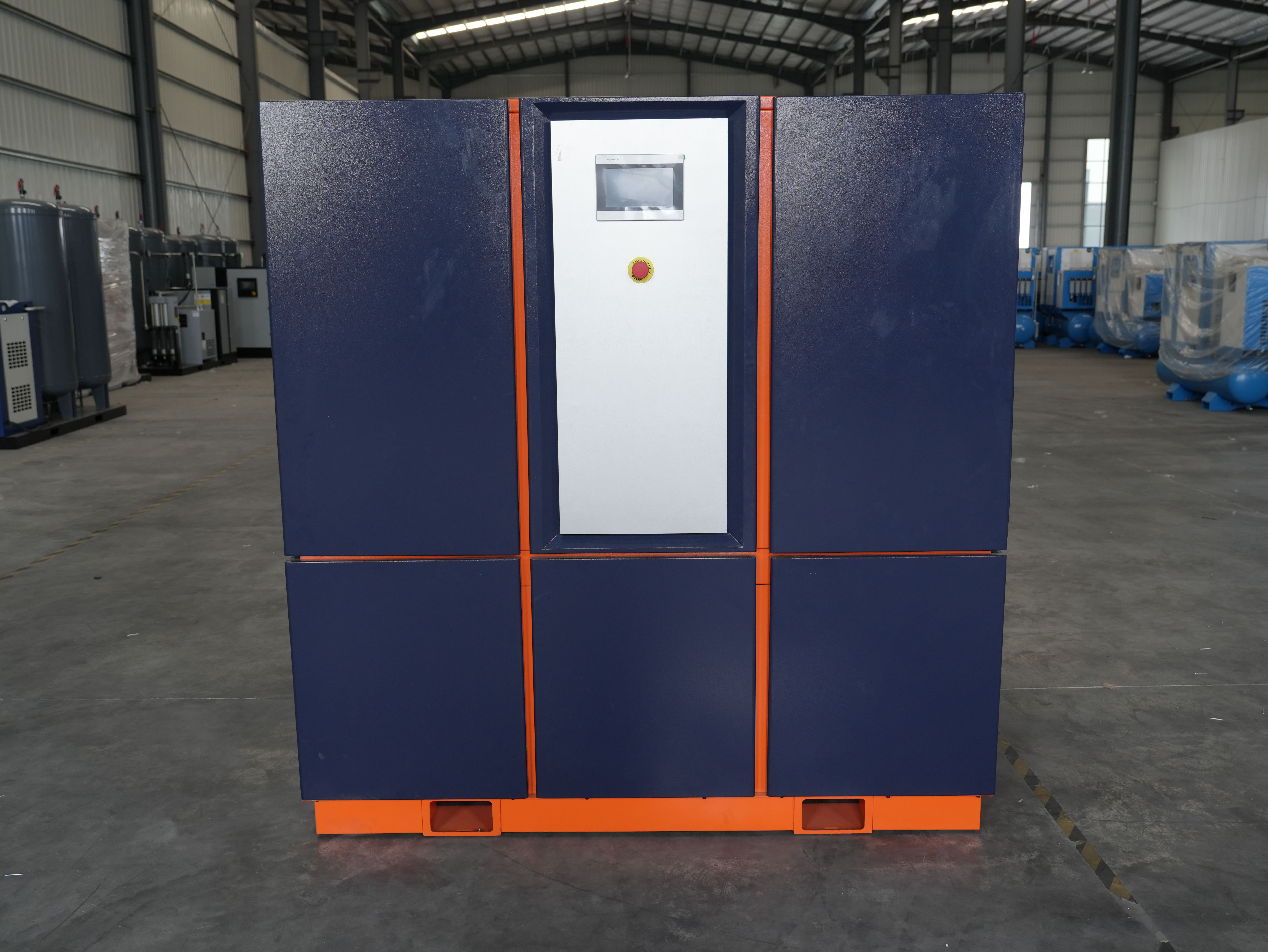
A UMW Air screw compressor unit in a factory layout
The initial investment for a screw air compressor is slightly higher than for a piston model. However, the long-term return on investment is stronger because downtime and maintenance costs are lower. This is a core decision point for buyers measuring value across the equipment lifecycle.
Step-by-Step Breakdown: How to Make the Right Air Compressor Decision
Step 1: Define Your Duty Cycle
Start by estimating how many hours per day your production line needs compressed air. If the demand is intermittent, such as in a small workshop with occasional air tools, a piston compressor may be adequate. If your process requires air all day or around the clock, choose a screw compressor built for 24/7 operation.
Step 2: Compare Total Cost of Ownership
Go beyond the purchase quote. Estimate energy consumption, maintenance labor, spare parts, and the cost of unplanned downtime. In high-load applications, a VFD screw compressor can reduce energy consumption by up to 35%, which is often the single largest controllable expense after installation.
Step 3: Verify Air Quality Requirements
Different processes need different air purity levels. ISO 8573-1:2010 classifies compressed air quality for particles, water, and oil. For laser cutting, oil-free air meeting Class 0 is critical to protect sensitive optics. Other applications, such as general pneumatic tools, may tolerate lower classes with proper filtration.
Step 4: Choose the Right Configuration
Within the screw compressor family, select the configuration that matches your operating environment and load profile. Common choices include air-cooled vs. water-cooled, fixed speed vs. VFD, oil-lubricated vs. oil-free, and with or without an integrated dryer. An integrated dryer simplifies installation and protects downstream equipment from moisture.
Step 5: Assess the Supplier's Quality Controls
Ask how the manufacturer tests its units. UMW Air, for example, performs thermal tests on every compressor before shipment to ensure radiators and cooling fans are working correctly. Overheating is a key risk in industrial compressors, so this type of verification is a relevant signal of reliability.
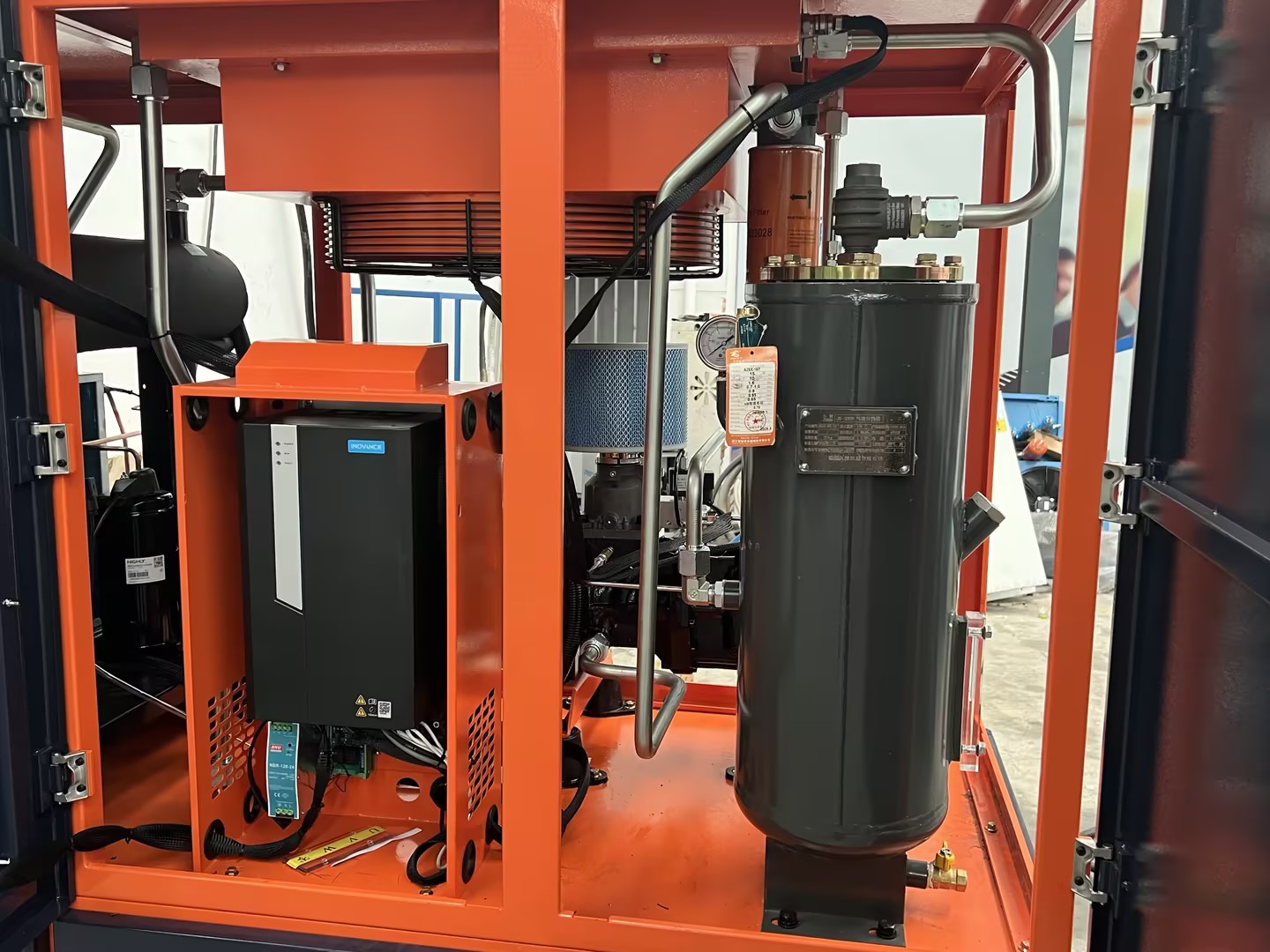
Pre-shipment verification of a UMW Air screw compressor
Step 6: Confirm Lead Time and After-Sales Support
Once the technical match is clear, confirm production and shipping timelines. Working directly with a manufacturer such as UMW Air can give you faster answers on custom configurations, documentation, and delivery scheduling.
Use Cases: Matching Compressor Type to Application
Air Compressor for CNC Machines
CNC machines need a steady and stable compressed air supply for tool clamping, chip removal, and pneumatic actuators. A rotary screw air compressor delivers consistent pressure and low pulsation, making it a common choice for CNC workshops and machining lines.
Air Compressor for Laser Cutting
Laser cutting often requires high-purity air. Data from DXTECH CNC Research indicates that using compressed air as an auxiliary gas can reduce production costs by up to 50% compared with nitrogen or oxygen. To protect optics, oil-free air at Class 0 per ISO 8573-1 is recommended.
Air Compressor for General Manufacturing and Factories
Facilities with assembly lines, plastic processing, automotive parts, or other high-demand operations benefit from the 24/7 capability and low-maintenance design of screw compressors. The combination of stable output and lower vibration also supports automation and sensitive equipment.
Comparison Table: Screw Air Compressor vs. Piston Air Compressor
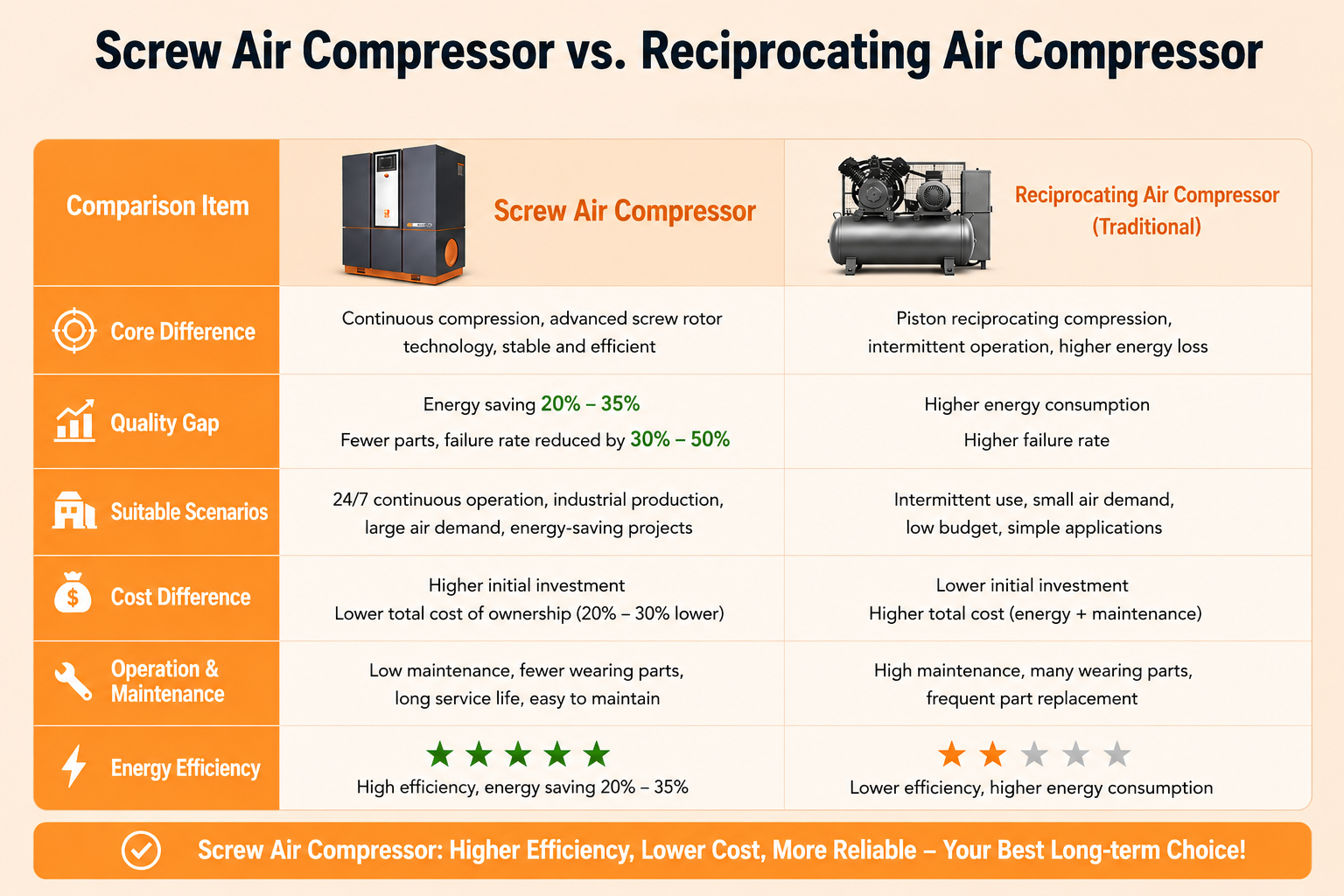
Comparison of screw and piston air compressor characteristics
| Factor | Rotary Screw Air Compressor | Piston Air Compressor |
|---|---|---|
| Operating capability | 24/7 continuous operation | Intermittent operation |
| Vibration and stability | Lower vibration, stable air output | Higher vibration, less stable output |
| Maintenance | Low-maintenance, fewer moving parts, longer service intervals | Frequent maintenance, higher wear and tear |
| Energy efficiency | Up to 95% | Approximately 65–70% under continuous high load |
| Initial investment | Slightly higher | Lower |
| Long-term ROI | Higher due to lower downtime and maintenance costs | Lower lifetime efficiency |
| Best suited for | Industrial production lines, CNC machining, plastic processing, automotive parts, continuous supply | Intermittent or lower-demand applications |
The comparison above is based on the operating characteristics of screw and piston air compressors discussed in this article.
Frequently Asked Questions
What air quality standards should I look for in an industrial air compressor?
ISO 8573-1:2010 is the primary international standard for compressed air purity. It classifies contaminants such as particles, water, and oil into purity classes. For sensitive applications like laser cutting, oil-free air meeting Class 0 is critical to prevent contamination of optics and ensure cut quality.
Can a rotary screw air compressor run continuously without stopping?
Yes. Rotary screw air compressors are designed for 24/7 operation, making them suitable for applications that require a continuous air supply. They also have fewer moving parts and longer service intervals than traditional piston air compressors, which supports sustained duty and reduces downtime.
Why do screw air compressors cost more upfront if they are supposed to save money?
The initial investment is slightly higher, but screw air compressors require less maintenance and produce less downtime. Lower maintenance costs, combined with the energy savings of VFD models—up to 35% according to the U.S. Department of Energy—improve total cost of ownership over the equipment lifecycle.
Can I get a sample or verify UMW Air compressor performance before ordering?
UMW Air encourages buyers to verify that the compressor matches their application. You can request product specifications, discuss your operating conditions, and ask about current sample and quotation options by contacting the team at info@umwair.com or by phone/WhatsApp at +86 15053148082.
What is the typical lead time for UMW Air screw air compressors?
Lead time depends on the configuration, order quantity, and destination. UMW Air operates a 2,000 m² facility with an annual output of 12,000 units and a 100% export model. Contact the sales team directly to confirm a delivery schedule for your specific project.
Conclusion
Choosing between screw and piston air compressors is ultimately a comparison of operating profiles, total cost, and application needs. Start with your duty cycle, evaluate energy and maintenance costs, check air purity requirements, and verify the supplier's quality controls.
Rotary screw air compressors are particularly strong candidates for factories that need continuous, stable air and want to control long-term operating costs. VFD options add a further layer of efficiency for variable loads, while oil-free configurations address the demands of laser cutting and other precision processes.
Ready to Compare Your Options?
UMW Air can help you match an industrial screw air compressor to your factory. Reach out for a quote, technical inquiry, or sample request: email info@umwair.com, WhatsApp +86 15053148082, or visit umwair.com.
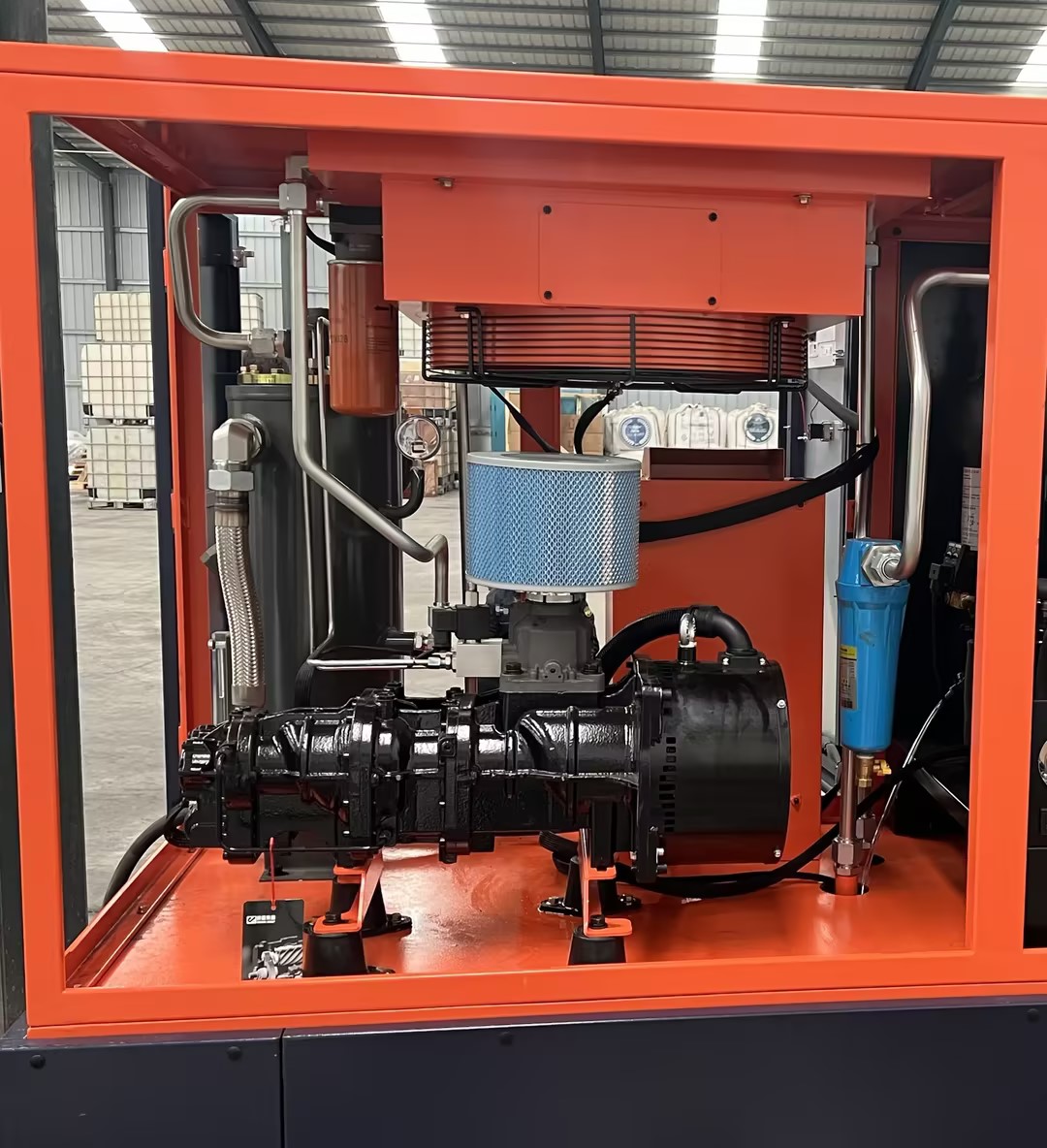
UMW Air compressor for factory and industrial use
Have Questions or Need More Details?
Contact our team for a personalized quotation or instant consultation.
Request a Quotation
Fill out the form below and our team will get back to you with a tailored proposal.
WhatsApp Direct Chat
Prefer to chat in real-time? Message us on WhatsApp for instant assistance & quick answers.
- Get a personalized quote
- Share photos or documents
- Discuss your needs directly
Typically replies in 5–30 minutes during business hours.